Jason Scott’s weekly review of Pope Leo XIV’s audiences –
Sunday, 24 May: Pentecost Mass — Peace, Mission and Truth
Pope Leo XIV celebrated Pentecost Mass in St Peter’s Basilica on Sunday morning, anchoring his homily in the Gospel scene of Christ’s appearance to the disciples in the locked Upper Room. The disciples had shut themselves in for fear, but the Risen Lord passed through their closed doors, showed them his wounds, and breathed the Holy Spirit upon them. Leo drew out what he called the three aspects of that gift: peace, mission, and truth.
On peace, the Pope reflected on the Upper Room itself — the very space marked by the fear and betrayal of Holy Week — becoming, through Christ’s gift of the Spirit, what he called “the womb of the Resurrection.” The Spirit does not erase the wounds of the past but transfigures them. On mission, he invoked Saint Paul’s words that “to each is given the manifestation of the Spirit for the common good,” and drew from this the Church’s calling as a body that lives in God and serves the world. On truth, he invited the faithful to allow the Spirit to lead them to the full truth of Christ — not as a possession but as a living encounter.
“Thanks to the Spirit, we can bring true peace to all, the Truth that saves — the same Christ our Lord.”
The Pope closed the homily with an appeal for peace, praying that the Holy Spirit would save humanity “from the evil of war” and renew the Church in its mission to transform, in his words, confusion into communion.
Sunday, 24 May: Regina Caeli — The Spirit Opens Three Doors
Following Mass, Pope Leo XIV led the Regina Caeli from St Peter’s Square — the final such address of the Easter season, since the Regina Caeli replaces the Angelus only during Eastertide. His reflection continued the theme of Pentecost, asking: “What doors does the Spirit open?” He identified three.
The first is the door of personal encounter with God: the Spirit transforms faith from the mere observance of rules into a lived relationship with Christ. The second is the door of the Church: without the fire of the Spirit, Leo said, the Church remains “a prisoner of fear, timid in the face of the world” — but the Spirit opens her to welcome all, including those who have distanced themselves from hope. The third is the door of the human heart: the Spirit overcomes the selfishness, mistrust, and prejudice that keep people from recognising one another as brothers and sisters.
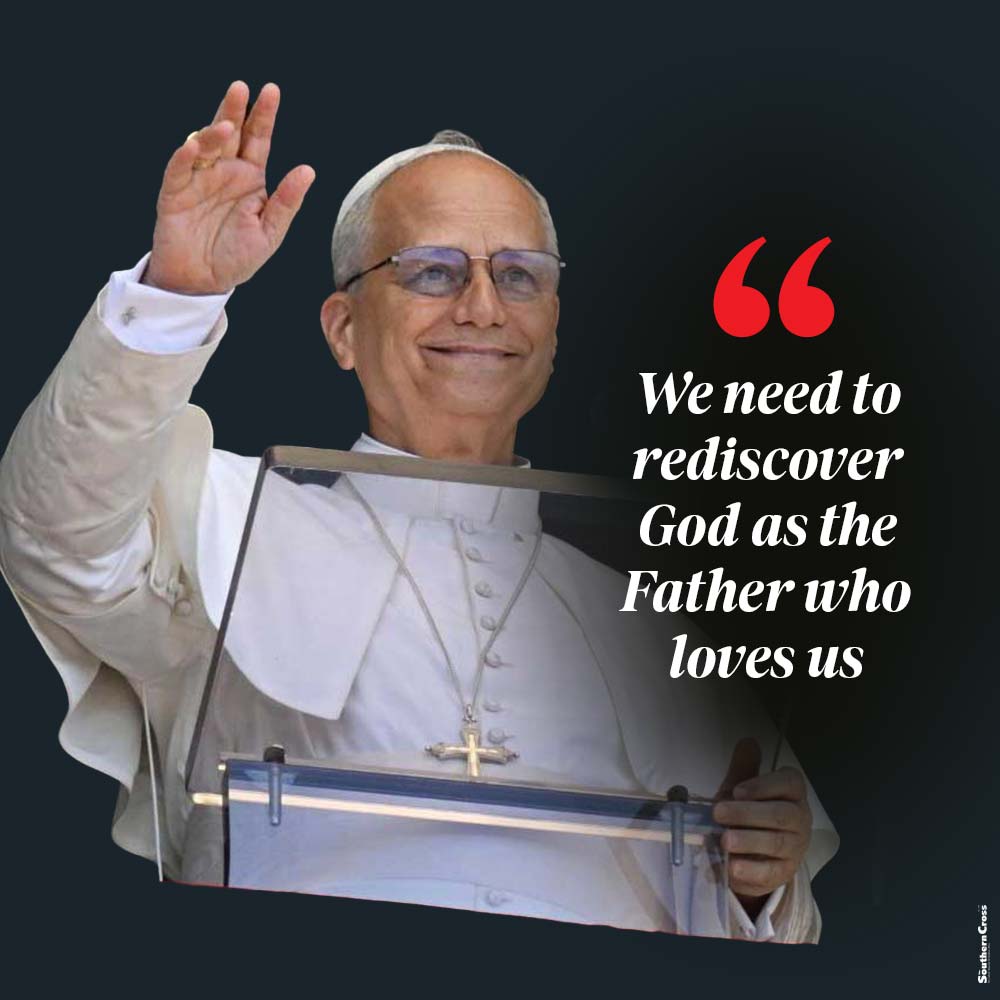
“We need to rediscover God as the Father who loves us, so that we can form a Church where everyone feels at home, and build a fraternal world where peace reigns among all peoples.”
After the prayer, Pope Leo entrusted the Christians of China to the Virgin Mary, praying that they might be witnesses of “hope and peace.” He also appealed for peace in regions of ongoing conflict.
Monday, 25 May: Encyclical Published — Magnifica Humanitas
Pope Leo XIV published his first encyclical letter on Monday, Magnifica Humanitas (“Magnificent Humanity”), on the safeguarding of the human person in the age of artificial intelligence. The document was signed on 15 May — the 135th anniversary of Rerum Novarum — and presented at a Vatican event on Monday at which the Pope spoke alongside Christopher Olah, co-founder of Anthropic, the AI safety company.
At approximately 42,000 words across five chapters, it is the most substantial papal document of Leo’s pontificate to date and the first encyclical to deal directly with artificial intelligence. It situates the AI question within the tradition of Catholic Social Teaching running from Leo XIII through to the present, frames the challenge through the biblical images of the Tower of Babel and the rebuilding of Jerusalem under Nehemiah, and addresses specific questions including the governance of AI, the dignity of work in a period of technological disruption, the protection of children from digital platforms engineered to exploit their attention, the threat of transhumanism, and the use of autonomous weapons in warfare.
“The primary choice is not between a ‘yes’ or ‘no’ to technology, but rather between constructing Babel or rebuilding Jerusalem; between a power that claims to dominate the heavens and a people who work together in the presence of God to rebuild the walls of fraternal coexistence.”
The full text is available at vatican.va in eight languages. A fuller analysis of the encyclical appears separately in this publication.
Wednesday, 27 May: General Audience — Liturgy: Tradition and Development
At the Wednesday General Audience in St Peter’s Square, Pope Leo XIV continued his catechesis series on the documents of the Second Vatican Council, delivering the second of his reflections on Sacrosanctum Concilium, the 1963 Constitution on the Sacred Liturgy. Where last week’s audience introduced the document, this week’s focused specifically on the relationship between tradition and development in liturgical reform.
The Pope opened by quoting Venerable Pius XII’s encyclical Mediator Dei, which described the Church as “a living organism” that “grows, matures, develops, adapts and accommodates herself to temporal needs and circumstances, provided only that the integrity of her doctrine be safeguarded.” This, Leo argued, is the frame through which Sacrosanctum Concilium should be read — not as rupture but as the latest expression of a continuous, living tradition. Tradition and progress are not opposites; a living river carries both continuity and movement.
He was also notably direct in addressing priests. While the Council’s liturgical reform permitted substantial development, Leo XIV was clear that the norms of the reformed liturgy are not optional:
“I encourage all priests to respect the texts and norms of the liturgy with openness, humility, trust in God’s greatness and with sincere fidelity to ecclesial communion.”
He noted that certain elements of the liturgy can never change because they are divinely instituted, while others can and do develop in response to the needs of each era. Legitimate liturgical development does not mean private alteration. Priests who modify the Mass “on their own initiative,” he said, risk confusing the faithful and undermining the ecclesial unity that the liturgy exists to express and foster.
Take-Away Points
• “The womb of the Resurrection” — the Upper Room, marked by fear and betrayal, became through the Spirit the birthplace of the Church. Fear does not disqualify a community from the Spirit’s action.
• “Three doors” — the Spirit opens the door of personal encounter with God, the door of an outward-facing Church, and the door of the human heart. All three remain closed without him.
• “Constructing Babel or rebuilding Jerusalem” — the central choice of the encyclical. The question is not whether to use technology but whether it is oriented toward communion or self-assertion.
• “It is difficult for parents by themselves” — the encyclical names the structural asymmetry between parents and the major digital platforms. Protection of children from digital harms requires a legislative response, not only parental discipline.
• “Tradition is a living reality” — liturgical development is not rupture but organic growth. A river carries continuity and movement at the same time.
• “Respect the texts and norms of the liturgy” — Leo XIV’s direct message to priests: fidelity to the reformed rite is not restriction but communion. Individual initiative at the altar fragments rather than builds.
Sources
2026-05-24 – https://www.vatican.va/content/leo-xiv/en/homilies/2026/documents/20260524-pentecoste.html
2026-05-24 – https://www.vatican.va/content/leo-xiv/en/angelus/2026/documents/20260524-regina-caeli.html
2026-05-25 – https://www.vatican.va/content/leo-xiv/en/encyclicals/documents/20260515-magnifica-humanitas.html
2026-05-27 – https://www.vatican.va/content/leo-xiv/en/audiences/2026/documents/20260527-udienza-generale.html
- Why I Chose Catholicism: 7 Reasons - October 7, 2026
- Why I Am Not an Atheist: The Three M’s - September 28, 2026
- “Help, the Pope said something I disagree with” - July 20, 2026