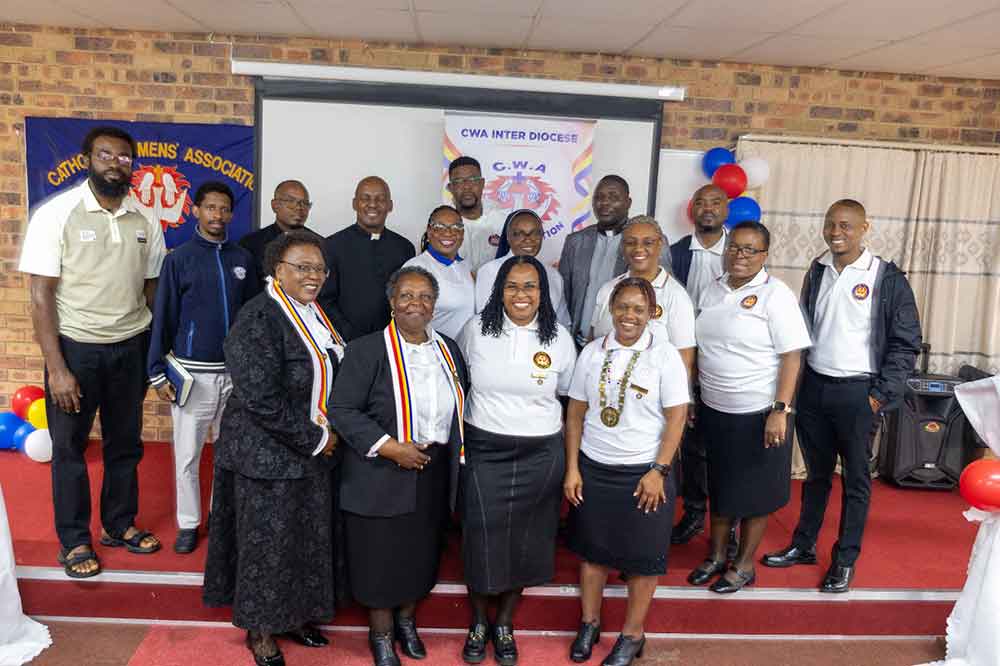
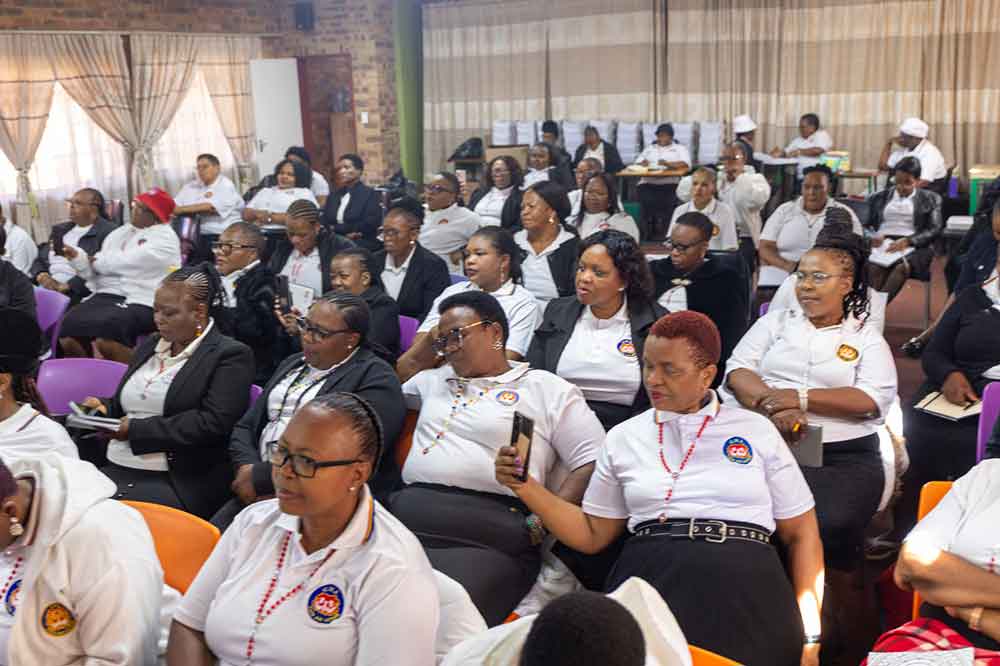
The Catholic Women’s Association (CWA) held its first leadership workshop of the new term at Padre Pio Retreat Centre in Pretoria, bringing together newly elected interdiocesan leaders and diocesan executive members from eleven dioceses of the Southern African Catholic Bishops’ Conference (SACBC) in South Africa and Botswana.
The workshop became more than a training session. It was a moment of spiritual renewal, leadership formation, historical reflection, and sisterhood. Throughout the gathering, speakers repeatedly reminded delegates that leadership in the Church is not about status, titles, or power, but about service, humility, faith, accountability, and walking together as “Pilgrims of Hope.”
The workshop covered several critical themes, including emotional intelligence, conflict resolution, professionalism, rapport building, servant leadership, social responsibility, organisational history, teamwork, financial accountability, synodality, and the role of women in the mission of the Church.
For many participants, the workshop served as a foundation for the next three years of leadership. For those who could not attend, it offered important lessons on how Catholic leadership should be exercised in today’s Church and society.

Pilgrims of Hope
Opening the workshop, the Interdiocesan President of CWA, Ms Moipone Mathole, welcomed delegates, spiritual advisors, former leaders, and guests. She reminded participants that the workshop was not merely an administrative gathering but a sacred moment of preparation for the leadership journey ahead.
Using the theme “CWA as Pilgrims of Hope,” Mathole challenged leaders to see themselves first as Catholic women grounded in faith before being organisers of activities and meetings.
She described hope not as passive optimism but as confidence rooted in God’s promises. Referring to Hebrews 6:19, she explained that hope is “the anchor of the soul,” especially during difficult moments of leadership such as declining membership, financial pressures, misunderstandings, and personal exhaustion.
Drawing inspiration from the Gospel account of the disciples on the Road to Emmaus (Luke 24:13-35), she encouraged leaders to journey together, walk alongside one another, and recognise Christ as their companion in leadership.
Mathole stressed that leadership requires women who can bring hope to others through prayer, spiritual formation, fellowship, and service. She encouraged leaders to become “lanterns of hope” in their dioceses, parishes, deaneries, and communities.
Her address set the tone for the workshop by emphasising synodality, unity, spiritual growth, and servant leadership.
Emotional Intelligence and Conflict Resolution
Fr Mandla Makhanya from the Diocese of Dundee delivered one of the most practical presentations of the workshop on Emotional Intelligence and Conflict Resolution.
He explained that emotional intelligence involves the ability to understand, manage, and use emotions positively in relationships and leadership situations. According to him, leaders who lack emotional intelligence often struggle with communication, teamwork, and decision-making.
Fr Makhanya highlighted five important elements of emotional intelligence:
- Self-awareness
- Self-regulation
- Motivation
- Empathy
- Social skills
He reminded delegates that church leadership involves dealing with people from different personalities, backgrounds, experiences, and emotional situations. Leaders, therefore, need patience, compassion, and emotional maturity.
He further explained that emotional intelligence can be strengthened through mindfulness, active listening, empathy, and stress management.
The priest also addressed conflict resolution, noting that conflicts are inevitable wherever people work together. However, conflicts should never destroy unity within the Church.
Using Biblical teachings, he outlined Christian approaches to resolving disputes:
- Speak privately and directly to the person involved
- Reconcile quickly
- Control anger
- Use gentle words
- Practice humility
- Forgive one another
- Listen before speaking
He referred to several Scripture passages including Matthew 18:15, Matthew 5:23-24, Ephesians 4:26, Proverbs 15:1, and James 1:19.
Fr Makhanya reminded participants that unresolved conflict weakens ministry and damages relationships, while healthy conflict resolution strengthens unity and witness within the Church.
Professionalism in Church Leadership
One of the major highlights of the workshop was a presentation by Rev. Fr. Tefo Oratile Litch Bolokwe, Interdiocesan Spiritual Advisor, on “Professionalism and Building Rapport.”
He explained that professionalism in church leadership should not be understood merely as workplace efficiency, but as ethical and faithful service rooted in Gospel values.
According to Fr Bolokwe, even though many church leaders serve voluntarily, they still carry serious responsibilities. Their conduct, communication, and leadership style influence not only their organisations but also the image of the Church itself.
He described professionalism as:
- Integrity
- Responsibility
- Reliability
- Respect
- Accountability
- Excellence
The priest emphasised that professionalism includes:
- Good communication
- Respect for time
- Proper conduct
- Honesty
- Respectful appearance
- Confidentiality
- Accountability
He warned that lack of professionalism leads to confusion, mistrust, conflict, gossip, and division.
Using Colossians 3:23-24, he reminded delegates that church leaders ultimately serve God through their ministry.
Fr Bolokwe also reflected deeply on rapport building. He described rapport as the ability to create trust, understanding, and harmonious relationships.
He encouraged leaders to:
- Show genuine care
- Be approachable
- Encourage participation
- Listen actively
- Lead with humility
- Support others emotionally and spiritually
He noted that leadership without rapport becomes cold and disconnected, while friendliness without discipline creates disorder. Effective leadership therefore requires both professionalism and genuine human connection.
The presentation strongly resonated with delegates because many church organisations struggle with communication breakdowns, poor administration, and unresolved interpersonal tensions.
Growing Together as Leaders
The Diocese of Tzaneen President, Mativandlela N.G., delivered a deeply motivational presentation on “Growing Together and Leadership Connections.”
Her message focused on teamwork, emotional support, servant leadership, and empowering fellow women.
She reminded delegates that leadership can become lonely and emotionally draining if leaders isolate themselves. She encouraged women to support one another, share struggles, pray together, and celebrate each other’s achievements.
A central theme in her presentation was “Fix Her Crown.”
She explained that fixing another woman’s crown means:
- Supporting without shaming
- Empowering without ego
- Correcting with grace
- Encouraging without gossip
- Uplifting one another
The symbolism of the crown represented dignity, strength, honour, and identity.
Mativandlela challenged leaders to stop competing against one another and instead complement one another’s gifts and talents.
She emphasised:
- Synodal leadership
- Teamwork
- Empathy
- Mentorship
- Prayer partnerships
- Building confidence in others
Quoting Philippians 2:3-4 and 1 Thessalonians 5:11, she encouraged delegates to become women who build others rather than destroy them.
Her presentation reminded participants that leadership in the Church must strengthen relationships instead of creating jealousy, insecurity, or division.
Social Responsibility in the Church
Sr Suinyuy Franka Dzeaye MSHR from Caritas Pretoria addressed delegates on “Social Responsibility in the Church.”
Her presentation challenged participants to move beyond prayer alone and actively engage social realities affecting communities.
She explained that faith without works is incomplete, quoting James 2:17:
“Faith by itself, if it has no works, is dead.”
Sr Franka reminded delegates that the Church has three essential missions:
- Proclaiming the Word
- Celebrating the Sacraments
- Serving in Charity
She stressed that charity and social responsibility are not optional extras in Christianity.
The presentation focused strongly on Catholic Social Teaching and human dignity. Delegates were encouraged to recognise Christ in:
- The poor
- The unemployed
- Victims of gender-based violence
- Migrants
- The elderly
- Vulnerable children
- The physically challenged
Sr Franka identified major social challenges affecting South Africa:
- Poverty
- Hunger
- Substance abuse
- Gender-based violence
- Family breakdown
- Corruption
She challenged CWA leaders to ask: “What are we doing as the Church?”
The nun proposed a practical four-step framework:
- See the need
- Judge using Scripture and Church teaching
- Act through focused projects
- Evaluate effectiveness and sustainability
She further encouraged support initiatives such as:
- Food drives
- Hospital visits
- Counselling support
- Youth mentorship
- School support programmes
- Advocacy for justice and dignity
Her presentation highlighted the powerful role women play in transforming families, parishes, and communities.
The Sacred Meaning of Leadership Roles
Dr Kedibone Luxie Mokwena delivered one of the workshop’s most memorable presentations on the roles and responsibilities of CWA office bearers. Using powerful symbols, she explained leadership in a deeply spiritual and practical manner.
The Candle
The President and Deputy President were symbolised by a candle. Dr Mokwena explained that a candle does not compete or argue; it simply gives light. Leaders, therefore, should provide guidance, clarity, stability, and hope. A candle can light many others without losing its own flame. Similarly, leaders should empower others without fear.
The Seed
The Secretariat was symbolised by a seed. Although small and often unnoticed, a seed carries the future within it. Secretaries preserve the memory, identity, and continuity of the organisation through faithful documentation and communication.
The Rope
The Treasurer was symbolised by a rope woven from many strands. Every contribution within the organisation represents sacrifice and trust. Financial accountability therefore, becomes sacred stewardship. Dr Mokwena stressed the importance of honesty, transparency, proper records, and accountability.
The Basket
Additional committee members were represented by a basket. A basket carries what one pair of hands cannot carry alone. The symbol emphasised teamwork, participation, inclusion, and shared responsibility.
The Compass
Spiritual Advisors were symbolised by a compass. A compass does not walk the journey for travellers but keeps them moving in the right direction. Spiritual advisors help leaders remain spiritually focused and rooted in Christ. Dr Mokwena’s presentation beautifully integrated spirituality, symbolism, leadership, and synodality, leaving many delegates deeply inspired.
Understanding the Rich History of CWA
Former Interdiocesan President Ms Rachel More presented a detailed and emotional history of the Catholic Women’s Association.
She described history as the roots that keep an organisation grounded and stable.
Tracing the origins of CWA back to 1964 at St Anne’s Parish in Atteridgeville, she explained how the organisation emerged during the period of the Second Vatican Council when the Church encouraged greater lay participation.
The founders chose the Holy Spirit as Protector of CWA because Vatican II was regarded as a “New Pentecost.”
Ms More described the sacrifices, struggles, and perseverance of early members during apartheid years when the organisation fought for recognition and survival.
One of the most remarkable parts of her presentation involved the story of the CWA logo and pin, which she described as a miraculous intervention of the Holy Spirit.
Following disputes around the use of another organisation’s intellectual property, CWA leaders travelled to Rome in 1989. At the Vatican, they discovered a pin which perfectly reflected the renewed identity and spirituality of CWA.
For many members, this became a confirmation of the Holy Spirit’s guidance and protection over the organisation.
Ms More repeatedly encouraged younger generations to honour the sacrifices of the founders while protecting the identity and mission of CWA for future generations.
Lessons Beyond the Workshop
Several important lessons emerged from the workshop.
Leadership is Service
Every presentation reinforced the idea that leadership in the Church is not about power but service. Leaders are called to guide, support, listen, and uplift others.
Unity Requires Effort
Delegates were reminded that unity does not happen automatically. It requires patience, humility, forgiveness, communication, and mutual respect.
Faith Must Become Action
The workshop consistently connected spirituality with social responsibility. Prayer without service remains incomplete.
Women Play a Critical Role in the Church
The workshop highlighted the unique contribution women make in strengthening families, parishes, communities, and the Church as a whole.
The Church Needs Professional Leadership
Church organisations require leaders who are disciplined, organised, accountable, compassionate, and emotionally mature.
A Workshop Rooted in Hope
As the workshop concluded, delegates left not only with notebooks full of information, but with renewed spiritual energy and purpose.
The atmosphere throughout the workshop reflected sisterhood, prayer, learning, reflection, and commitment to mission.
For many participants, the gathering was a reminder that CWA is not simply an organisation but a spiritual family rooted in the Holy Spirit, faith, action, and service.
The challenge now is for leaders to return to their dioceses and implement the lessons learned:
- To lead professionally
- To build unity
- To empower women
- To serve communities
- To protect the dignity of others
- To become true “Pilgrims of Hope”
As the Church continues its synodal journey, workshops such as this remain important spaces for formation, healing, collaboration, and renewal.
The CWA leadership workshop ultimately reminded participants that leadership is not measured by titles, but by the ability to bring light, hope, compassion, accountability, and Christ-like service to others.
- The Piling Bodies in Ekurhuleni: Examination of Conscience - September 16, 2026
- Fr Wiseman Sihawu April Nkomo, Rest in Peace - June 15, 2026
- CWA Workshop Equips Women to Lead with Faith and Hope - May 8, 2026