Jason Scott’s weekly review of Pope Leo XIV’s audiences –
Saturday, 6 June: Arrival in Madrid — Authorities and Young People
Pope Leo XIV began his fourth Apostolic Journey on Saturday morning, landing in Madrid at the start of a seven-day visit to Spain that would take in the capital, Barcelona and the Canary Islands. After a welcome ceremony at the Royal Palace and a courtesy visit to King Felipe VI and Queen Letizia, he addressed some 300 representatives of the country’s authorities, civil society and the diplomatic corps, warning against fanning the flames of polarisation. In the afternoon he visited a Cáritas project providing round-the-clock care for homeless people.
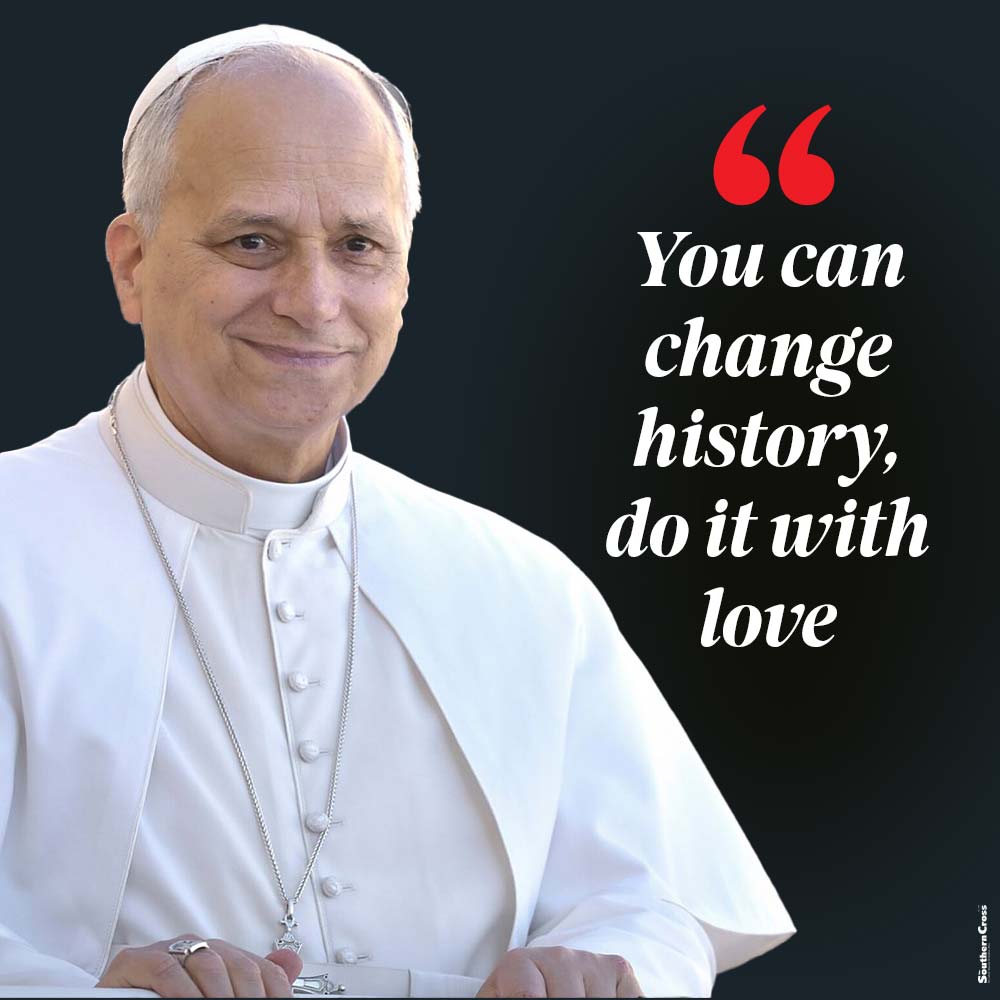
The day ended at the Plaza de Lima, where local authorities estimated that 600 000 people, most of them young, gathered for an evening vigil that closed with Eucharistic Adoration. Seated on a stage arranged like a living room, the Pope answered questions on faith and vocation and encouraged the young to seek out silence, in which, he said, “ideologies pass away, while truth remains.”
“In the face of the emptiness of indifference and compliance, before the violence of war and lies, you must be the sparks of a new humanity. You can change history, do it with love.”
The mission he entrusted to them, he added, was simply to be human — men and women of flesh and blood. The vigil was the prelude to Madrid’s “White and Yellow Night,” during which several of the city’s museums opened their doors free of charge to pilgrims ahead of the following day’s Mass.
Sunday, 7 June: Corpus Christi Mass — Plaza de Cibeles
On the Solemnity of Corpus Christi, Pope Leo XIV celebrated Mass in the Plaza de Cibeles and led a Eucharistic procession through the centre of Madrid, with Spanish authorities estimating that more than a million people attended. His homily reflected on the Eucharist as the living presence of Christ, given so that the faithful might enter into communion with the Father.
He noted the deep roots of Corpus Christi in Spanish history and devotion, and said this inheritance should not become a museum of the past to be visited but should remain a school of faith from which to draw even today. The procession, he said, is not only a matter of carrying out the monstrance but of allowing oneself to be drawn out of indifference.
“It is not merely a matter of bringing out the monstrance, but of allowing ourselves to be brought out of our selfishness and indifference, of a comfortable, private faith, so as to respond to his invitation to conversion, to change our perspective, and to welcome his presence which transforms us.”
He called on Spaniards to carry their faith into public life rather than keep it private. Later that day he met privately with members of the Augustinian order, to which he belongs, and addressed figures from culture, the arts, business and sport at the Movistar Arena.
Monday, 8 June: Address to the Spanish Parliament
On Monday, Pope Leo XIV addressed members of the Spanish Parliament at the Congress of Deputies — the first time a pope has spoken before that body. He had met the Prime Minister, Pedro Sánchez, earlier in the morning.
In his address, the Pope spoke of the dignity of human life from conception to its natural end, drawing on the sixteenth-century School of Salamanca, the Spanish theologians who helped shape the foundations of international law, while acknowledging that society and the Church had not always lived up to those principles.
“The defence of human life is neither a partisan issue nor a confessional interest: it is a goal of civilisation.”
He also addressed migration, freedom of conscience and the ethical questions raised by artificial intelligence, and repeated his view that every war is a defeat of the capacity to negotiate. The address was followed by a standing ovation of nearly seven minutes. He met the bishops of Spain later in the day at the offices of the Episcopal Conference.
Tuesday, 9 June: Midday Prayer at Barcelona Cathedral
Pope Leo XIV travelled to Barcelona on Tuesday, where he prayed the Midday Prayer at the Cathedral of the Holy Cross and Saint Eulalia and prayed at the tomb of the city’s co-patroness. He offered a prayer to Our Lady in Catalan.
Reflecting on the witness of Saint Eulalia, an early martyr of the city, the Pope called the faithful to be witnesses and prophets of unity, of welcome, of harmony and of peace in a world he described as torn by wars and divisions and a society that is increasingly fragmented and individualistic.
“Like the virgin Eulalia and so many other martyrs, we wish to say our ‘yes,’ ready if necessary to die to ourselves, to lose ourselves in order to find ourselves again, to renounce the superfluous in order to build upon what is essential and lasts forever.”
Such witness, he said, carries the same cost of self-denial that the martyrs accepted. In the evening he led a prayer vigil at the Lluís Companys Olympic Stadium, where he answered questions from young people.

Wednesday, 10 June: Mass at the Sagrada Família
On Wednesday, the centenary of the death of the Venerable Antoni Gaudí, Pope Leo XIV celebrated Mass at the Basilica of the Sagrada Família and blessed the newly completed Tower of Jesus Christ, the central spire that now makes the basilica the tallest church in the world. He prayed beforehand at Gaudí’s tomb in the crypt; Pope Benedict XVI had consecrated the basilica in 2010.
In his homily he described the basilica as an eloquent catechesis made of stones, colours and light, and spoke of art and beauty as channels of evangelisation. He also set out the incompatibility he sees between faith in Christ and the justification of violence.
“We cannot believe in Jesus and promote war. We cannot believe in Jesus and kill the innocent. We cannot believe in Jesus and abandon those who suffer, those who weep, those who flee from misery.”
The cross crowning the new tower, he said, should be read as a sign of charity and hope rather than of death. Earlier in the day the Pope had visited the Brians 1 prison and prayed the Rosary at the Abbey of Montserrat.
Thursday, 11 June: Gran Canaria — Meeting with Migrants
On Thursday the Pope flew to the Canary Islands, one of the main points of entry to Europe from the African coast and the part of the journey given over to migration. At the port of Arguineguín he met organisations working with migrants, heard testimony from survivors of trafficking, and laid a wreath of flowers on the sea in memory of those who have died on the crossing, as Pope Francis had done at Lampedusa in 2013. Speaking to the survivors, he affirmed a dignity that no captor can take from them.
“Your life does not belong to those who harmed you; your body does not belong to those who took advantage of you; your days do not belong to those who wanted to chain you to fear. Your life belongs to God, who has given you a dignity that cannot be taken from you.”
In the evening he celebrated Mass before about 40 000 people at the Gran Canaria Stadium. Drawing on Saint Augustine, he described the surrounding sea as an image of the difficulties of life, which can be crossed only when one is borne by the cross of Christ.
Friday, 12 June: Tenerife — Final Day of the Journey
On the final day of the journey, the Solemnity of the Most Sacred Heart of Jesus, Pope Leo XIV visited the Las Raíces reception centre in Tenerife and met organisations that work for the integration of migrants at the Plaza del Cristo de La Laguna. He spoke of welcome, describing a city without walls in which the heart too is called to open.
He then addressed those who profit from migration, calling on them to stop and to repent, and warning that they will answer before divine justice for every life exploited.
“Break those chains and free those you hold in bondage.”
He celebrated a closing Mass at the port of Santa Cruz de Tenerife before flying back to Rome that evening, bringing his fourth Apostolic Journey to an end.
Take-Away Points
• “You can change history, do it with love” — at the youth vigil in Madrid the Pope urged the young to be the sparks of a new humanity.
• “A school of faith from which to draw even today” — he asked Spain to treat its Catholic heritage as a living source rather than a relic of the past.
• “A goal of civilisation” — addressing Parliament, he framed the defence of human life as a civil concern rather than a confessional one.
• “Witnesses and prophets of unity” — at the tomb of Saint Eulalia, he linked Christian witness to the example of the martyrs.
• “We cannot believe in Jesus and promote war” — at the Sagrada Família, he set faith in Christ against the justification of violence.
• “Your life belongs to God” — to survivors of trafficking in the Canary Islands, he affirmed a dignity that cannot be taken away.
Sources:
2026-06-06 –https://www.vatican.va/content/leo-xiv/en/speeches/2026/giugno/documents/20260606-spagna-veglia-giovani.html
2026-06-07 – https://www.vatican.va/content/leo-xiv/en/homilies/2026/documents/20260607-spagna-messa-madrid.html
2026-06-08 – https://www.vatican.va/content/leo-xiv/en/speeches/2026/giugno/documents/20260608-spagna-parlamento.html
2026-06-09 –https://www.vatican.va/content/leo-xiv/en/homilies/2026/documents/20260609-spagna-preghiera-ora-media.html
2026-06-10 – https://www.vatican.va/content/leo-xiv/en/homilies/2026/documents/20260610-spagna-messa-sagrada-familia.html
2026-06-11 –https://www.vatican.va/content/leo-xiv/en/events/event.dir.html/content/vaticanevents/en/2026/6/11/spagna-accoglienza-migranti.html
2026-06-12 –https://www.vatican.va/content/leo-xiv/en/speeches/2026/giugno/documents/20260612-spagna-migranti-integrazione.html
Did you enjoy reading this article or find it helpful? We need your support to continue to bring the Good News to our country, so badly in need of God’s healing hand. Please consider subscribing to The Southern Cross Magazine or becoming a Southern Cross Associate


- Congratulations to Navi Pillay on Peace Prize - October 14, 2026
- 170 Years of Serving the Poor in South Africa! - October 14, 2026
- St Philip Parish Strandfontein, Cape Town 40th Jubilee - October 14, 2026