There are many beautiful hymns within the rich treasury of the Catholic Church—hymns that have carried generations through joy, sorrow, worship, awe and wonder. I love many of them. But never, in my wildest dreams, did I imagine that a new hymn would enter that treasury and touch me as deeply as Pilgrims of Hope, the official hymn of the Jubilee Year 2025.
I must admit, that I know very little about the technicalities of music. I simply know what music does to me. And this hymn does something extraordinary.
Every note, every phrase and every movement draws me closer to God. It stirs something deep within me. It can bring me to tears while simultaneously awakening an extraordinary sense of joy and hope. My family can attest to that.
How composer Francesco Meneghello and lyricist Pierangelo Sequeri brought melody and words together with such simplicity, beauty and theological depth is, to me, almost mind-blowing. I can only describe it as the work of the Holy Spirit. What else?

It reminds me of something our Bible College lecturer, Father Gregory Brooke O.P., taught us: Catholic hymnody does not merely speak of a Kingdom still to come. It proclaims a God who is already present and a people who are already journeying towards the fullness of that Kingdom.
We are a people on the way
The Jubilee’s visual identity expressed that beautifully. The logo, designed by Giacomo Travisani, depicts pilgrims travelling together in a boat, with an anchor and sails of different colours. It speaks of diversity, unity, nations and hope. The imagery and the hymn seem almost to sacredly converse with one another.
And then there was the Jubilee “package”: banners, candles, prayer cards, music sheets, logos and countless other materials.
But this was never simply a marketing campaign. It was hope being shared. And that distinction is important.
More than an emotional experience
A February 2026 article in The Southern Cross, in which Fr Thomas Plastow SJ considered the use of Hillsong music in Catholic liturgy, offered an important reminder: music that is popular or emotionally moving is not automatically suitable for the Mass.
Catholic liturgical music must be theologically sound, appropriate to the liturgical action, communal rather than merely individualistic, and capable of helping the congregation participate in the worship of the Church.
The Catechism of the Catholic Church calls the musical tradition of the universal Church “a treasure of inestimable value” (CCC 1156). It further teaches that sacred music fulfils its function when it is closely connected to the liturgical action, expresses prayer, encourages participation and reflects the solemnity of the celebration (CCC 1157).
This is precisely why Pilgrims of Hope deserves consideration as more than a Jubilee anthem.
It speaks of a people, not simply an individual. It speaks of pilgrimage, not merely personal emotion. It speaks of hope, not simply happiness. It belongs naturally to the life of the Church.
I experienced it before I understood it
I remember the first time we practised the hymn at church before Mass. Again and again and again. I had no idea then that those ordinary, repetitive moments would introduce me to one of my favourite hymns.
Later, I heard it sung at a junior school choir festival in which my daughter participated. Hearing those children’s voices sing Pilgrims of Hope moved me profoundly. There was something almost angelic about it. It reminded me that sacred music can carry theology into places that words alone sometimes cannot reach.
Music becomes memory. And memory can heal.
The Jubilee has ended. The journey has not
This is where my greatest concern lies.
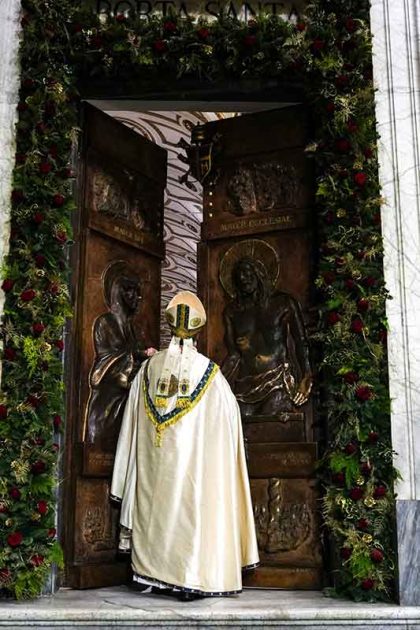
The Holy Doors have closed. The Jubilee Year has ended. But surely we must not close the door on the hope the Jubilee opened within us.
My fear has always been that Pilgrims of Hope could become another piece of promotional material” quietly packed away when the campaign ended. It simply cannot.
The vision of the late Pope Francis was surely bigger than a twelve-month emotional high. The Jubilee called us to become pilgrims of hope—to carry that hope into our families, communities, suffering world and daily lives.
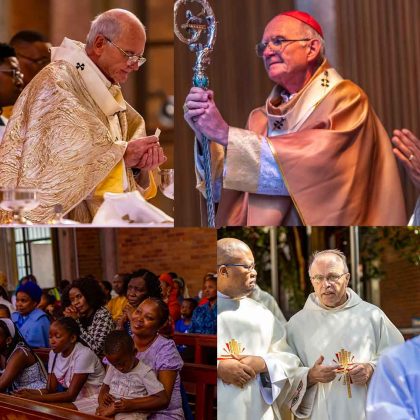
The responsibility now lies, in part, with our dioceses and parishes. We need to create opportunities to reconnect people with the spirituality of the Jubilee: through prayer, pilgrimage, catechesis, works of mercy, youth ministry, reconciliation, Scripture and music. And Pilgrims of Hope can help us do precisely that.
A missed opportunity for vocations?
There is another opportunity here that we dare not miss.
We constantly lament the decline in vocations to the priesthood and religious life. Yet the Jubilee may have given us something that vocation programmes often struggle to create: a connection point.
Imagine a young man or woman who experienced something profound during the Jubilee. Perhaps they walked through a Holy Door, went on pilgrimage, attended a youth gathering, retreat or Mass where Pilgrims of Hope was sung. Perhaps, in a moment known only to God, something stirred within them—a question about purpose, priesthood, religious life or a deeper relationship with Christ.
And then the Jubilee ended. The banners came down. The music stopped. The conversations moved on. The flame of hope may slowly have been extinguished—not because God stopped calling, but because we stopped creating opportunities for that young person to remain connected.
From a contemporary communication and recruitment perspective, the Church already has many of the tools organisations spend enormous resources trying to create: a recognisable identity, a compelling message, visual imagery, music, stories, shared experiences and emotional connection.
The “campaign” has already been laid out. The question is: what are we doing with the momentum?
This is where vocation directors, priests, youth ministers, parish leaders and diocesan pastoral teams could think strategically.
Pilgrims of Hope could become a bridge back to the Jubilee experience. A hymn could reopen a conversation. A pilgrimage could reconnect someone with an encounter. A retreat could ask again: What is God calling me to become?
What we need now is the pastoral imagination to connect the dots.
Not to market Christ as a product, but to ensure that an encounter with Christ is not lost because we failed to follow up.
Let the music/hymn play on
Imagine hearing Pilgrims of Hope months or even years from now. A parishioner who has forgotten some of the details of Jubilee 2025 hears those opening notes—and suddenly remembers:
The pilgrimage. The prayers. The people. The hope. That is the power of sacred music. It can become a bridge between what we experienced and what we are called to continue living.
Pilgrims of Hope can stand strongly on its own—not merely as an entrance or closing hymn, but appropriately within Communion celebrations, ordinations, pilgrimages, parish celebrations and even funeral liturgies, wherever its theology and character suit the occasion. It is theology in melody. Faith in song. Hope carried by memory.
So my humble appeal to dioceses, parish priests, liturgy committees, vocation directors, youth ministers, cantors, choirs and music ministers is simple:
Do not let Pilgrims of Hope become a relic of Jubilee 2025. Keep singing it. Teach it to our children. Let our young people discover it. Use it to reconnect people with the hope and vision of the Jubilee. Because the Jubilee was never ultimately about banners, logos, candles, prayer cards—or even a beautiful hymn. Those were the instruments. The message was hope. And hope is not something the Church should pack away when the campaign ends.
“Could God be calling me?”
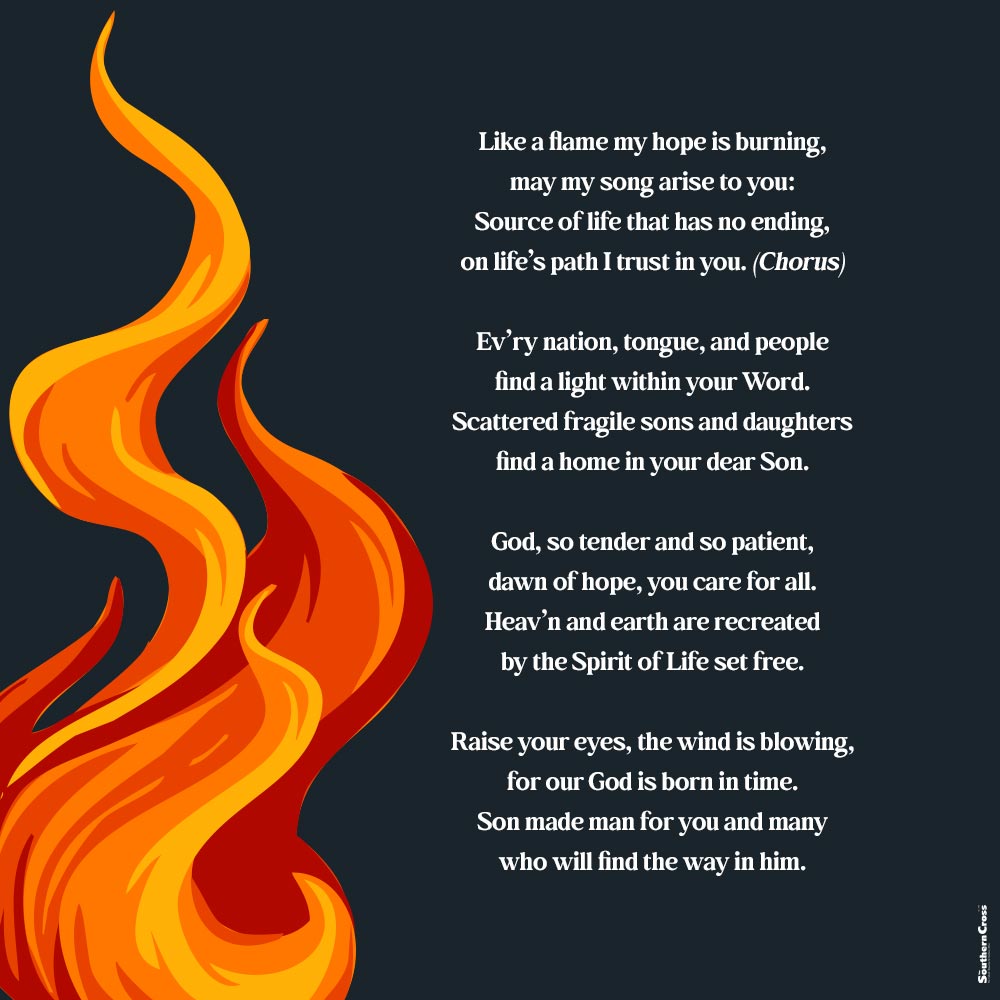
And perhaps the answer begins with the very words that opened the hymn:
“Like a flame my hope is burning…”
What if we kept that flame alive?
What if the hymn became more than a beautiful reminder of something that happened in 2025? What if it became a bridge between the experience of the Jubilee and the continuing journey of the Church?
A young person hearing it again might remember. A parishioner might rediscover hope. A family might begin to pray again. A vocation might be awakened. A heart might once again begin to listen.
Sequeri himself described the Jubilee hymn as a synthesis of the faith animating the Jubilee and said that, whenever it is sung, it can renew the emotion of the event and preserve its memory.
Perhaps that is precisely the gift we have been given. The Holy Doors may have closed. But the road remains open. The Jubilee Year has ended. But the pilgrimage continues.
And perhaps somewhere along that road, a young man or woman will hear that familiar melody, feel something stirring within, and ask the question that we must be ready to receive:
“Could God be calling me?”
Let us make sure the music has not died before they have had the chance to hear it. Let us keep the flame burning.
- When Wooden Spoons Become Instruments Of Grace - October 3, 2026
- All Things Bright and Beautiful — A Beautiful Hymn, An Ugly Reality - September 11, 2026
- Pilgrims of Hope: A Hymn We Must Not Leave Behind - August 14, 2026