Every month Fr Chris Chatteris SJ reflects on Pope Leo XIV’s prayer intention –
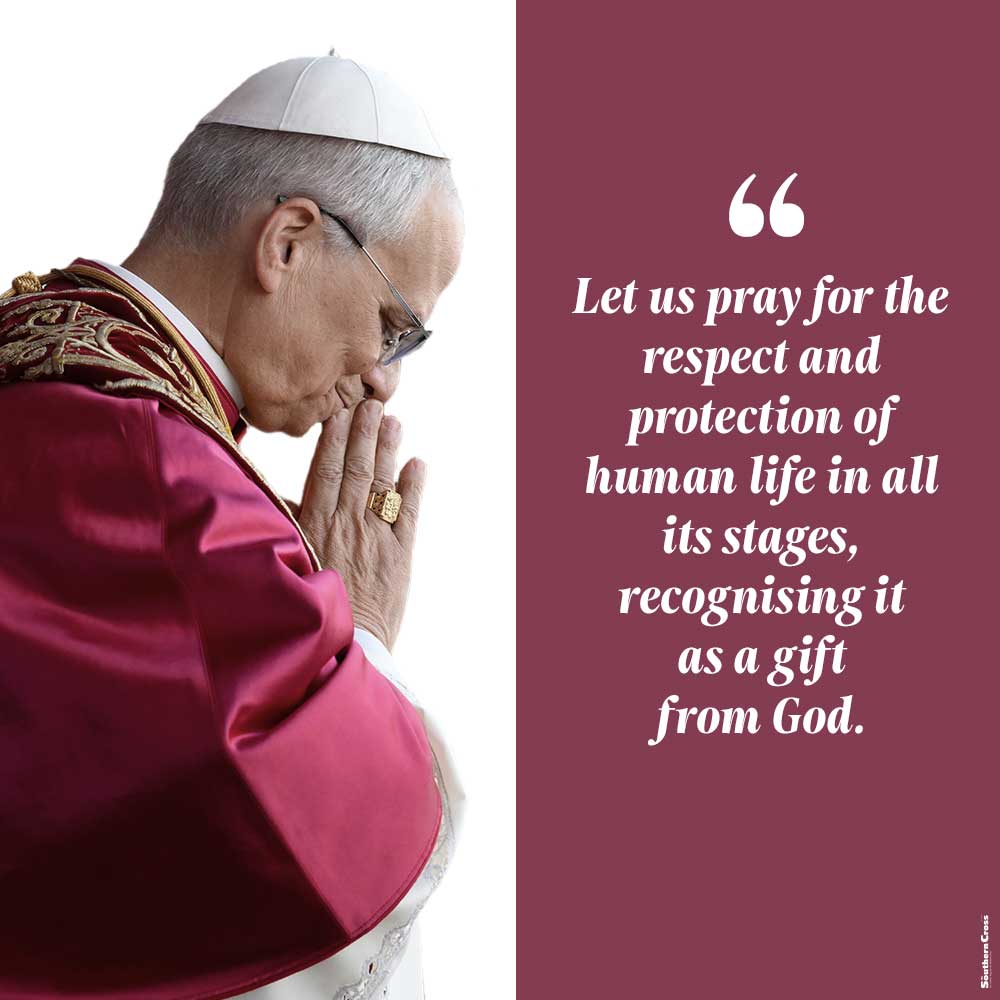
Intention: Let us pray for the respect and protection of human life in all its stages, recognising it as a gift from God.
‘Let us give thanks for the gift of life!” As someone who has lived abroad, it strikes me that this prayer is much more frequently uttered in our African context than in other places.

It’s a beautiful sentiment, but putting it into practice requires more than sentiment alone. For example, a few weeks ago, a young woman pedestrian was run over by a car and killed in our neighbourhood. She seems to have been the “collateral damage” when a driver decided to travel the wrong way up a one-way street and collided with vehicles going in the correct direction.
The statistics tell us that pedestrians make up over 40% of road fatalities in South Africa. In India the figure is 20%, in Australia 12%, and in the Netherlands 8%. An analysis of our dire statistics points to alcohol abuse and sheer carelessness on the part of both drivers and pedestrians as the main problems.
Overall, our traffic safety record is appalling compared to other countries, including developing ones. Our death rate is one of the highest in the world. The global average is 15-18 deaths per 100000 of the population; ours is 24,5 deaths per 100000. When it comes to alcohol-related traffic deaths, the statistics put these at 57,5%. When I was the superior of our students, I used to remind them that the most dangerous thing we could do in our country was to use the roads.
Do we in SA value life?
These statistics, so much higher than elsewhere, prompt me to ask the uncomfortable question: Do we South Africans value human life, including our own, less highly than people in other societies? According to the researchers Wilkinson and Pickett, in their fascinating book The Spirit Level, highly unequal societies have higher incidences of social problems, including life-threatening ones such as suicide, abortion, drug abuse and violence.
Their very plausible theory is that extreme inequality causes those at the bottom of the pile to devalue themselves and become depressed and despairing, leading to self-destructive behaviour. Clearly, a person who undervalues their humanity is much more likely to be careless about their own life. South Africa is one of the most unequal societies in the world and so, unfortunately, it fits the pattern outlined by Wilkinson and Pickett.
We also see this in many other areas where we fail to value human life. So-called “lifestyle diseases” are destroying lives, including young ones. Diabetes is the leading cause of death in South Africa — accounting for 5,8% of all deaths in 2023 — yet the disease is, in many cases, preventable and treatable. Malnutrition ends more young lives than we care to think about. And something to which we have perhaps become inured is our murder rate, which is the fourth highest in the world.
Why do we live like this? Why do we put up with this state of affairs? It’s all very well thanking God for the gift of life, but why do we tolerate a “culture” in which, in practice, we place such a low value not only on the lives of others, but also on our own?
These are questions for a collective examination of conscience which must lead to changes in personal and collective behaviour. This will reduce the senseless waste of life which currently characterises our society.

- Pray with the Pope: Beat the Stigma! - October 6, 2026
- Pray with the Pope: Life is Sacred - July 1, 2026
- Pray with the Pope: God Provides, We Squander - May 9, 2026