As the Diocese of Kimberley celebrates the Solemnity of the Assumption, a long-serving lay leader reflects on synodality, women’s witness and the responsibility of the baptised to build a living Church.
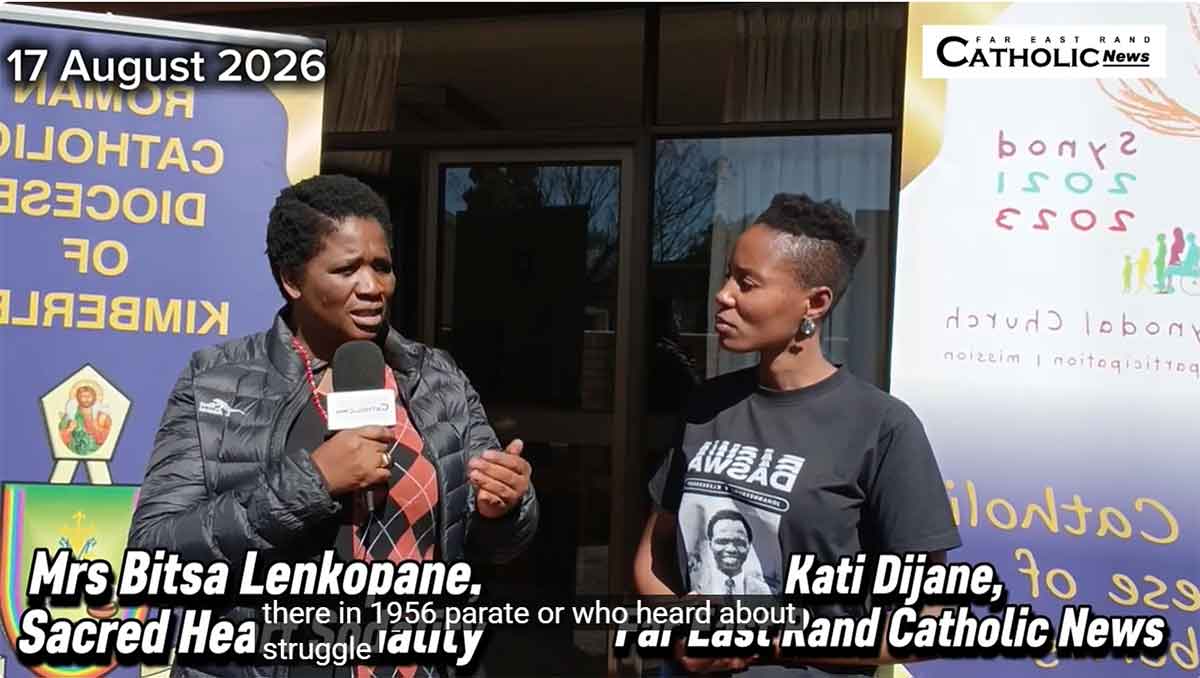
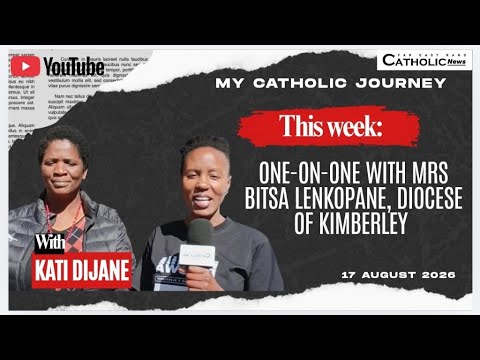
Bitsa Lenkopane in our interview says that being Catholic is not simply about attending Mass or belonging to a sodality. It is a call to participate, to serve and to become an active instrument of God’s love in the world. A long-serving member of the Sacred Heart Sodality in the Diocese of Kimberley, Lenkopane has held several leadership responsibilities in the local Church, including serving almost three terms as diocesan secretary and president. She has also served as secretary of the Bloemfontein Metropolitan Province and is currently part of the diocesan team responsible for promoting understanding of the Synod on Synodality. Speaking after the Diocese of Kimberley’s celebration of the Solemnity of the Assumption of the Blessed Virgin Mary on Monday, 17 August, she reflected on what the celebration meant for the faithful and on the growing responsibility of lay Catholics in the life of the Church.
‘The Church strengthens our families’
Lenkopane says that the Assumption celebration was more than a liturgical gathering. Having arrived on the Friday, she spent the night in prayer, praise and healing with other faithful. At the heart of the celebration was Mary, the Mother of God, whom she described as a source of strength and an example for Catholics. The experience, she said, renewed the faithful and strengthened their families. She believes the Church has a significant role to play in strengthening society, particularly at a time when families and communities face numerous pressures. For her, devotion to Mary ultimately points Catholics towards Christ, who remains “the source of our strength, protection and everything”.
‘We all matter’ in the life of the Church
One of the strongest themes in Lenkopane’s reflection is the role of lay Catholics. Through her involvement in the diocesan synodal team, she has become increasingly convinced that synodality must help Catholics recognise that every baptised person has a role in the Church’s mission. “We all matter in the affairs of the Church and in the decision-making of the Church,” she said, adding that this responsibility is rooted in the Church’s structures and teachings. The bishop has responsibility for the diocese, while the parish priest is the custodian at parish level. But lay people are essential in making the Church’s mission happen in their communities. She believes that understanding this responsibility is particularly important as the Church seeks to become more self-sustaining. Lay Catholics are called not only to pray and sing at Mass, but also to help ensure that their parishes are organised, have the necessary resources and remain active communities of faith. This includes caring for the priests who serve them. “It is the responsibility of the lay people to take care of their priests,” she said, describing priests as a gift given by their families to the Church.

Synodality begins at parish level
Lenkopane sees synodality as something that must be lived at the grassroots. She says that it is not enough for synodality to remain a concept discussed at diocesan or national level. It must be visible in the life of every parish, district and small Christian community. She points to structures such as parish councils, districts and deaneries as essential links in this process. “If St Anne Parish is not alive, then the Church is dead,” she said, using her own community as an example. The vitality of the Church, she argues, depends on what happens at the local level. A healthy parish contributes to a healthy diocese, which in turn allows the Church in Southern Africa to participate meaningfully in the wider mission of the universal Church. This, she says, is one of the important lessons emerging from the synodal journey: the Church belongs to its people, and therefore the people must participate.
From spectators to participants
Lenkopane believes the Church is moving away from an attitude in which Catholics expect the Church to provide everything for them. “Gone are those days when we thought the Church was something else; it will provide, it will sponsor,” she said. Instead, Catholics are being called to become part of a “self-propagating and self-sustaining” Church. For her, service to the Church is not about gaining recognition. Even though she holds a senior position in government, she insists that her Catholic identity comes first. “I might be a member of the executive, but that does not come first,” she said. Her position, she explained, came after her identity as a Catholic and active member of the Church. She sees her public position as another opportunity to be an ambassador for the faith. “I have to participate and be an ambassador of the Church,” she said.
Women, Mary and the unfinished work of 1956
Lenkopane’s reflections on the Assumption also intersected with South Africa’s celebration of 70 years since the historic Women’s March of 1956. As a government official involved in economic development, she reflected on the distance travelled since the women of 1956 marched to the Union Buildings to protest discriminatory pass laws. South Africa now has a Constitution and laws promoting equality and inclusion, she noted. Yet many of the challenges confronting women have not disappeared. Gender-based violence, poverty, substance abuse and economic hardship continue to affect women and families. Lenkopane adds that these struggles cannot be separated from the Church’s mission. She sees a parallel between the courage of the women of 1956 and Mary’s own witness of faith, humility, patience and perseverance. Mary, she said, responded to God’s call despite the suffering and uncertainty that accompanied her vocation. Her example therefore challenges Catholic women today to respond to the needs of others. “What do we do today as women in the Church?” she asked.
‘What do I give to actualise the love of God?’
Lenkopane says the answer lies in service. She believes that Catholic women, and indeed all lay Catholics, must look beyond what the Church can give them and ask what they can give to the Church and to society. Her own contribution extends beyond financial giving. She speaks of making herself available to bring people together and to respond to the needs she encounters in her community. The Church, she says, often becomes the place where society’s deepest wounds become visible. Priests hear the struggles of people in confession, including the pain caused by gender-based violence, alcohol abuse, drug abuse and poverty. The question for Catholics, therefore, is how they respond. Reflecting on the Assumption and Mary’s role in salvation history, Lenkopane poses a challenge to the faithful: if Mary gave her Son as an expression of God’s love, what are we prepared to give to actualise that same love today? For her, the answer is not complicated. It means loving others, caring for those who are vulnerable, making oneself available and becoming an ambassador of the faith.
A Church strengthened by its people
Lenkopane’s message comes at a significant moment for the Diocese of Kimberley, which is celebrating its 75th anniversary as a diocese and reflecting on its missionary heritage and future. Her understanding of synodality offers a practical vision for that future: a Church in which priests and lay people understand their responsibilities, parishes are alive, young people and women are included and Catholics recognise that baptism comes with a mission. Her story is also a reminder that lay leadership is not peripheral to the Church. It is part of its life.

- Cardinal Brislin: The Church must walk with families beyond the wedding day - October 19, 2026
- JHB leadership conference calls Catholics to shared responsibility for Church’s mission - October 19, 2026
- Justice & Peace call for responsible mining, youth empowerment and accountable leadership - October 16, 2026