Kigali Taught Me That Communication Is More Than Telling Stories
There are some events that end after you file and publish the final story. And then there are those that linger long after you have left the place where they happened.
For me, the SIGNIS World Congress in Kigali, Rwanda, was the latter.
When I travelled to Kigali for the 2026 SIGNIS World Congress, I knew I was going to cover a significant gathering of Catholic communicators. More than 300 participants from different parts of the world had gathered for the first SIGNIS World Congress ever to be held on African soil, under the theme, “Digital Communication for Cultural Harmony and Environmental Well-Being.”

But after landing at Kigali International Airport on 2 August, I soon realised that I was not simply going to Rwanda’s capital to report on an event. I was going to encounter a story. This is a story about a country that has lived through unimaginable pain and chosen the difficult path of rebuilding. A story about a Church trying to understand its mission in a rapidly changing digital world.
A story about African voices being heard on a global Catholic platform. And, perhaps most importantly for me as a journalist, a story about how communication can either divide people or help bring them together.
When I returned home a few days later, I left Kigali with a deeper understanding that the work of a Catholic communicator is not simply about producing content. It is about witnessing. Here’s a glimpse of my experience at the Land of a Thousand Hills:
Starting the week with the Virgin Mary
One of the most memorable parts of my trip there was travelling to Kibeho, which is about 155 km from Kigali. Kibeho is where the only Vatican-approved apparitions of the Virgin Mary in Africa took place in the 1980s. I travelled with a small group of participants to the pilgrimage site and upon our arrival, we met Monsignor Eugène Dushimurukundo, the rector of the Shrine of Our Lady of Kibeho and the vicar general of the Diocese of Gikongoro. He shared the history of the apparitions and, before our departure, presided over Mass in one of the chapels where the Virgin Mary is reported to have appeared.
The Congress officially began on 4 August at Sainte Famille Hotel, where communicators from around the world gathered. We were graced by the presence of bishops and dignitaries. And from that moment, I was in work mode, structuring questions in my head while recording speeches and taking pictures.
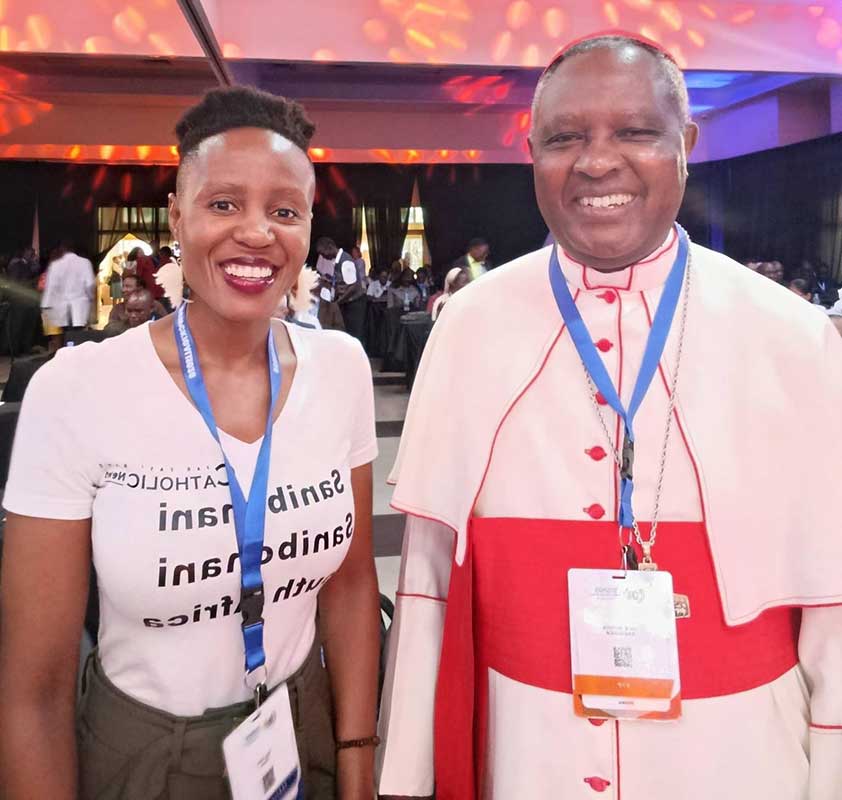
Listening to Cardinal Kambanda
One of the moments that made the Congress particularly personal for me was the opportunity to meet and interview Cardinal Antoine Kambanda, the Archbishop of Kigali. I had seen him in his public role as the host of the Congress, welcoming hundreds of Catholic communicators to Rwanda. But briefly interviewing him gave me an opportunity to encounter another dimension of the man entrusted with leading the local Church in Kigali. Cardinal Kambanda spoke about communication not merely as a professional function within the Church, but as an essential part of evangelisation, especially for the youth who have embraced and mainly communicate through social media.
As someone who has spent years working in journalism and Catholic media, I sometimes find myself thinking about communication in terms of deadlines, interviews, headlines, photographs, social media posts and audience engagement. But Kigali reminded me that communication is also about people: listening to their stories and giving them a voice. It is about creating spaces where people who have been separated by misunderstanding can encounter one another, especially Jesus Christ. The country has become a powerful symbol of rebuilding and hope following the 1994 Genocide against the Tutsi.
The choice of Kigali as the host city, to me, carried a significance that went beyond logistics. SIGNIS itself described Rwanda as a place where hope has emerged from adversity, making it an appropriate setting for conversations about communication, peace and reconciliation.
A conversation with Archbishop Fortunatus
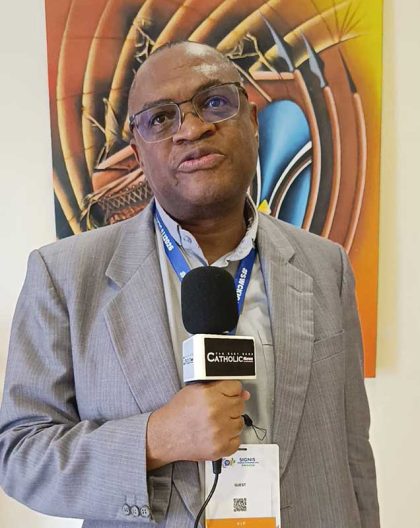
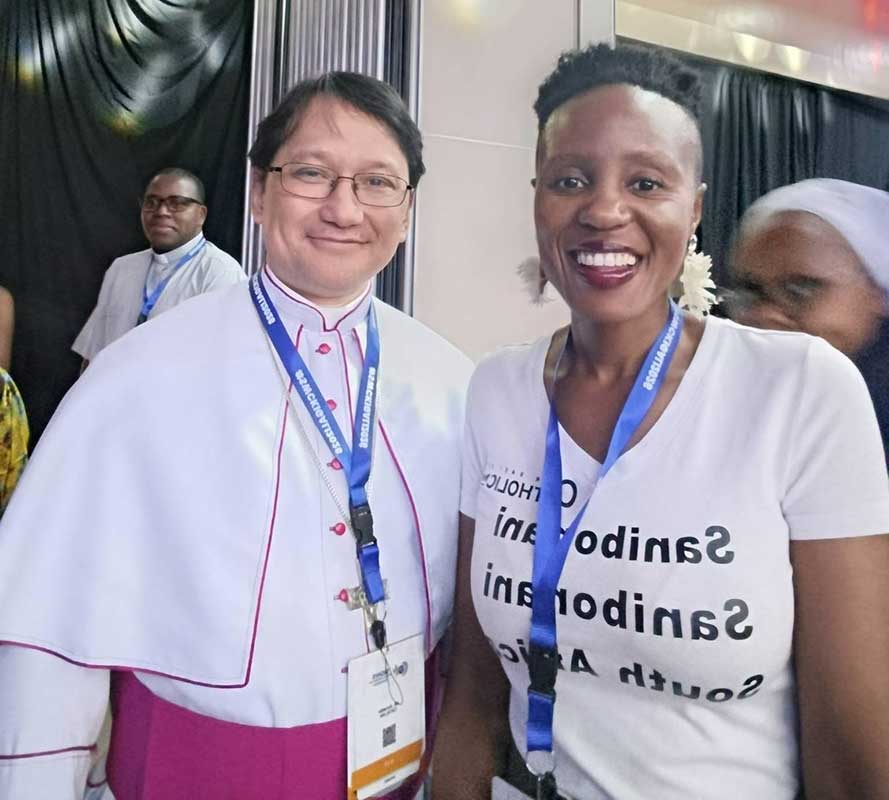
Another encounter that stayed with me on 5 August at the Kigali Genocide Memorial was my interview with Archbishop Fortunatus Nwachukwu, Secretary of the Section for First Evangelisation and New Particular Churches at the Vatican Dicastery for Evangelisation. I had already heard him speak during the first day of the Congress, but interviewing him personally gave me the opportunity to explore his understanding of the Church’s missionary responsibility in the digital age. The words that stood out from him were, “Build yourself because your platform is going to carry your identity, and if your identity is weak and faulty, your platform is also going to be weak and faulty.”
He was also speaking on the basis that media, particularly digital platforms that can evangelise, can also mislead, manipulate and divide. That is why his emphasis on formation was important, adding that the Church needed to form “digital evangelisers” in the same way that it formed other evangelisers. Communication cannot simply be about knowing how to operate a camera, edit a video or manage a social media account. It must also be about knowing how to communicate responsibly, ethically and with a genuine missionary spirit, he stated.
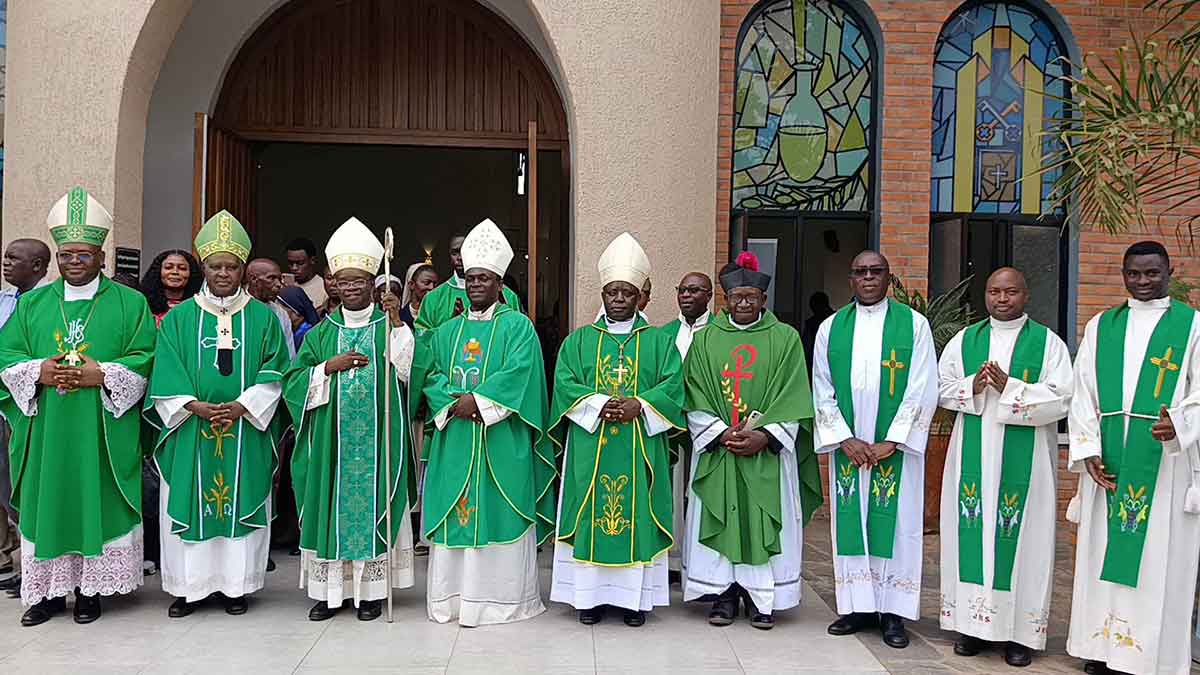
When history speaks
One of the most powerful experiences of the Congress was visiting places connected to Rwanda’s history and faith.
It is difficult to walk through Kigali without encountering reminders of the country’s past. The beauty of the city is striking. Kigali is clean, orderly and vibrant. Its hills stretch into the distance, while its modern buildings and growing digital infrastructure tell a story of a country looking towards the future. But beneath that progress is a painful history. The visit to the Kigali Genocide Memorial was deeply sobering.
At the place, I was reminded that as much as media can build bridges, it can also become a weapon. Propaganda can dehumanise. Hate speech can normalise violence. Repeated lies can make the unthinkable appear acceptable. But history, told at the Memorial’s walls, plaques and by its people, is an opportunity to learn, especially where media is concerned, and build a better future.
“Rome is also ours”
Another moment that stayed with me came during the Congress when Archbishop Nwachukwu reflected in his homily during Mass on the Basilica of St Mary Major and the story of Antonio Manuel Nvunda, an ambassador from the Kingdom of Kongo who travelled to Rome in the early seventeenth century. The ambassador died shortly after arriving in Rome and was buried with honour at the basilica. Archbishop Nwachukwu used the story to remind participants that Africa’s relationship with the Catholic Church and the Holy See is not something new. “Rome is also ours,” he told participants.
The fact that the SIGNIS World Congress was being held in Africa for the first time was itself significant. Africa was not simply hosting, it was contributing to the future of Catholic communication.
A Bright Future for Africa
Then, on Friday, Father Walter Chikwendu Ihejirik of Nigeria was elected President of SIGNIS World, while Father Fidèle Mutabazi, Secretary of the Commission for Communication of the Catholic Bishops’ Conference of Rwanda, was elected President of SIGNIS Africa. Their elections marked a fitting conclusion to the first-ever SIGNIS World Congress to be hosted on African soil, highlighting the growing contribution of the African Church to Catholic communications worldwide. It was a great privilege having an interview with them about how they planned to lead Signis on a continental and global level during their tenure.
What I brought home from Kigali
When I boarded my flight home, I realised that I was carrying much more than notes, interviews, photographs and memories. I was carrying the voices of people I had met from different continents. I was carrying the words of Cardinal Kambanda, who reminded me of the responsibility of communication in a country that has experienced the destructive power of division. I was carrying the challenge from Archbishop Nwachukwu to take the Church’s missionary mandate seriously in the digital spaces where people live.
I was carrying the memory of more than 300 Catholic communicators gathering in Africa and discovering that, despite our differences, we share a common mission. And I was carrying a renewed understanding of my own work. Catholic journalism is about people too, but it also carries a responsibility to point beyond ourselves. Our stories can give people hope and our platforms can amplify voices that might otherwise remain unheard. The Signis World Congress reminded me that some stories cannot simply be written. They have to be experienced. And, ultimately, they are tools for bringing people closer to one another and closer to God.

- SECAM Seeks African Participation in World Youth Day 2027 - September 24, 2026
- ‘Carlo is an instrument of God’: His mother reflects on the first year of her son’s sainthood - September 11, 2026
- Durban youth urged to keep their lamps burning for Christ - August 31, 2026