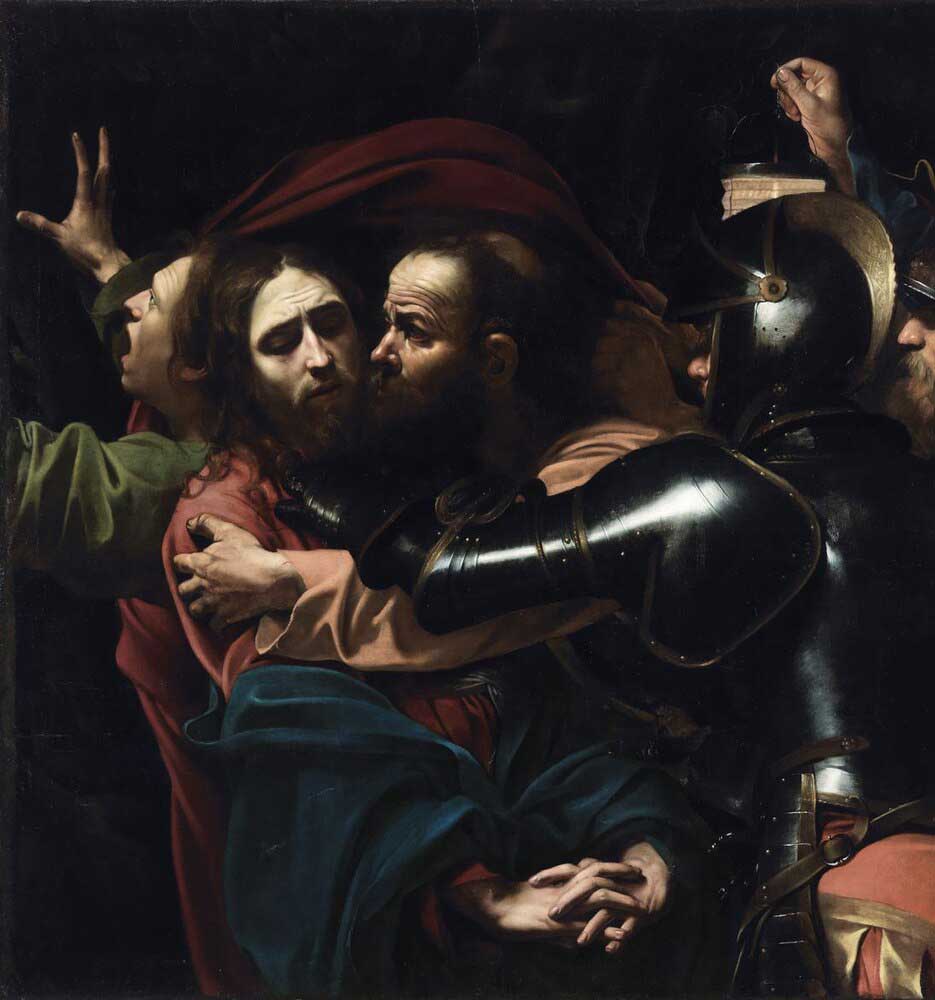
Question: If Jesus knew that Judas would betray him, why did he choose him to be one of the Twelve Apostles? Also, why did the Jewish authorities need Judas to identify Jesus in the Garden of Gethsemane? Wasn’t Jesus well-known already, especially after the triumphal entry into Jerusalem?
Answer: The idea that Judas was somehow destined or forced to betray the Lord is not compatible with Catholic teaching. God does not predestine anyone to sin. He wills everyone to be saved and to come to knowledge of the truth” (1 Timothy 2:4). If Judas was merely a pawn, set up to fail, then he would not have been truly free — and without freedom, there can be no real sin.
Judas was freely chosen by Jesus to be one of the Twelve (John 6:70), just as all the others were. God, in his divine foreknowledge, knew what Judas would one day choose — but knowing it is not the same as willing it.
Judas had every opportunity to love and serve Christ faithfully. He heard the same teachings, saw the same miracles, was even entrusted with responsibilities (John 12:6). But for reasons the Gospels hints at — greed, pride, resentment, perhaps disappointment that Jesus was not the political Messiah he expected — Judas chose the course of betrayal.

The Church Fathers often saw in Judas a mirror of human freedom: the Lord never compels us, but respects our choices, even when those choices lead to tragedy.
St Augustine put it like this: God permitted Judas’ betrayal not because he willed Judas to sin, but because he could draw a greater good from it — the Passion and our redemption. Like any of us, Judas was offered divine mercy, but in his despair rejected it, to the point of taking his own life (Matthew 27:5).
The betrayal in the Garden
As for why Judas was needed at Gethsemane to identify Jesus, we must remember that this was centuries before photography or even realistic portraits were available, making easy identification of individuals possible.
To Roman soldiers or temple guards, Jesus would have been just one more Galilean man in a group, at night in a garden lit only by the moon and flickering torches. The triumphal entry into Jerusalem had been a public moment, but the crowd that had hailed him was not the same as the arresting party. The authorities wanted certainty and discretion since nobody knew yet that Jesus’ popularity would fail to translate into resistance to his arrest and planned execution.
On a deeper level, the Church Fathers also saw in Judas’ kiss a fulfilment of Scripture: “Even my close friend in whom I trusted, who ate my bread, has lifted his heel against me” (Psalm 41:9). The kiss was an act of a friend betraying the Friend. Christ thus entered into the full weight of human treachery so that nothing of our human sin was left unredeemed.
Published in the March 2026 issue of The Southern Cross Magazine

- Pope: Marriage in the light of Christ’s love - October 22, 2026
- Queen of the Most Holy Rosary Parish Celebrates 70 Years of Grace - October 21, 2026
- Mass Readings: 25 October – 1 November, 2026 - October 20, 2026