The Church in Africa is determined that the continent’s young people should not merely attend World Youth Day 2027 in Seoul, South Korea, but should arrive prepared, engaged and ready to return home as agents of hope, peace and evangelisation.
That was one of the key messages emerging from the second international preparatory meeting for World Youth Day Seoul 2027, held in Seoul and Incheon from September 14–17, where more than 400 people from more than 100 countries participated. The gathering brought together representatives of more than 160 dioceses, religious congregations and ecclesial movements, together with members of the Seoul organising committee.
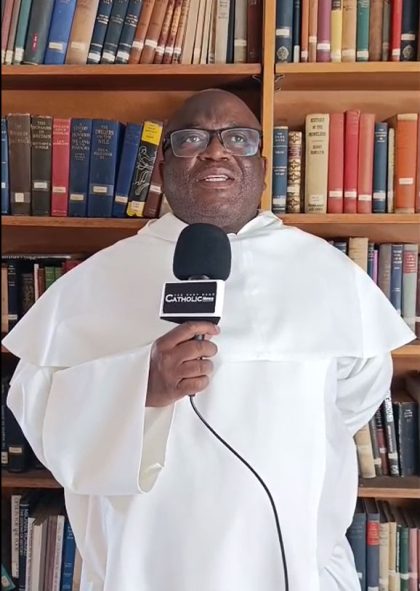
Among those taking part was Mavis Bonsu of the Symposium of Episcopal Conferences of Africa and Madagascar (SECAM), the continental body of the Catholic Church in Africa.
For Bonsu, SECAM’s presence at the meeting was about much more than receiving information about the next World Youth Day. It was about ensuring that the Church in Africa has a coordinated and practical plan for preparing its young people for Seoul.

“Our major priority for the second preparatory meeting here is to have the greatest clarity, a strong coordination and also come out with a practical roadmap to guide the Church in Africa,” Bonsu explained.
The aim, she said, is for African young people participating in World Youth Day in August 2027 not to be present merely “symbolically as an event”, but to participate meaningfully — sharing their gifts, knowledge and experiences with the universal Church.
A continental voice for the Church in Africa
SECAM was established from the desire of African bishops to create a forum through which the Church in Africa could speak with one voice on matters affecting the continent and the universal Church. It was officially launched in Kampala, Uganda, in 1969 during Pope Paul VI’s historic visit to Africa. Today, its mission includes fostering communion, collaboration and joint action among the Episcopal Conferences of Africa and its islands.
Its role extends beyond purely ecclesial matters.
SECAM works on issues including integral human development, peace, justice, social development, dialogue and the dignity of the human person. It also has observer status at the African Union, enabling the Church to engage at continental level on matters such as governance, sustainable development, peace and human security.
Bonsu pointed to examples of this work, including capacity-building for Church leaders in Zambia ahead of elections, carried out in collaboration with the African Union and electoral authorities. SECAM has also worked with young people and women in the Congo Basin, encouraging environmental awareness and action to protect the region.
This broader mission provides important context for SECAM’s involvement in World Youth Day preparations. The organisation sees youth ministry not simply as preparing young people for a Church event, but as forming young Catholics who can contribute to the transformation of their communities.
“For us, this is the message we want to leave to our youth,” Bonsu said, referring to the challenges of conflict, insecurity and division across Africa. “Christ is our only source of hope, peace and reconciliation.”

From Seoul to the African continent
The second preparatory meeting was designed to move World Youth Day preparations from a global vision towards practical implementation.
The four-day gathering introduced participants to the registration system, pilgrim app, Days in the Dioceses programme and the practical journey pilgrims will undertake in Korea. Delegates also visited possible venues and experienced aspects of Korean Church and culture.
For SECAM, however, the important question was how this information would translate into African dioceses, parishes and youth communities.
Bonsu said African representatives planned to develop a continental roadmap to harmonise youth participation across the continent. A standardised programme of formation and retreat is also being considered so that young people can be spiritually prepared before travelling to Korea.
There are also plans for Africans attending the World Youth Day to gather during the event, celebrate their culture and roots, and reflect on what it means to be part of the African Church within the universal Church.
This approach reflects a wider message coming from the Seoul meeting.
Archbishop Peter Soon-taick Chung of Seoul reminded delegates that they were not simply organising a large gathering. “You are not simply gathering participants,” he said. “You are inviting a young person to encounter the Lord.”
Cardinal Kevin Farrell, Prefect of the Dicastery for Laity, Family and Life, similarly described World Youth Day as a pilgrimage rather than simply an event. At the opening Mass, he said the pilgrimage leading towards August 2027 had already begun.
For Africa, that pilgrimage has already moved into local communities.
Bringing the spirit of World Youth Day to Africa
One of the challenges identified by SECAM is that many young Africans do not have the opportunity to travel to international World Youth Days.
Bonsu explained that SECAM is therefore working towards an African Youth Day, which would allow young people who cannot travel to the international event to experience a similar encounter of faith closer to home.
But rather than immediately launching a continental event, SECAM has chosen to learn from regional experiences.
The first of these initiatives was the West Africa Youth Days, organised by the Regional Episcopal Conference of West Africa (RECOWA/CERAO) in Accra, Ghana, from September 7–12, 2026.
According to SECAM, more than 3,500 young people gathered at Achimota School for the historic event under the theme: “Take Courage (John 16:33): Catholic Youth as Actors and Agents of Peace and Hope in West Africa.”
Bonsu said the West African initiative provided an opportunity to test the concept, understand challenges and gather experiences that could eventually inform a wider African Youth Day.
The gathering brought together young people from across West Africa to encounter one another, celebrate their faith and reflect on how they can respond to insecurity, conflict and social challenges affecting the region.
“West Africa needs you”
SECAM President Cardinal Fridolin Ambongo Besungu placed the West Africa Youth Days firmly within the broader mission of the Church on the continent.
Addressing the young people, he described the gathering as a “historic moment” for the Church, West Africa and Africa as a whole. He told them that the bishops of West Africa had made the gathering possible because they believe in young people’s “faith, energy, creativity and capacity to transform society.”
His message was direct: “West Africa needs you. Our continent needs young people who are not afraid to dream, to serve and to build.”
Cardinal Ambongo called on young people to become voices of hope and agents of peace in communities affected by violence, insecurity, poverty, unemployment and conflict.
His message echoes SECAM’s broader vision for African youth: young people are not simply recipients of pastoral programmes but protagonists in the life and mission of the Church.
Preparing young people before, during and after Seoul
For Bonsu, this is ultimately what SECAM hopes to achieve through its World Youth Day preparations.
The goal is not for African pilgrims to experience an inspiring week in Seoul and then return home unchanged. Instead, the journey should begin before World Youth Day, continue during the gathering and bear fruit afterwards.
SECAM is therefore working with national Episcopal Conferences, youth coordinators and chaplains to ensure that the continental roadmap reaches dioceses, parishes and local youth communities.
Young people who cannot travel to Korea will also be encouraged to participate spiritually through prayer and other forms of engagement.
“When they go back home to their communities and countries after the World Youth Day,” Bonsu said, “they will be agents of hope, agents of peace and courageous to witness the Gospel of Christ rooted in the Catholic social teachings.”
That vision places World Youth Day within a much larger African pastoral project.
From Seoul to Accra, and eventually to communities across the continent, SECAM is seeking to build a generation of young Catholics who are connected to the universal Church but deeply rooted in the realities of Africa.
As Cardinal Ambongo reminded West African youth, the continent needs young people prepared to dream, serve and build. And as Cardinal Farrell reminded those preparing for Seoul, the pilgrimage has already begun.
For Africa’s young Catholics, the real measure of World Youth Day 2027 may therefore not be how many make it to Seoul, but what happens when they return home — and how courageously they live out their faith in the communities that need them most.
Source note: The interview with Mavis Bonsu states that 15 African countries participated in the West African deliberations; recent SECAM reporting confirms that more than 3,500 young people attended the West Africa Youth Days in Accra. The Seoul preparatory meeting was attended by more than 400 participants, including about 300 representatives from more than 160 dioceses, congregations and ecclesial movements, plus around 100 organising committee staff and volunteers.

- Bishop Nyandoro calls on religious leaders to defend human dignity and advocate for peace - October 14, 2026
- Father Chaka Motanyane: Support Matrics 2026! - October 13, 2026
- SECAM Seeks African Participation in World Youth Day 2027 - September 24, 2026