The opening Mass of the African Synodality Initiative’s workshop on Tuesday, 27 October 2026, began with a call to service and transformation.
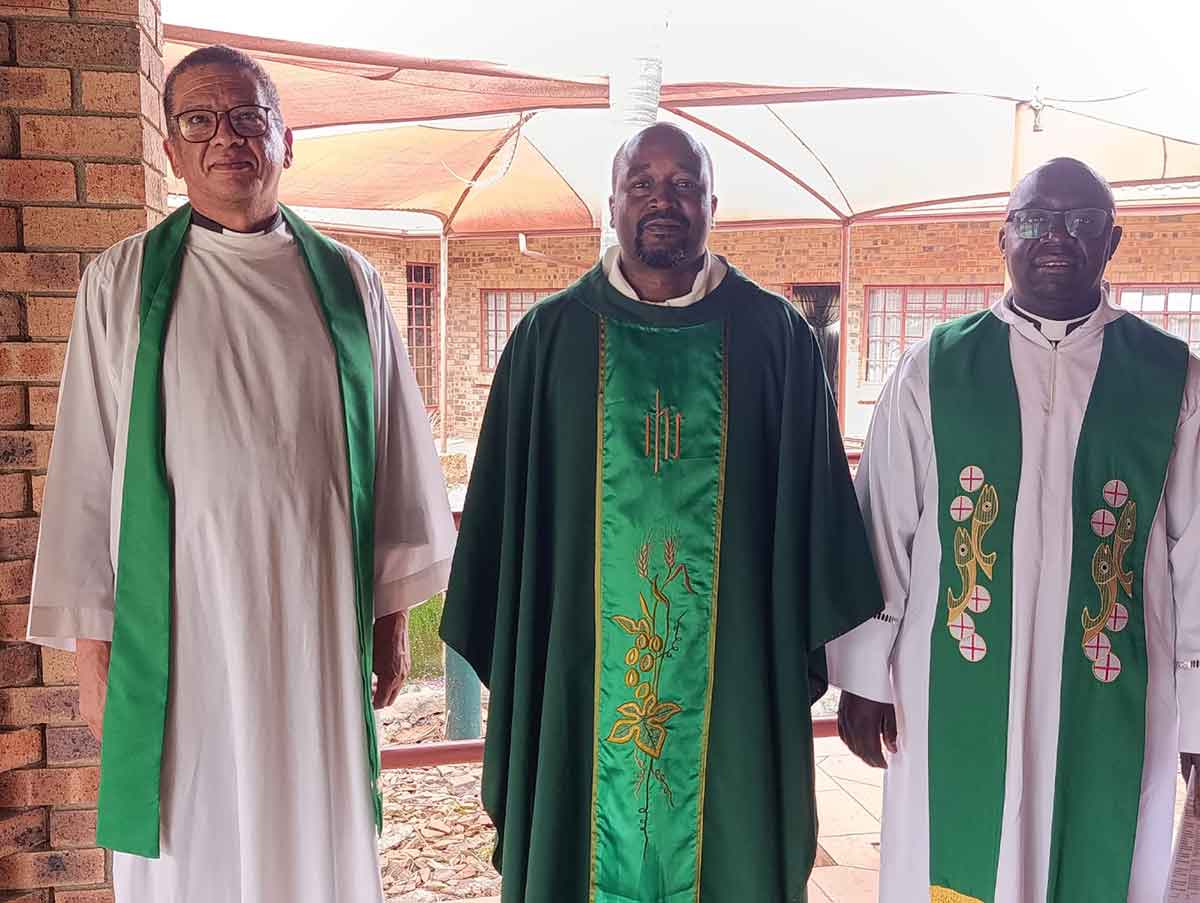
In his homily, Father Canaan Dumbura, the rector of Sacred Heart Pre-Major Seminary (widely known as Mazowe Seminary) in Zimbabwe, challenged seminary formators and rectors to create an environment in which future priests can grow in faith and become effective servants of the people of God.
Drawing on the readings of the day from St Paul’s Letter to the Ephesians and the Gospel of Luke, the rector, who presided over Mass, reflected on the importance of mutual respect, the responsibility of nurturing faith and the often-unseen work of formation in the life of the Church. He reminded the rectors and participants that priestly ministry, like the vocation of marriage, is rooted in service, calling on those entrusted with the formation of future priests to approach their responsibilities with love, dedication and humility.
Reflecting on St Paul’s teaching about the relationship between husbands and wives, Father Dumbura explained that love and respect should not be understood as opposing responsibilities, but as expressions of a shared commitment to serving one another. “If you love someone, you respect them,” he said, highlighting the relationship between love, respect and service. He extended this principle to the priesthood, explaining that priests choose a life dedicated to serving the people of God. “For our context as priests, we take this journey, this route. We choose this life to serve the people of God,” he said.

Joining Father on the altar for the Mass celebration were Father Enrico Parry, the director of the secretariat for IMBISA, and Father Anselm Tafara Musemwa, the rector of Chikwingwizha Minor Seminary in the Diocese of Gweru, Zimbabwe. Fourteen other priests concelebrated Mass, which offered an important starting point for the workshop. The workshop started on Tuesday, 27 October 2026, at Padre Pio Retreat Centre in the Archdiocese of Pretoria and will end on Friday, 30 October 2026.
The synodal journey calls the Church to deepen communion, participation and mission, encouraging its members to listen to one another, discern together and recognise the gifts and responsibilities of all the baptised. In this context, Father Dumbura’s emphasis on service reminded those present that formation must prepare future priests not simply to lead communities, but to accompany and serve them.
Nurturing the seeds of faith
Reflecting on the Gospel’s comparison of the Kingdom of God to a mustard seed, Father Dumbura reminded participants that even the smallest beginnings can develop into something significant when given the opportunity to grow. He noted that the early Church began with a small group of believers, yet carried within it the potential to grow and spread the message of Christ. Applying this image to seminary formation, he challenged formators and rectors to recognise the potential within every seminarian and to take responsibility for creating the conditions necessary for spiritual and human development. “As formators in the seminaries, this may also be our prayer: that the seed that is already planted may continue to grow,” he said. He emphasised that formators have a responsibility to nurture this seed through guidance, encouragement and the creation of a conducive environment in which future priests can mature in their vocation.
He recalled the experience of a bishop who, after his episcopal ordination, expressed concern about the possibility of his diocese becoming stagnant under his leadership. Rather than focusing on his new position, the bishop was concerned about whether the local Church would continue to grow. According to Father Dumbura, this concern reflects a responsibility shared by seminary formators, which is ensuring that the Church’s future remains vibrant through the formation of priests who can faithfully serve their communities.
Formators called to be agents of change
The priest also reflected on Jesus’ comparison of the Kingdom of God to yeast mixed into flour, describing it as an agent that transforms what surrounds it. Although yeast may not be visible once it has been mixed into the dough, its effect becomes evident as the dough rises. In the same way, he explained, the work of seminary formators may not always receive public recognition, but its impact can be seen in the lives and ministry of the priests they help to form. “Yeast may not be visible, but the change will always be visible,” he said. He acknowledged that formators are not always recognised when the priests they have trained serve their communities well. Their work may instead attract attention when difficulties arise. Nevertheless, he encouraged them not to become discouraged by the absence of recognition, but to remain committed to their mission of bringing about growth and transformation.
“Our task is to bring that change, that conversion,” he said, urging formators to allow their encounters with seminarians and the wider people of God to become agents of transformation through Christ.
The workshop for rectors in seminaries in the IMBISA region is organised by the African Synodality Initiative for the synodality curriculum development, as seminaries have an important role in helping future priests understand that leadership in the Church is inseparable from service and a willingness to listen and learn alongside the people they serve.
Some of the topics in the programme this week include synod and the process of synodality in the life of the Church: Introduction to the Synod on Synodality; rooting synodality in seminary formation: Understanding synodality as a constitutive dimension of the Church; and Introduction of the syllabus: Draft syllabus for review and adaptation.

- African Synodality Initiative’s workshop opens with call to service and transformation - October 27, 2026
- Mass Readings: 1 November – 8 November, 2026 - October 27, 2026
- Pope: The One True God Wants to Become our God - October 26, 2026