There is more to being Catholic than going to Mass on Sunday. There’s learning the faith, and there’s sharing it, and you cannot do the second without the first.
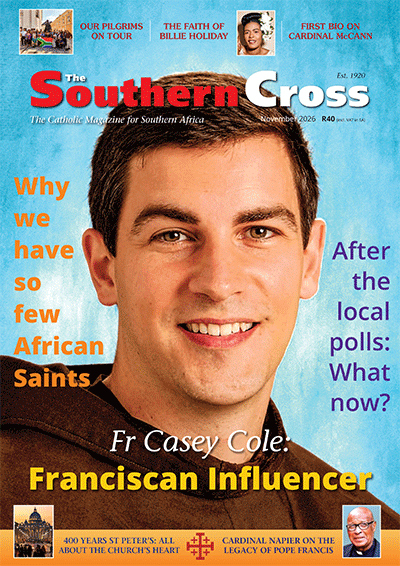
Parishes know this. The first newsletter of the year from the Archdiocese of Cape Town had a Parish Alive summit, ministry training and a youth conference on its contents page, and a youth section headed “Formed to Lead, Sent to Serve”.
Archbishop Sithembele Sipuka, who did not grow up Catholic either, told The Southern Cross in June what learning did for him: “Once I learned about the Eucharist, it felt so real for me. What you learn about Christ being present in the Eucharist, it is not just a theory. It really resonates with me.” For most converts, and for plenty of cradle Catholics, that learning starts with a book.
As a convert, I am often asked which books to start with, so I made a list. Most are beginner-friendly.

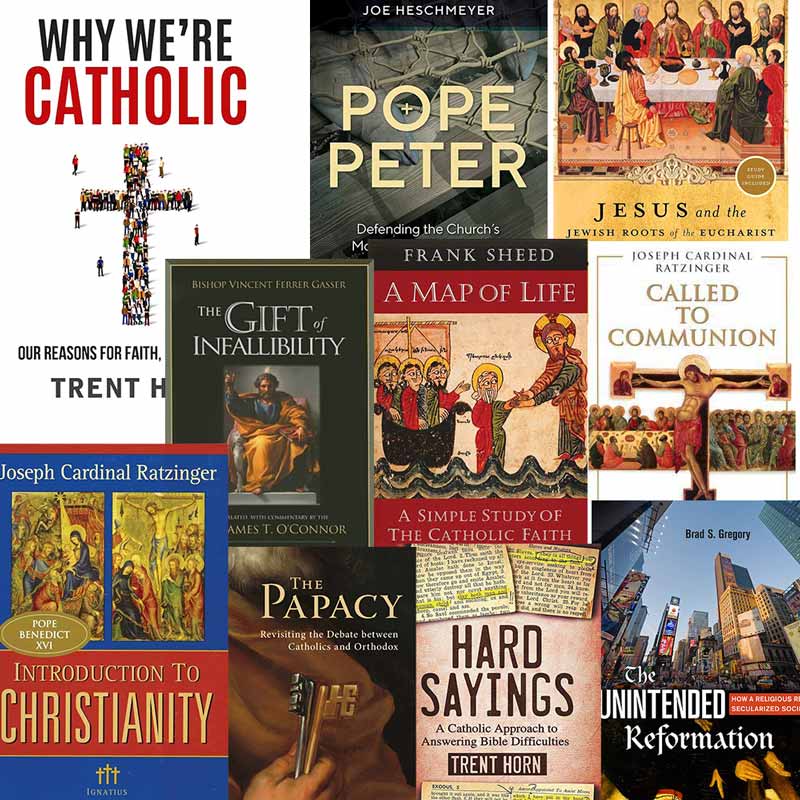
1. WHY WE’RE CATHOLIC, by Trent Horn
Probably the top book on Catholic apologetics out there. Accessible enough for a complete beginner, with short chapters that each take one question, from why believe in God to why trust the Bible and why have a Church at all. If you only buy one book to give away, or if it’s your first apologetics book, make it this one.
2. A MAP OF LIFE, by Frank Sheed
Sheed wrote one of the best summaries of Catholicism ever put to pen, and did so in a way that is deeply heartfelt and accessible. If you find reading difficult, but still want an impactful book, this is the greatest work you could ever read.
3. HARD SAYINGS, by Trent Horn
Horn again, this time focusing on Bible difficulties. He goes through the passages that trip people up, from apparent contradictions to the violence in the Old Testament, and explains each one clearly. Good to keep nearby and dip into as the questions come up. Great for atheists, sceptics, and faithful Catholics alike.
4. POPE PETER, by Joe Heschmeyer
The best book on the papacy for most readers. Heschmeyer was a lawyer before he became an apologist, and it shows: he lays out the biblical evidence, then the early Church, then the usual objections, and he is fair to the other side throughout.
5. CALLED TO COMMUNION, by Joseph Ratzinger
The future Benedict XVI on what the Church actually is: why it is visible, why it has bishops, and why Peter. Great for anyone who has been told they can love Jesus without the Church, and one I would recommend to any Catholic.
6. THE PAPACY, by Erick Ybarra
Ybarra takes the papacy question to the Orthodox, whose objections are different from Protestant ones and come up online more than you would think. It is long and detailed, more of a reference book than a cover-to-cover read, and the most thorough treatment of the subject I know of.
7. THE GIFT OF INFALLIBILITY, translated by James T. O’Connor
The official explanation of papal infallibility, given to the bishops at the First Vatican Council in 1870 by Bishop Vincent Gasser on behalf of the commission that drafted the definition. A little more technical than the rest of the list, but short, and the clearest account of the doctrine you will find, straight from the source. If infallibility keeps coming up in your conversations, or you have ever wondered what it actually means, this is the book.
8. JESUS AND THE JEWISH ROOTS OF THE EUCHARIST, by Brant Pitre
Pitre reads the Last Supper the way a first-century Jew would have heard it, through the Passover, the manna and the bread of the Presence. An easy and fascinating read, and it will change how you hear the words of consecration at Mass. Especially helpful for anyone from a Jewish background, and for any Catholic who wants to know how the Mass grew out of the faith of Israel. His “Jesus and the Jewish Roots of Mary” does the same for Our Lady.
9. INTRODUCTION TO CHRISTIANITY, by Joseph Ratzinger
Ratzinger’s lectures on the Apostles’ Creed, given at Tübingen in 1967 and published the next year. He goes through what Christians believe, article by article, and it is one of the most profound books on the faith of the last century. The hardest book on the list, so I would save it for after a few of the others, but every Catholic should read it at some point.
10. THE UNINTENDED REFORMATION, by Brad S. Gregory
Gregory, a historian at Notre Dame, traces how the religious arguments of the sixteenth century ended up shaping the secular world we live in today. It is an academic book and reads like one, but if you have ever wondered how the West got to where it is, this is the book that explains it. Great for anyone interested in history, Catholic or not.
Further Reading
The Catechism of the Catholic Church sits behind everything above and belongs on the shelf first. Benedict XVI’s “Church Fathers”, collected from his Wednesday audiences as pope, is the painless way into the first centuries, and Heschmeyer’s “The Early Church Was the Catholic Church” carries on from there. For arguments with unbelievers, which this list mostly leaves aside, Peter Kreeft and Ronald Tacelli’s “Handbook of Christian Apologetics” has an answer to nearly every objection, and C.S. Lewis’s “Mere Christianity” is still the book for the friend who is not sure about God at all.

- Ten Books for Catholic Apologetics - October 26, 2026
- Why I Chose Catholicism: 7 Reasons - October 7, 2026
- Why I Am Not an Atheist: The Three M’s - September 28, 2026