On early Church councils, John Henry Newman, the Council of Trent, and how the Church holds together over generations
Corné Gieselbach is a theologian and author. He is a PhD researcher in historical dogmatics at St Mary’s University, Twickenham, where his research concerns the Eucharist and the liturgy, and chair of the graduate programme at TheosSeminary, an online seminary. He is the author of four books, the most recent of which, “Flesh & Memory: A Theology of Christian Life”, was published in October, and he writes a weekly Substack: The Altar at Moriah.
Though not a Catholic himself, Gieselbach proposed the subject of this interview: the Church’s councils, from Nicaea to Vatican II, as her response to controversy, and the means by which her teaching has been preserved.
For a reader who has never given them much thought: what is a Church council, and how did the first ones come about?

In the New Testament, we find the first Church council in Acts 15. The apostles and elders met in Jerusalem to decide whether Gentile converts must be circumcised or not. After deliberation, they concluded it to be unnecessary, and their concluding statement revealed the source of their reasoning: “it has seemed good to the Holy Spirit and to us.” This is the self-understanding of the Church when it comes to conciliar teaching.
So from this model a council can be best described as a gathering of bishops, who are seen as the successors of the apostles, who meet to judge together a question that touches the whole Church’s faith or life.
Why did the early Church feel the need to define what it believed, instead of just pointing to Scripture?
The first point we have to make is that, for most of church history, what is considered Scripture has been up for debate. Even St Augustine himself does not claim that one canon is true, for he famously says that it is the Christian’s duty to follow the canon of the Church that he is a part of. Secondly, Scripture is insufficient for teaching doctrine. The Church knows this, which is why they believe in the necessity of the magisterium.
St Vincent of Lérins famously teaches in the 430s that even the heretics and Satan himself both appeal to Scripture to teach their wicked doctrine. This proves that Scripture does not work when it comes to teaching what Christianity is because, if it did, then Arians would not exist. Therefore, the real question is not what does Scripture say but whose interpretation is correct. St Vincent’s remedy for this was what is known today as the Vincentian Canon: it identifies authentic Catholic doctrine as “what has been believed everywhere, always and by all.”
Take Nicaea in 325. What was the fight about, and why did it matter so much?
Well, there was this guy Arius, who was a priest in Alexandria, who taught that the Son, though the highest of creatures, was himself created. Infamously stating: “there was when he was not.”
However, this teaching was rightfully declared a heresy at Nicaea, because the bishops realised that this altered the Gospel significantly. If the Son is a creature, then the one who saves us is not God, and the one we worship is also not God. The council therefore confessed that the Son is “of one substance” (homoousios) with the Father, “begotten, not made.” St Athanasius, who became the council’s great defender, put the logic memorably: God became man that man might become god. Only God can divinise, so the Son must be God.
Ephesus, Chalcedon and the councils after them can sound like hair-splitting today. Why should someone in the pew care what was decided 1,500 years ago?
I think viewing these events as moments in time is historically honest, but it is also not Catholic. The Church is the continuation of a story that has existed since the creation of time and will exist past our lives. These councils aren’t distant relics; they are still embodied in the present witness of the Church to who Jesus is. Every Sunday when we say the Creed, we partake of the fruit of these councils, and the Christ we meet in the Eucharist is the one these councils were defending. Pope Benedict XVI, drawing on St Augustine, called this the Memoria Ecclesiae, the Church’s living memory. What might be considered hair-splitting to the modern mind was, for the fathers, traits of the God they worshipped, and part of their worship was defending Him.
Once a council has spoken, what makes its decision binding? Who has the final word?
In Catholic teaching, a council binds when it is a true ecumenical council of the bishops in communion with the Bishop of Rome, and when its decisions are confirmed by him. Catholic theology therefore does not treat the council and the pope as rival sources of authority. The bishops in a council represent the Church’s episcopal teaching office, while the pope has a decisive role in convoking, confirming, and authoritatively promulgating the council’s decrees. Lumen Gentium 22 describes the college of bishops as having its head, the pope, and acting only with him.
Doctrine has clearly developed over the centuries. How do you tell the difference between the Church developing a teaching and changing it?
Development in the Catholic sense means that the Church expresses an enduring apostolic faith with greater precision as new questions arise. Change, in the contradictory sense, would mean affirming what the Church had previously denied or denying what it had definitively affirmed.
St John Henry Newman’s account of development in An Essay on the Development of Christian Doctrine defines it as organic continuity. A helpful image Newman invokes shows how genuine development might look: just as an adult looks vastly different from their infant selves, they still retain the same biological architecture, proportions, and identity. Newman quotes St Vincent of Lérins: “Let the soul’s religion imitate the law of the body, which… develops indeed and opens out its due proportions, and yet remains the same.”
Then the Reformation. What was the Council of Trent answering, and what did it actually settle?
Keeping with the conciliar form, the Church gathered its bishops in response to two things: first the Reformation, and second in hope of liturgical reform and standardisation. Doctrinally, it dealt with the relation of Scripture and tradition, original sin, justification and the sacraments, and it clarified the Church’s teaching on the Mass, on grace, and on faith and works.
It also made strides in reforming the liturgy and standardising it for the whole Church. While Trent did not address every Protestant question it did clarify what the Catholic Church believed. Showing once again how outside pressure often brings about opportunity for greater doctrinal clarity through conciliar teaching.
Vatican I defined papal infallibility in 1870. Vatican II, almost a century later, defined no new dogma at all. Does it fit the pattern, or is it a different kind of council?
I would say it does, in a different way. We have to remember that Vatican I’s definition of papal infallibility in Pastor Aeternus was, in a sense, unfinished, since the council was cut short by the Franco-Prussian War before it could say what it intended about the bishops.
Vatican II took up that business, and so Lumen Gentium on the episcopal college can be read as completing Vatican I. Pope John XXIII set its tone in his opening address: the deposit of faith is one thing, and the manner of presenting it is another. It was a pastoral council; it had to address how the Church was going to respond to the rapidly growing society around it without becoming a relic of the past, while ensuring that she did not lose her identity.
Which figure or episode in Catholic history do you think is the most misunderstood, and what do people get wrong about it?
I’d pick the Crusades, because I believe it is one of the most popular accusations of abuse hurled at the Catholic Church. People act like the Church woke up one morning in 1095 and decided to conquer the Middle East. But by then Muslim armies had spent four centuries taking Syria, Palestine, Egypt, North Africa and most of Spain. After the Seljuk victory at Manzikert in 1071, they had also taken most of Anatolia, the Byzantine heartland. When Pope Urban II preached at Clermont, he was answering an appeal from the Byzantine emperor Alexios I for help for the eastern Christians.
Now I also want to state that there were obviously abuses of power during the Crusades. The massacres of Jews in the Rhineland in 1096 were condemned by bishops of the time, and the sack of Constantinople in 1204 was a betrayal of the very Christians the movement claimed to help. St John Paul II even apologised for the latter.
I just want people to hold both truths at once. The origins of the Crusades were more defensible and more devout than the popular secular legend allows, and the history was definitively darker than most of its proud defenders would like to admit.
And finally: what does all this say about how the Church has held together for two thousand years?
All that we have covered suggests to me that the Church has held together not by avoiding conflict, nor by imagining that every generation can start from zero. Pope Benedict XVI writes in Principles of Catholic Theology that the Church holds together three tenses when she decides what is true: not only what is true about today, but what was true in the past and what will still hold to be true in the future.
That endurance hasn’t been a smooth ride; the history of the Church makes that clear. Yet across two millennia, the Church repeatedly returned to the central confession that God has acted decisively in Jesus Christ. Councils are the Church’s way of making that confession precise when its identity is threatened.
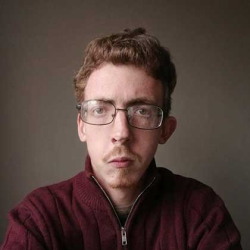
- Theologian Corné Gieselbach interviewed - October 31, 2026
- Ten Books for Catholic Apologetics - October 26, 2026
- Why I Chose Catholicism: 7 Reasons - October 7, 2026