What their stories can teach us about following God in our daily lives
The Bible is filled with stories of people who experienced many of the same realities that we experience today. They knew joy and sorrow, success and failure, courage and fear, love and betrayal, moments of great faith and moments when they struggled to understand what God was doing. When we read about David, Solomon, Joseph, Moses, Esther, Ruth, Daniel, Peter and Paul, we are not simply reading about people from a distant past. We are encountering human lives through which God continues to speak to us.
For Catholics, Scripture is not simply something we read occasionally or hear proclaimed at Mass. The Word of God invites us into a relationship with God and challenges us to allow our faith to influence the way we live. The stories of these biblical figures can therefore become a mirror for our own lives. We can ask ourselves: What does David teach me about courage? What does Solomon teach me about wisdom and remaining faithful? What does Joseph teach me about forgiveness? What does Peter teach me about failure and returning to Christ? What does Paul teach me about conversion? And, perhaps most importantly, what is God asking me to change in my own life?
David: A Man Of Faith Who Was Not Perfect
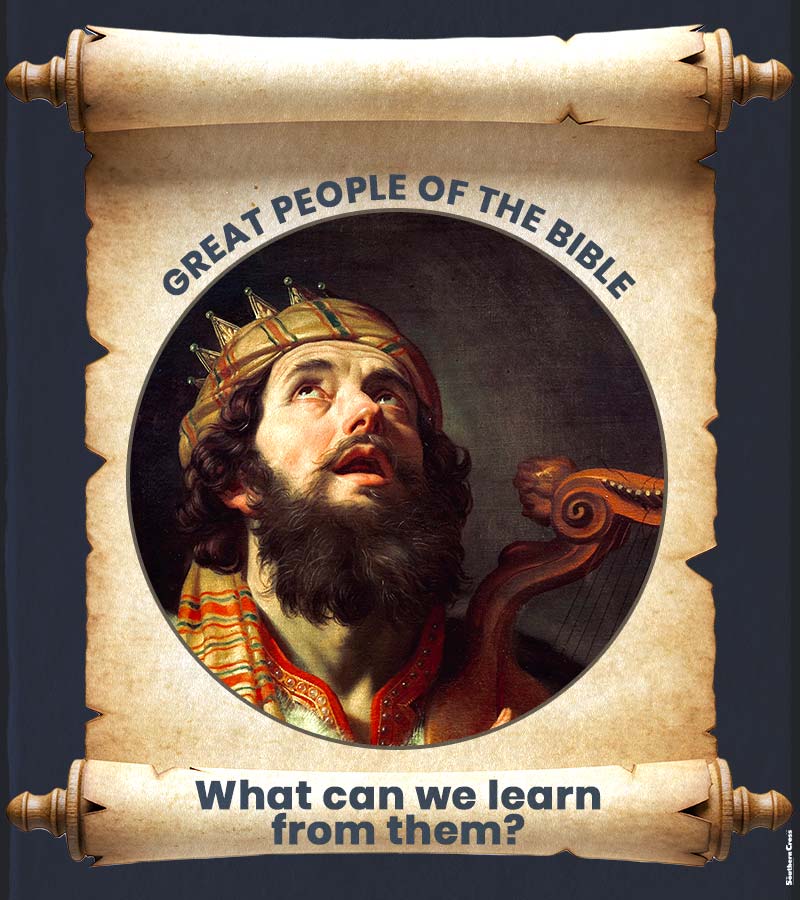
David is one of the most recognisable figures in the Old Testament. He was a shepherd, a musician, a warrior and eventually king of Israel. His story begins with someone who might not have appeared to be the obvious choice for greatness. Yet God saw something in David that others did not necessarily see.
When David faced Goliath, he did not have the physical strength or military experience of the giant standing before him. Yet David trusted that God was greater than the obstacle in front of him. His courage came from faith.

There is an important lesson here for us as Catholics. We all face our own “Goliaths”. They may not be nine-foot-tall warriors. They may be unemployment, financial pressure, family difficulties, loneliness, illness, grief, addiction, fear, disappointment, rejection or uncertainty about the future.
Sometimes our problems appear so large that we begin to believe they are larger than God’s ability to help us.
David reminds us that faith does not mean pretending that our problems are small. Faith means remembering that our problems are not bigger than God.
Yet David’s story also teaches us something equally important: being a person of faith does not mean being a perfect person.
David made serious mistakes. His actions involving Bathsheba and Uriah were sinful and had painful consequences. Scripture does not hide these failures. Instead, David’s story reminds us about the importance of repentance.
This is particularly meaningful for Catholics because repentance is central to our Christian journey. In the Sacrament of Reconciliation, we are reminded that God’s mercy is greater than our failures when we sincerely turn back to Him.
David teaches us that we must have the courage not only to face our enemies, but also to face ourselves. Sometimes the hardest thing is not admitting that someone else hurt us. It is admitting that we have hurt others. True repentance requires humility. It requires us to say, “I was wrong. I need God’s mercy. I need to change.”
David’s life therefore teaches us both courage and repentance.
Next up: Solomon
- Understanding the Lives of Great People of the Bible - October 16, 2026
- One Church, One Family: Learning to Welcome the Stranger - October 12, 2026
- Who Is Waiting Outside Our Church Doors? - October 9, 2026