Remembering the departed, reclaiming our African heritage and challenging the Church to embrace an authentically African Christianity.
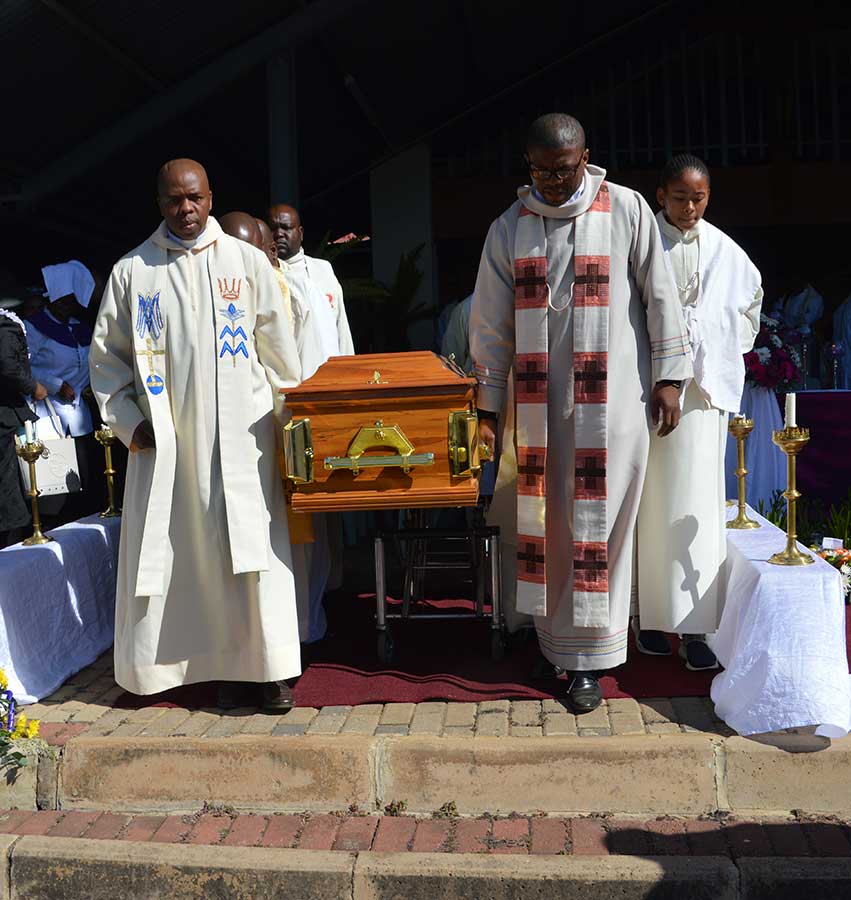
Every year on 2 November, the Catholic Church celebrates All Souls Day, a day dedicated to remembering and praying for the faithful departed. It is a day when families remember their loved ones, visit cemeteries, light candles, offer prayers and reflect on the mystery of death and eternal life. Across South Africa, people will visit the graves of parents, grandparents, siblings, relatives, friends and others whose lives have touched theirs.
For many Africans, however, remembering the dead is not something reserved for one particular day on the Christian calendar. It is woven into our understanding of family, identity, belonging and the continuity of life. The departed remain part of our conversations, family histories and collective memory. Their names are mentioned at family gatherings, their stories are retold, and their contributions to the lives of those who remain are acknowledged.
Yet there is an interesting tension that deserves serious attention. Many African Christians celebrate All Souls Day, pray for the departed and believe in the communion of saints, but become uncomfortable when African traditional communities speak about Badimo, ancestral remembrance or go phasa. Some immediately associate these practices with paganism, ancestor worship, witchcraft or even demonic activity.

Why is it that we can comfortably pray for the dead within the Catholic tradition, visit cemeteries, light candles and remember our departed relatives, but become suspicious when similar expressions of remembrance are practised within African cultural traditions?
Perhaps it is time for a more honest conversation. It is also time to examine how much of our understanding of African spirituality comes from our own investigation and how much has been inherited from interpretations shaped by colonial missionary education.
This is not an argument against Christianity, nor an attempt to defend every traditional practice. It is a call for intellectual honesty, theological maturity and the freedom to be both authentically Catholic and genuinely African.
The language we inherit tells a story
Sometimes, the journey towards understanding African spirituality begins with language.
In Setswana, Sesotho and Sepedi, there are words whose relationships invite us to reflect more deeply on how our ancestors understood the spiritual world. Consider the words Legodimo, Modimo, Badimo and Ledimo.
These words have linguistic relationships associated with the stem -dimo, connected in Sotho-Tswana linguistic traditions with what is high, above or elevated. Their precise historical derivations deserve further linguistic investigation, but their relationship offers an interesting window into African thought.
Legodimo refers to the sky or heaven. It points towards what is above us, beyond our immediate physical surroundings.
Modimo is the Supreme Being, the Creator, the One above all creation.
Badimo refers to ancestors, those who came before us and whose lives remain woven into the history and identity of their descendants.
Even Ledimo, associated in some usages with a monster, destructive force or violent storm, reminds us of how language preserves older understandings of the unseen forces of nature.
We should not assume that all these words have exactly the same meaning simply because they share linguistic elements. Nevertheless, they invite us to investigate how our languages have historically expressed the relationship between the visible world, the spiritual realm, the Creator and human existence.
There is something worth recovering here: our languages are not merely instruments for communicating everyday information. They carry memory, philosophy, history and our people’s understanding of existence.
When we dismiss our indigenous languages or accept interpretations of them without investigation, we risk losing knowledge preserved across generations.
Our languages deserve to be studied, documented and understood by African scholars, rather than simply explained to us through interpretations inherited from elsewhere.
Are Badimo gods? Understanding the African ancestor
One of the greatest misunderstandings surrounding African traditional spirituality is the tendency to translate Badimo as gods.
This translation is problematic because it can lead to serious theological confusion.
In Sotho-Tswana languages, Badimo refers to ancestors. It does not automatically mean gods in the sense of multiple competing supreme deities. The distinction between Modimo and Badimo is important. “Ba,” refers to a group of people while “dimo’ denotes an elevated status.
Modimo is the Supreme Being. Badimo are ancestors who have passed away and are remembered within the family and community. They are not the Creator.
African communities have different explanations of the relationship between ancestors and the Creator. Some understand ancestors as intercessors, guardians or members of the extended family who have entered the spiritual dimension of existence. Others place greater emphasis on remembrance, lineage and the moral responsibilities of the living.
We should not pretend that every African community shares exactly the same beliefs. Nevertheless, we should resist the temptation to reduce all these understandings to the accusation of ancestor worship.
There is a difference between worshipping someone as God and honouring someone because of the life they lived and the relationship they continue to have with their family.
When we remember our grandparents, we are not necessarily worshipping them. When we mention the names of those who raised us, we are not turning them into gods. We are acknowledging that our existence did not begin with us.
We are here because somebody came before us.
Death is not simply the disappearance of a person
The Kenyan theologian and philosopher John S. Mbiti made an important contribution to African reflections on time, life and death. In his discussion of African religions, he explored the concepts of Sasa and Zamani, referring broadly to the immediate and recent past and the more distant past.
His reflections on the living-dead are particularly relevant to our discussion.
In many African communities, a person who has died does not immediately disappear from the social and spiritual consciousness of the family. The departed remain part of the family through memory, relationships, stories and the influence they continue to exercise on those who are alive.
Think about a grandmother who died twenty years ago.
Her grandchildren may never have met her, but they know her name. They know how she raised her children, how she welcomed visitors, what she believed in and what she sacrificed for her family. They may have inherited her expressions, her values, her sense of humour or even her manner of doing things.
She is physically absent, but her influence remains.
A grandfather who taught his children the importance of education may continue to influence generations of grandchildren who never knew him personally. A mother who struggled to provide for her children may remain present in every decision her children make about their own families.
In this sense, death does not erase the relationship between the departed and the living.
Mbiti’s reflections on the living-dead provide a useful framework for understanding this continuity. As long as the departed remain known through personal memory and family relationships, they occupy a particular place in the consciousness of the living.
This should not be confused with the Catholic understanding of eternal life. The Church teaches that human life does not end with physical death. We believe in the resurrection of the dead and eternal life.
Nevertheless, there is an opportunity for meaningful dialogue between African understandings of continuity and the Christian proclamation of life beyond death, without pretending that the two traditions explain every aspect of death in precisely the same way.
Visiting graves: A conversation with those who came before us
When African families visit cemeteries, they sometimes speak to the departed.
They may stand beside a grave and talk about what has happened in the family since the person’s death. They may share good news, speak about challenges, introduce a new family member or simply sit quietly.
Why should this automatically be interpreted as worship?
If a person were still alive, we would visit them, sit with them, talk to them and share our experiences. For some African families, visiting a grave is an extension of that relationship. It is an opportunity to remember and express what might otherwise remain unsaid.
Of course, not every Christian will understand or participate in this practice in the same way. But we should be careful about imposing an interpretation on people without first understanding what they are doing and what it means to them.
Furthermore, ancestral remembrance is not geographically confined to cemeteries.
A person living in Johannesburg can remember a grandmother buried in Limpopo. A South African working in London can remember a father buried in Mamelodi. Someone living in Australia can speak about their grandparents and teach their children the family history.
Memory is not restricted by geography.
The relationship with those who came before us is carried in the heart, in language, in family traditions and in the stories we tell.
Go phasa: Is every offering a sacrifice?
Another area that deserves careful consideration is the practice known as go phasa or, in some communities, go phahla.
These expressions are associated with traditional ways of addressing, honouring or communicating with the ancestors. Depending on the community and occasion, practices may include the presentation of traditional beer, snuff or other offerings.
There are also occasions when an animal is slaughtered as part of a family gathering or traditional ceremony.
Unfortunately, such practices are often immediately translated into Christian theological language as sacrifices to the ancestors.
This is where we need to slow down and ask questions.
What does the family understand itself to be doing? What is the meaning of the occasion? Who benefits from the gathering? What is the purpose of the animal being slaughtered?
In many African family traditions, the slaughtering of an animal is connected to a significant communal event. The meat is shared among relatives, neighbours and visitors. People gather, eat, talk, remember and renew relationships.
The ancestors are not physically hungry. The meat is eaten by the living.
The slaughtering may mark an important family occasion, express gratitude, acknowledge a transition or bring relatives together. The meaning of blood, the animal and the ceremony must be understood within the particular cultural context rather than automatically translated into the biblical understanding of sacrifice.
We must also distinguish the communal slaughter of an animal from the Christian understanding of the sacrifice of Jesus Christ on the Cross.
In Catholic theology, the sacrifice of Christ is unique, definitive and redemptive. It is not interchangeable with the cultural practices of African families.
Nor should every traditional slaughter be equated with the sacrifices offered to Baal or other false gods in biblical accounts.
The words may sometimes sound similar in translation, but the meanings and theological contexts are not necessarily the same.
Even the use of animal skins in traditional funerary practices deserves historical attention. In some communities, hides were used to wrap or cover the deceased, providing a practical and dignified form of burial. Such practices remind us that African funeral traditions were not simply collections of mysterious rituals. They were also responses to the practical, social and emotional realities of human life and death.
When people gather to mourn, they also need to eat. When relatives travel long distances, they need to be welcomed and accommodated. When a family loses someone, the community comes together.
There is nothing inherently strange about these human needs.
We must, however, recognise that practices differ between families and communities. Understanding requires listening rather than assuming that every ceremony has the same meaning.
The praise of ancestors is the preservation of identity
Across African communities, people have traditions of praising their families and recounting their lineage. Among Nguni-speaking communities, izithakazelo are an important expression of clan identity and ancestral remembrance. Sotho-Tswana communities also have their own forms of praise poetry, clan histories and genealogical expressions.
When people recite these praises, they are not necessarily worshipping their ancestors.
They are acknowledging where they come from.
A person who remembers the names of their grandparents, great-grandparents and other members of their lineage is preserving family history. These names tell a story of belonging.
They remind us that we are not isolated individuals who appeared from nowhere.
Our surnames, clan names, family praise names and oral histories are part of our inheritance.
There is a particular sadness in seeing young Africans who cannot identify their grandparents, who know little about their family history and who have no interest in discovering where their names and surnames come from.
We cannot speak about Ubuntu while forgetting the people through whom we received our humanity.
Ubuntu is not simply a popular expression meaning that a person is a person through other people. It is a way of understanding human responsibility, belonging, compassion and the obligations we have towards one another.
Remembering the departed should also challenge us to live responsibly towards those who are still alive.
It is not enough to praise a grandfather after his death if we neglected him when he needed our support. It is not enough to speak lovingly about a mother at her funeral if we failed to show her love while she was alive.
Perhaps one of the greatest tributes we can offer those who came before us is to live lives that honour the values they taught us.
The African Christian: We can be authentically Catholic and genuinely African
One of the greatest challenges facing African Christianity is the mistaken belief that becoming Christian requires an African to abandon their African identity.
For generations, some Africans have been made to feel that the closer they move towards Christianity, the further they must distance themselves from their cultural heritage. This is a false choice that deserves to be challenged.
We can be authentically Catholic and genuinely African.
These identities are not necessarily in conflict. Being Catholic does not require me to become culturally European, just as being African does not require me to abandon my Christian faith.
I can embrace the teachings of Jesus Christ, participate fully in the sacramental life of the Church, profess the Creed and remain deeply conscious of my African roots, language, history and identity.
The problem arises when Christianity is presented not simply as a faith in Jesus Christ but as an entire cultural package imported from another civilisation. In the process, European cultural expressions have sometimes been confused with the Gospel itself. African customs, languages and ways of understanding human relationships have consequently been treated with suspicion, even when they do not necessarily contradict Christian teaching.
This is where the African Church must undertake serious theological reflection.
It is time for African theologians, philosophers, historians, linguists and scholars to rise from the death of ignorance, inferiority complexes and uncritical dependence on Western interpretations of African life.
We cannot continue borrowing intellectual explanations of ourselves without interrogating their origins, assumptions and limitations. We cannot allow others to have the final word on who we are, what our languages mean, what our ancestors believed and how we understand the mystery of life and death.
This is not a call to reject Western scholarship or dismiss the enormous contributions made by missionaries, theologians and scholars from other parts of the world. Knowledge has no geographical ownership. We should learn from the West, just as the West can learn from Africa.
However, learning from another civilisation must never mean surrendering our capacity to think for ourselves.
African theologians must move beyond merely translating European theology into African languages. They must develop theological thought that emerges from African experiences, African philosophy, African history and African understandings of community, without compromising the essential truths of the Gospel.
We need scholars who are prepared to investigate the meaning of Modimo, Badimo, Ubuntu, go phasa, ukubuyisa, mphabadimo, isiphandla, usage of beads, and other expressions of African spirituality without immediately reaching for labels inherited from colonial missionary interpretations.
We need people who can distinguish between cultural practices, religious beliefs, superstition and genuine contradictions with Christian doctrine.
Above all, we need the intellectual courage to ask difficult questions.
Why should an African feel embarrassed about knowing their clan praises? Why should remembering the names of one’s grandparents be regarded as a threat to Christian identity? Why should African ways of expressing respect, grief, belonging and family solidarity automatically be subjected to suspicion?
The Church must be able to distinguish between the Gospel and the cultural prejudices that sometimes accompany its transmission.
The Second Vatican Council opened important doors in this regard. Its teaching on the relationship between the Church and different cultures, particularly in Gaudium et Spes, Ad Gentes and Nostra Aetate, provides a foundation for understanding the importance of engaging cultures in the Church’s mission.
The Gospel does not need Africans to become Europeans before they can become Christians. It needs Africans to encounter Christ in the fullness of their humanity and cultural identity.
The African missionary, therefore, has a particular responsibility. We must not become agents of cultural alienation. We must proclaim Christ while listening to the people, understanding their languages, appreciating their histories and engaging their traditions with theological maturity.
We should not be afraid of our African identity. Neither should we romanticise every African practice. Authentic inculturation requires discernment. Some traditions will need to be challenged, others understood, and some recovered and appreciated. But the process must be based on knowledge rather than prejudice.
The future of African Christianity will depend, in part, on our willingness to stop seeing ourselves through somebody else’s eyes.
Decoloniality must begin with intellectual honesty
Decoloniality is sometimes misunderstood as rejecting everything that comes from the West. That is not what it should mean.
It is about recovering the ability to think, interpret and speak from our own historical and cultural experiences. It is about questioning inherited assumptions, including those that have become accepted simply because they were repeated by influential institutions.
We must be prepared to examine our traditions critically, just as we examine Christianity critically and thoughtfully.
Not everything African is necessarily good, just as not everything Western is necessarily bad. Every culture has practices that need to be examined in the light of human dignity, justice, compassion and truth.
But the examination must be fair.
We cannot judge African traditions solely through Western philosophical or theological categories and then conclude that they are inferior because they do not fit those categories.
We must first understand what a particular practice means to the people who practise it.
This is especially important for African missionaries today. The missionary must understand the people, their language, their history, their customs and their understanding of family before making pronouncements about their spirituality.
A missionary who cannot listen to the people is likely to misunderstand them.
The Church in Africa must also create spaces where difficult questions can be discussed without people being labelled, intimidated or accused of abandoning their faith.
Sober theological debate is not a threat to Christianity. It is part of the Church’s intellectual and spiritual growth.
We should be able to sit at the global theological table not as people seeking permission to be African, but as confident participants bringing the richness of our own intellectual and spiritual heritage.
Remembering the dead should teach us how to live
As we celebrate All Souls Day, we should remember that the departed are not simply names on tombstones.
They are mothers and fathers, grandparents, brothers and sisters, friends, neighbours, teachers and people who contributed to our lives in ways that we sometimes recognise only after their death.
Some left us beautiful memories. Others left difficult family histories. Some died peacefully, while others experienced painful and violent deaths. Some were reconciled with their families before they died, while others left unresolved disagreements.
Remembering the dead also means acknowledging the complexity of human life.
We do not have to pretend that everyone who died was perfect. We remember them as human beings, with their virtues, weaknesses, achievements and failures.
And we pray for them.
Perhaps the greatest lesson of All Souls Day is that life is a gift and that our relationships matter.
We should not wait for funerals to express love. We should not wait for graveside visits to have conversations with our parents. We should not wait until someone is gone to discover the importance of family history.
We should ask our grandparents questions while they are still alive. We should record their stories, preserve their photographs, learn their languages and teach our children where they come from.
The dead cannot be brought back into physical life, but their stories can continue to educate and inspire generations.
Remembering those who have died should also make us more attentive to those who are still alive. There is little value in celebrating the memory of our ancestors while neglecting the elderly, abandoning vulnerable relatives or failing to care for our families and communities.
Ubuntu must be lived, not merely spoken.
A final challenge: Let us rise and reclaim our intellectual dignity
Perhaps this All Souls Day should also challenge us to reflect on another kind of death: the death of intellectual curiosity, cultural confidence and the willingness to investigate our own history.
We have buried too many African ideas without first examining their value. We have sometimes dismissed our languages before understanding their depth. We have condemned traditions without listening to the people who practise them. We have accepted explanations of our spirituality without asking whether those explanations accurately represent our lived experiences.
It is time to rise from that intellectual death.
African theologians and scholars must take their rightful place in shaping global theological conversations. They must write, research, debate, publish and challenge inherited assumptions. They must not simply reproduce what has been written elsewhere. They must contribute original thought that enriches the universal Church.
We need African theological institutions that encourage research into indigenous knowledge systems, African philosophy, traditional religious expressions, family structures and the relationship between Christianity and African identity.
We need priests, religious, academics and lay people who are not afraid to engage these subjects seriously.
We also need a new generation of African missionaries who understand that evangelisation is not cultural replacement. It is the proclamation of Christ among people whose dignity, history and identity must be respected.
The Church in Africa must not be content with being a recipient of theological ideas. It must also become a contributor, a teacher and a voice in the universal Church.
We should not have to seek permission to think as Africans.
Being African is not a theological disability. It is part of the human experience through which we encounter, understand and express our faith.
We do not have to abandon Africa to find Christ
On this All Souls Day, let us remember those who came before us. Let us pray for the departed, preserve their stories, honour their contributions and teach our children where they come from.
Let us also remember that we have a responsibility to those who will come after us. What intellectual, spiritual and cultural inheritance are we leaving them?
We can be authentically Catholic and genuinely African. We can love the Church without despising our heritage. We can embrace the Gospel without developing an inferiority complex about our origins.
We do not have to reject our African identity to demonstrate our Christian commitment. Neither should we surrender our Christian convictions to defend every traditional practice.
What we need is knowledge, discernment, humility and honest dialogue.
Perhaps it is time that we stopped asking Africans to choose between being African and being Christian.
The Gospel is not the property of one continent, one language or one civilisation. Jesus Christ was not European. Christianity did not originate in Western Europe. Africa has a long and significant place in the history of Christianity, from the early Church in Egypt and North Africa to the many African Christian communities that have contributed to the life of the universal Church.
Our task today is to develop a Christianity that is deeply rooted in the Gospel and genuinely at home in African soil.
We do not have to die culturally in order to live spiritually. We do not have to abandon Africa to find Christ. And we do not have to become somebody else to belong to the universal Church.
The challenge is to become Christians who are deeply rooted in Christ and confident in their African identity.
Let us remember where we come from, understand who we are and have the courage to contribute to the world from that identity.
May those who have gone before us be remembered with gratitude. May those who have died in Christ find eternal rest. And may those of us who remain live in such a way that future generations will have good reasons to remember us.
Eternal rest grant unto them, O Lord, and let perpetual light shine upon them. May they rest in peace. Amen.
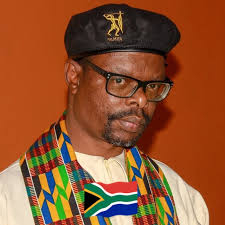
- All Souls Day: We Do Not Have to Abandon Africa to Find Christ - November 2, 2026
- The Piling Bodies in Ekurhuleni: Examination of Conscience - September 16, 2026
- Fr Wiseman Sihawu April Nkomo, Rest in Peace - June 15, 2026