Did the Jews hate Jesus because they thought he was under Greek influence?
Patrick Dacey, Johannesburg – Chris Shelmerdine’s observation that “surely a creature has no power to kill his infinitely powerful creator”, leads to only one conclusion — it cannot happen. Death is not the final indictment, for the atoms in living and non-living matter are indestructible. Upon death, the trillions of atoms that constitute a person do not perish.
Where Mr Shelmerdine says, concerning the death of Jesus, “because he and his Father had decided from eternity that he [Jesus] should die”, is solely an imaginative view of the circumstances of Jesus’ death.

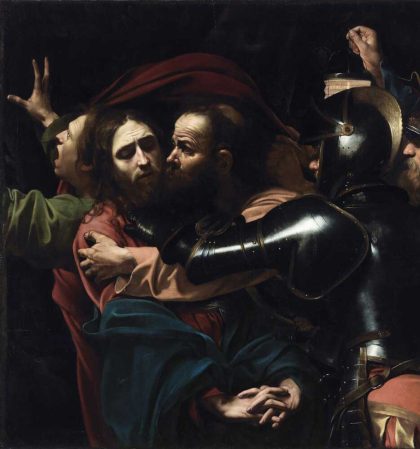
It is evident that certain elders of the Sanhedrin had issues with Jesus, and the evidence of Jesus’ trial and subsequent death is quite clearly spelt out by all four Gospel writers.
The History of the Time
But why had Jesus become persona non grata? For a clue one needs to look at the history of the time.
The death of Alexander the Great heralded the Hellenistic period (323-31BC). Greek influence was anathema to the Jewish religious hierarchy (mostly Pharisees) and Jesus’ followers included many women, foreign to Jewish religious ways.
But not the Epicurians, a school which followed the Greek philosopher Epicurus, and which included men and women, equally. The Epicurians also believed in the indestructible atom, proposed by two earlier Greek philosophers.
At the time of Jesus, Hellenistic Judaism did exist, combining Jewish religious tradition with elements of Greek culture. The two main centres of Hellenistic Judaism were Alexandria and Antioch, and to a lesser degree Jerusalem.

- Flabbergasted by a devout Holy Mass - January 30, 2024
- The Language of the Heart - August 8, 2023
- Let’s Discuss Our Church’s Bible Past - July 12, 2023