By Gregory B Stephenson, Author: Jesus In The Kallid Times
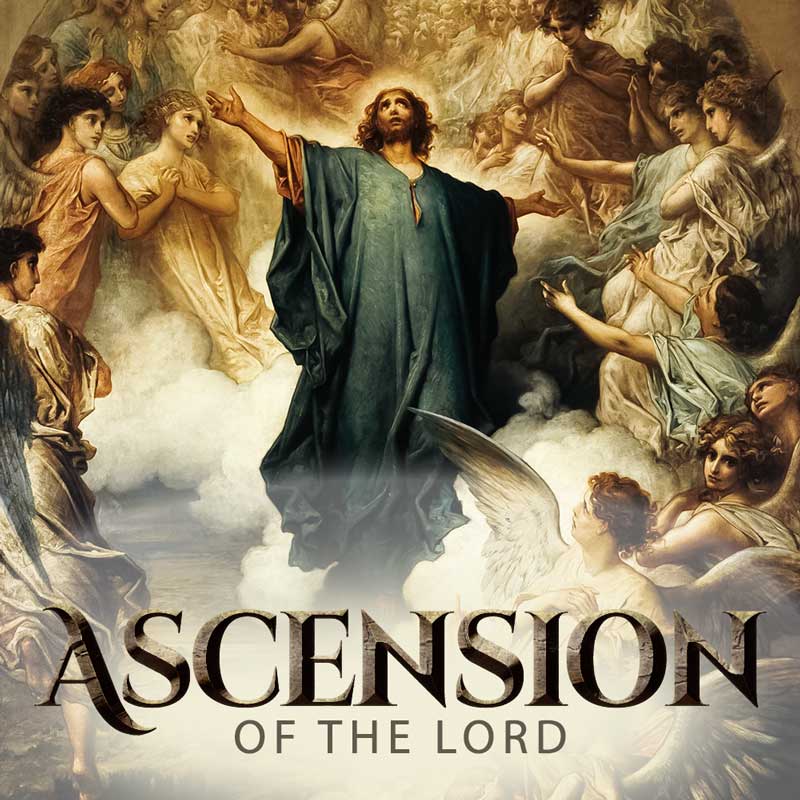
Twenty-four years ago, on the night of 8 May 2002 — the eve of Ascension Thursday — I experienced a dream so vivid, so deeply arresting, that even now it remains alive within me.
At the time, I was studying at the Catholic Bible College in Johannesburg, staying right next to St Patrick’s in La Rochelle, JHB. It was a season marked by prayer, Scripture, and spiritual formation. Looking back, I cannot separate that sacred environment from what unfolded that night.
This was no ordinary dream.

It began with movement—sudden, undeniable movement. I became aware that I was rising. Not walking. Not drifting. Ascending.
I was being lifted beyond the familiar weight of earth, beyond gravity, beyond what felt natural or explainable. There was no fear. Only awe. I could feel myself being drawn upward by a force both powerful and tender—something beyond me, yet somehow deeply intimate. My body seemed weightless, surrendered, no longer bound by the laws that ordinarily hold us in place. I was in motion, but also at peace—suspended in what I can only describe as a holy free flow.
I was not certain whether I had entered heaven, but I knew I was no longer fully of this world.
Then came the landscape.
Before me stood trees — recognisable, yet strangely altered. Some were bare, their branches exposed and stripped of life. Others clung to leaves already browned and fading. It looked like earth—but an earth emptied of something vital. Familiar, yet incomplete. Beautiful, yet unsettling.
What I felt in that moment was not terror, but a profound stillness—a silent knowing that this place, whatever it was, held meaning.
And when I awoke on the morning of the Ascension, that meaning did not leave me.
In fact, it never has.
What I wrote in my journal that day was only the beginning. Over the last twenty-four years, I have returned to that dream repeatedly—reflecting on it, praying with it, allowing it to mature within me. Each time, it feels as though I uncover another small “artifact” hidden beneath the surface—another fragment of grace, another invitation, another layer of understanding.
Like faith itself, the dream continues to reveal itself slowly.
As Scripture reminds us, “now we see in a mirror dimly, but then face to face” (1 Corinthians 13:12). The spiritual life often unfolds in this way—not in sudden completeness, but in patient revelation. What God gives us in one moment may take years to understand fully.
That is why the timing of this dream has become so important to me.
The Church, on the feast of the Ascension, lifts our gaze to Christ who “was lifted up, and a cloud took him out of their sight” (Acts 1:9). But the Ascension is not merely about Christ’s departure. It reveals our destiny: that where Christ has gone, we are called to follow.
Perhaps that is why the upward movement in my dream felt so profound.
It was not merely physical ascent; it was an invitation to consider the deeper ascent of the soul.
Adding to this dream is another memory that has accompanied me through the years.
On Ascension Thursday in 2003, I remember listening to a sermon by Fr Johnny Johnson, of the Oratory of St Philip Neri. His words were simple, yet they struck me with remarkable force. He said that Jesus had to ascend to heaven so that His presence would no longer be limited to one place—to one town, one people, or one moment in history—but so that through His divine omnipresence He could be present to all of us, wherever we may find ourselves.
That insight has never left me.
In many ways, it has journeyed alongside my dream.
What I had experienced inwardly the year before as mystery and movement, Fr Johnny helped me understand more deeply through the Church’s teaching: the Ascension is not about Christ becoming absent; it is about Christ becoming universally present. He returns to the Father not to distance Himself from us, but to be nearer to all of us—through the gift of the Holy Spirit, through the sacraments, and through His abiding presence in His Church (Matthew 28:20).
That sermon remained with me in the same way my dream remained with me—both continuing to unfold, each helping me to understand the other.
In Catholic teaching, the Ascension is not only about Christ returning to the Father; it is also about the elevation of our humanity. Christ does not abandon us. Rather, He draws us upward into His own divine life (John 14:18; Catechism of the Catholic Church, 665). Heaven is not simply a destination. It is perfect communion with God—the fulfilment of the deepest longing of the human heart.
Yet Scripture also reminds us that nothing imperfect enters that fullness (Revelation 21:27). The soul must be made ready.
Could it be, then, that what I encountered was not heaven itself, but something that pointed toward this truth? A symbolic glimpse of the soul in transition—drawn upward, yet not fully transformed?
The barren trees remain with me as a quiet sign.
Throughout Scripture, trees speak of spiritual life: “A good tree bears good fruit” (Matthew 7:17), and the one rooted in God is “like a tree planted by streams of water” (Psalm 1:3). What I saw seemed to reflect not condemnation, but incompleteness—a life not yet fully alive in grace.
And perhaps that is the deeper invitation of the Ascension itself.
Not only to look upward, but inward.
Not only to celebrate where Christ has gone, but to consider how we are being prepared to follow.
For even now, we are in motion.
As St Paul writes, we are being “transformed… from glory to glory” (2 Corinthians 3:18). The ascent is not only a future event—it is a present journey, unfolding slowly and patiently through grace.
The Christian life is not passive. It is a daily cooperation with grace — a continual turning of the heart toward God.
We are called to “seek the things that are above, where Christ is” (Colossians 3:1), not by escaping the world, but by allowing our hearts to be lifted and renewed within it.
Recently, while interacting with my RCIA group, I asked a simple question: Why have you enrolled in this programme? The answers were thoughtful and sincere, each carrying its own story of longing and faith.
But one response has stayed with me.
A young woman answered quietly but confidently: “It is my way to prepare myself for heaven.”
Her words deeply moved me. Almost to tears in front of the group. I needed to hear that. It felt as if God was chastising me.
In that moment, I was reminded how easily we, as Christians, can become distracted by the demands and burdens of earthly life and forget our ultimate calling—that our journey through this world is ordered toward eternal life with God. We are not simply moving through time; we are being prepared for eternity.
Ultimately, that interaction with my RCIA candidate leaves me with a quiet but urgent awareness:
That the journey toward heaven has already begun.
That ascent requires preparation.
And that what awaits us is not simply a place, but a Person—Christ Himself, who draws all things to Himself (John 12:32).
On the eve of the Ascension, twenty-four years ago, I was given not a vision of heaven, but a reminder of the journey.
And like the dream itself, that reminder continues to unfold—layer by layer, grace by grace—revealing that perhaps, even now, we are already on the way.
Perhaps that is the deeper invitation of the Ascension: to recognise ourselves, as the earliest Christians did, as a people of “the Way” (Acts 9:2)—pilgrims in motion, hearts lifted upward, walking together toward the fullness of life in Christ.
- Xenophobia: The Conversation We Never Had - October 20, 2026
- When Wooden Spoons Become Instruments Of Grace - October 3, 2026
- All Things Bright and Beautiful — A Beautiful Hymn, An Ugly Reality - September 11, 2026