A Rwandan refugee and advocate asks whether the Church’s response to South Africa’s migration crisis has gone far enough. While affirming that states have a legitimate right to regulate migration, Claude Marie Bernard Kayitare argues that the Catholic Church’s moral authority translates into sustained, visible witness for migrants and refugees.
The current debate on immigration in South Africa should never be reduced to a false choice between protecting citizens and protecting migrants. The Gospel calls us to seek both justice and mercy, both responsibility and compassion, both truth and love.
As a refugee, I know what it means to depend upon the kindness of strangers. As a Catholic, I believe Christ continues to meet us in the faces of those who are displaced.
As an advocate, I have witnessed extraordinary resilience among migrants and refugees who contribute to South Africa’s economy, enrich its communities, build businesses, educate children, pay taxes, and participate actively in society despite tremendous obstacles.

Their stories deserve greater visibility. This reflection is therefore not a call for political partisanship but a call for deeper discipleship.
The Church’s mission has never been to echo the loudest voices in society. The mission of all the People of God is to proclaim the Gospel, defend the dignity of every human person, and stand beside those who suffer.
In our present context, migrants and refugees need more than humanitarian assistance. They need a Church whose voice is consistently heard whenever fear threatens hope, whenever prejudice overshadows truth, and whenever human dignity is placed at risk.
The debate within the Catholic community on migrants has highlighted a difficult but necessary conversation. The discussion is not merely about immigration policy; it is about who we are as Christians and how faithfully we live the Gospel in a society marked by fear, inequality, and growing hostility towards migrants and refugees.
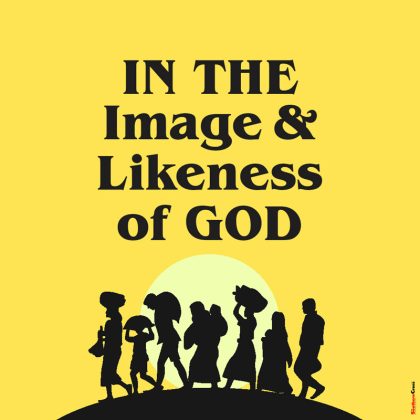
Through Catholic Social Teaching, the Catechism of the Catholic Church, and the teachings of successive popes — especially Pope Francis — the Church has consistently affirmed that every human being possesses inherent dignity because each person is created in the image and likeness of God.
At the same time, our faith also recognises that sovereign states have the legitimate responsibility to regulate migration in pursuit of the common good. Every nation has the right to secure its borders, enforce its laws, and develop fair immigration policies. Supporting lawful migration management does not contradict Catholic teaching.
However, there is another principle that is equally non-negotiable: No human being should ever be dehumanised because of nationality, immigration status, ethnicity, or country of origin.
This is where the Gospel speaks with unmistakable clarity. Jesus himself identified with the stranger when he declared: “I was a stranger and you welcomed me” (Matthew 25:35). This passage is not presented as optional charity. It is given as one of the criteria by which Christians will ultimately be judged.
Today, South Africa finds itself wrestling with legitimate concerns about unemployment, poverty, crime, and the effectiveness of migration management. These challenges deserve honest public discussion. Many South Africans are experiencing real hardship, and their concerns should neither be dismissed nor ignored.
Yet acknowledging these realities must never become an excuse for hatred or violence. Across our communities, migrants and refugees continue to experience intimidation, unlawful evictions, denial of healthcare, exclusion from education, discrimination in employment, arbitrary arrests, and periodic outbreaks of xenophobic violence. Families who fled persecution in search of safety often find themselves living in constant fear once again.
These experiences are not abstract policy debates. They involve mothers unable to obtain medical care for their children, students prevented from completing their education, workers dismissed because of documentation challenges, refugees assaulted in their neighbourhoods, and families living with uncertainty despite legal protections guaranteed under South African and international law. These realities call not only for humanitarian assistance but also for moral leadership.
The Southern African Catholic Bishops’ Conference has spoken against xenophobia on numerous occasions. Individual bishops, priests, religious communities, and Catholic organisations have provided invaluable pastoral care, legal assistance, humanitarian support, and advocacy for migrants and refugees. These contributions deserve sincere gratitude and recognition.
Nevertheless, many migrants — including faithful Catholics — continue to ask a difficult question: Is the Church’s prophetic voice sufficiently visible?
There is an important distinction between issuing statements and sustaining a public witness.
Whether confronting apartheid, defending human dignity, advocating for peace, or protecting the poor, the Church has repeatedly demonstrated that silence in the face of injustice is incompatible with the Gospel. South Africa’s current migration crisis presents another opportunity for such witness.
The Church possesses extraordinary moral authority. Parish priests accompany communities every day. Bishops command respect across society. Catholic schools educate future leaders. Religious sisters and brothers serve the poorest with remarkable dedication. Lay Catholics contribute in every sector of public life.
Imagine the transformative impact if every parish consistently preached against xenophobia, if every Catholic school actively educated learners about the dignity of migrants, if dioceses regularly visited displaced communities, if bishops publicly accompanied victims of violence, and if Catholic institutions became visible places of welcome and reconciliation. Such actions would not weaken national sovereignty. They would strengthen our nation’s humanity.
Pope Francis repeatedly reminded the global Church that migrants are not statistics, burdens, or political instruments. They are our brothers and sisters. Their suffering invites not only compassion but also solidarity.
Indeed, welcoming migrants does not require ignoring legitimate concerns about law, security, or economic capacity. Catholics can simultaneously support orderly migration systems while rejecting discrimination, collective blame, and violence. These positions are not contradictory; they reflect the balance of Catholic Social Teaching.
My prayer is that the Catholic Church in South Africa will continue to build upon its important work and embrace an even more visible prophetic role in promoting justice, reconciliation, and the protection of every person created in God’s image.
For when the Church stands beside the stranger, it stands beside Christ himself. And when society protects the dignity of the most vulnerable, it safeguards the dignity of us all.
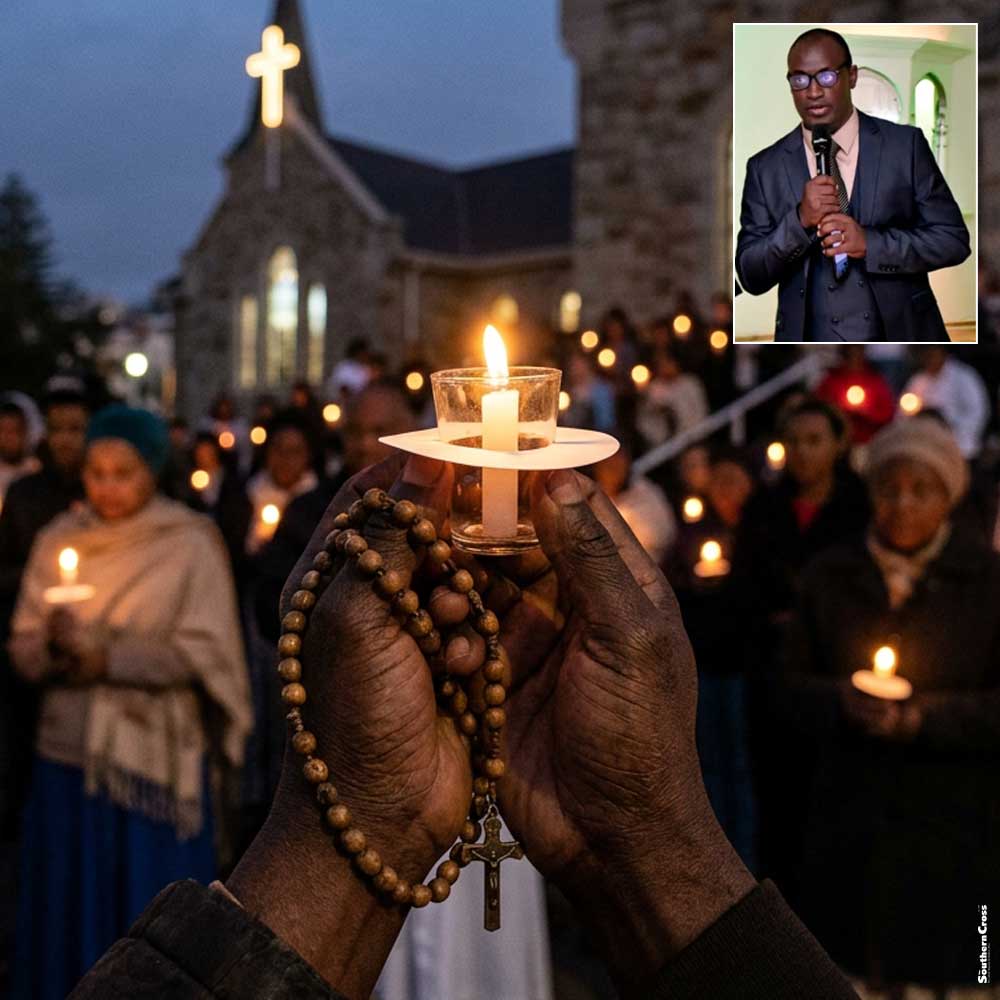
Claude Marie Bernard Kayitare is a Catholic refugee from Rwanda and the Head of Partnerships and Programs at the Southern Africa Network for Immigrants and Refugees (SANIR), where he works with refugee-led and civil society organisations to promote the rights, dignity, and inclusion of migrants, refugees, and asylum seekers in South Africa.

- Pope Leo’s Prayer for Mission Sunday - October 17, 2026
- A Call to Unity and Love: Pope Leo on the 100th World Mission Day - October 17, 2026
- Walking in the footsteps of Blessed Joseph Gérard: Missionary Associates renew their missionary call - October 15, 2026