Bishop Phomane’s Solemn Vespers and Oath of Fidelity
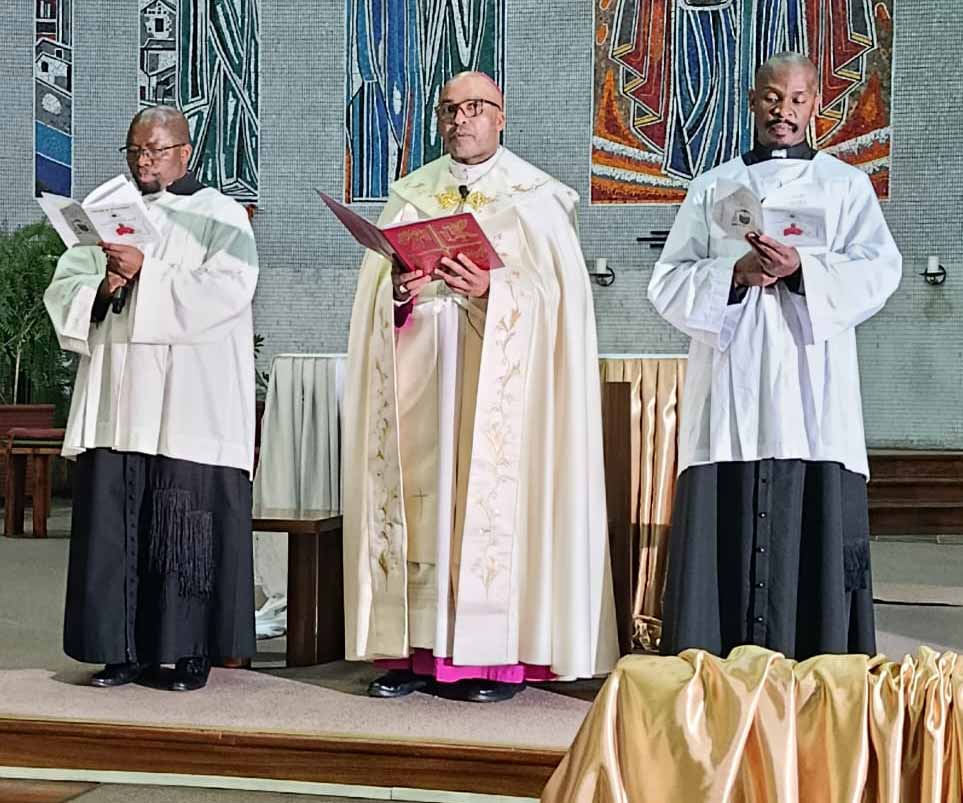
The Diocese of Bethlehem entered a sacred moment of anticipation and prayer on Friday, 3 July 2026, as clergy, religious and faithful gathered at Holy Ghost Cathedral for the Solemn Vespers and Oath of Fidelity of Bishop-Elect Monsignor Motlatsi Meshack Phomane, a day before his episcopal ordination.
The prayerful liturgy marked an important milestone in the Church’s preparation for the ordination of its new shepherd. During the celebration, Bishop-Elect Phomane made the Profession of Faith and took the Oath of Fidelity in accordance with Canon Law, publicly affirming his commitment to faithfully preserve, teach and proclaim the Catholic faith entrusted to him by the Church.
The appointment of Monsignor Phomane as the Bishop of the Diocese of Bethlehem was announced by the Holy See on 14 April 2026, bringing great joy to the clergy and faithful of the diocese. The Solemn Vespers now served as the final spiritual preparation before his episcopal ordination.
Presiding over the celebration, Bishop Thulani Victor Mbuyisa CMM of the Diocese of Kokstad and Apostolic Administrator of the Diocese of Mthatha reflected on the profound meaning of service, fidelity and episcopal ministry, challenging the bishop-elect to embrace his new vocation with humility and unwavering trust in God.
Using a surprising illustration drawn from popular culture, Bishop Mbuyisa recounted a light-hearted conversation he had shared with Bishop-Elect Phomane the previous evening about classic action movies. He then referenced the John Wick film series, where characters declare, “I have served. I will be of service,” as a pledge of unquestioning loyalty to the fictional High Table.
While acknowledging the dramatic nature of the films, Bishop Mbuyisa contrasted that form of allegiance with the infinitely greater and more beautiful service required of a disciple of Christ.
“The Church,” he said, “knows another word for service, one infinitely nobler and more beautiful: Serviam: I will serve.”
The Beauty of “Serviam”
He explained that throughout Catholic tradition, Serviam has become a powerful expression of faithful obedience to God, standing in direct contrast to the spirit of rebellion symbolised by the words “Non serviam:, I will not serve.”
Applying this to the evening’s celebration, Bishop Mbuyisa reminded the congregation that Bishop-Elect Phomane was about to make his own wholehearted “yes” to God, echoing the response of the Blessed Virgin Mary at the Annunciation.
“Tonight we gather to witness yet another servant of the Lord who, having been taught by God through His Holy Church, is about to pronounce his own fiat, his own ‘yes’, just as the Blessed Virgin Mary did when she accepted God’s invitation to become the Mother of our Saviour.”
The bishop emphasised that the Profession of Faith and Oath of Fidelity are far more than legal or canonical requirements.
“What we are about to witness this evening is something far deeper,” he said. “We are about to witness a profound transition: a servant of Christ assuming a new ecclesiastical office in the Church. Tonight lays the foundation for tomorrow’s episcopal ordination.”
He explained that the ancient prayer of Vespers accompanies the bishop-elect as he renews before God and His people the commitments first made at his priestly ordination: to pray faithfully, preach the Gospel in season and out of season, and serve God’s people wholeheartedly.
Addressing the priests of the Diocese of Bethlehem, Bishop Mbuyisa reminded them that the evening was also an invitation for the local Church to begin a new chapter together.
“Tonight is an invitation to each and every one of you to join your ‘yes’ to your own bishop. It is a call to renewal, a fresh start and an invitation to begin again in faith with your new shepherd.”
Pray for Bishop Phomane
He urged the faithful to accompany Bishop Phomane with their prayers, support and communion as he begins his episcopal ministry.
Bishop Mbuyisa also reminded the bishop-elect that authentic leadership in the Church is never exercised for personal gain or ambition.
“You do not do this because of certain benefits. You do not do this out of selfish ambition. You do this because you are here to serve God and His holy people in this Church of Bethlehem.”
He further stressed that a bishop is entrusted with safeguarding the faith handed down through generations.
“This faith is not of our own making. It is not of our own invention, but a faith that we have received from the Lord, handed on to us for safeguarding and proclamation.”
The bishop also spoke honestly about the realities of episcopal ministry, acknowledging that there would inevitably be moments of discouragement, loneliness and self-doubt.
“There will be moments when you feel misunderstood, weary or even alone. There may be times when you question yourself: ‘Why did I say yes?’ Yet it is precisely in those moments that you must hold fast to the Lord who has called you.”
Drawing from the words of St Paul, he encouraged Bishop Phomane to rely completely on God’s grace.
“My grace is sufficient for you, for my power is made perfect in weakness,” he quoted, adding that these words should become the new bishop’s consolation, strength and hope throughout his ministry.
Be a Synodal bishop
Recognising Bishop Phomane’s leadership during the Synod process in the Diocese of Mthatha, Bishop Mbuyisa thanked him for his generous service and encouraged him to continue building a Church rooted in listening, discernment and communion.
“You have already shown yourself to be a deeply synodal priest. Now be a synodal bishop.”
He called on the bishop-elect to lead clergy, religious and laity in listening not only to one another, but above all to the Holy Spirit.
“It is providential that this is Holy Ghost Cathedral,” he remarked warmly. “Help them discern together what the Spirit is saying to the Church.”
Bishop Mbuyisa reminded the congregation that synodality is not a temporary programme but “a way of being Church”, one that is listening, discerning, humble, missionary and rooted in service.
“Our ministries are distinct yet complementary, hierarchical yet profoundly communal, all ordered towards the one mission of Jesus Christ,” he said.
Concluding his homily, Bishop Mbuyisa offered a heartfelt blessing to Bishop Phomane as he prepared to assume the pastoral care of the Diocese of Bethlehem.
“My dear brother, tonight as you stand before the Church to profess your faith and pledge your fidelity, may your whole life become one unending prayer: Serviam, I will serve; today, tomorrow and always.”
The solemn celebration concluded in an atmosphere of joy as the Diocese of Bethlehem prepared to welcome its new bishop during the episcopal ordination the following day, confident that the Church was receiving a shepherd committed to serving Christ and His people with faithfulness, humility and a deeply synodal spirit.
Episcopal Ordination of Bishop Motlatsi Meshack Phomane
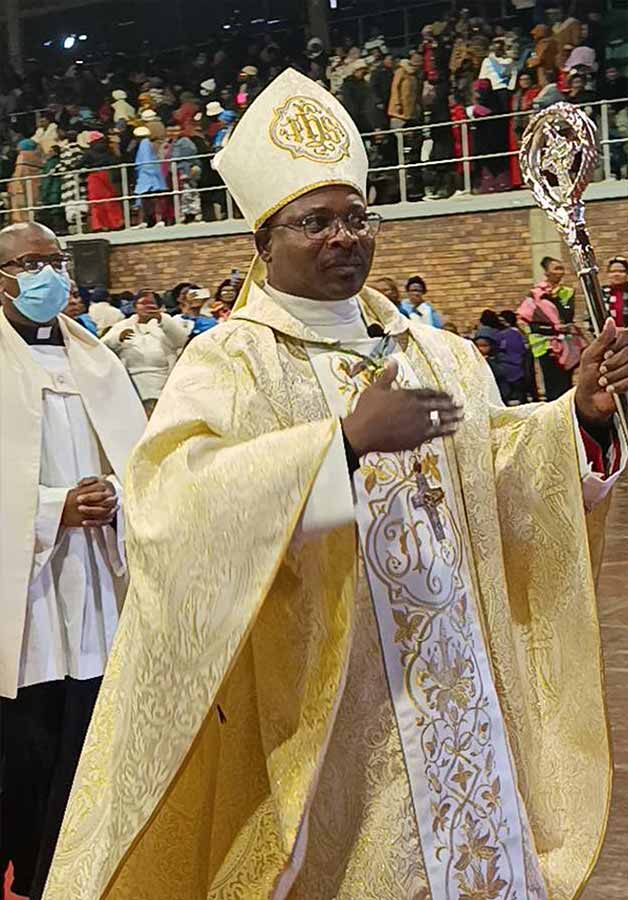
Joy filled the University of the Free State on Saturday, 4 July 2026, as thousands of faithful gathered to witness the episcopal ordination of Bishop Motlatsi Meshack Phomane as the fifth Bishop of the Diocese of Bethlehem.
The colourful celebration drew bishops from across the Southern African Catholic Bishops’ Conference (SACBC), priests, religious, government representatives, traditional leaders, family and friends, together with the faithful from across South Africa who came to celebrate a historic moment in the life of the Church.
Among those present were clergy from the Diocese of Mthatha, Diocese of Kokstad, the Metropolitan Archdiocese of Bloemfontein and many other dioceses throughout Southern Africa.
In a touching moment that highlighted God’s providence, Archbishop Sithembele Anton Sipuka of the Archdiocese of Cape Town served as the principal consecrator. The occasion marked another milestone in a journey the archbishop has shared with Bishop Phomane over many years. Archbishop Sipuka ordained him to the diaconate in 2011, to the priesthood in 2012, and, fourteen years later, entrusted him with the fullness of the Sacrament of Holy Orders through episcopal ordination.
Archbishop Zolile Mpambani’s homily
Preaching the homily, Archbishop Zolile Peter Mpambani SCJ invited the congregation to reflect on the call of Moses and its relevance to the ministry of a bishop in a synodal Church. Drawing from the first reading from the Book of Exodus, he compared Moses’ encounter with God at the burning bush to Bishop Phomane’s own response to God’s call.
“Moses asked, ‘Who am I that I should go to Pharaoh and lead the people of Israel out of Egypt?’ God answered, ‘I will be with you.’ Likewise, Bishop Phomane may ask, ‘Who am I that I should go to the Diocese of Bethlehem to teach, sanctify and govern God’s people?’ God’s answer remains the same: ‘I will be with you.’”
The archbishop explained that just as Moses was entrusted with leading Israel from slavery to freedom, every bishop is called to journey alongside God’s people towards the Kingdom of Heaven.
Using the Church’s vision of synodality as the foundation of his reflection, Archbishop Mpambani highlighted its three pillars: communion, participation and mission.
“Synodality is journeying together,” he said. “God called Moses personally, but the journey belonged to the whole people. Likewise, Bishop Phomane has not been sent to walk alone. He has been sent to journey together with the priests, religious and faithful of the Diocese of Bethlehem.”
He reminded the congregation that leadership in the Church is never exercised in isolation.
Just as Moses gathered the elders of Israel to help lead God’s people, Bishop Phomane, he said, would lead together with his priests, religious and lay faithful.
“Different vocations and different charisms contribute to the one mission of the Church. Unity does not mean uniformity. Every baptised person has a role to play in building up the Body of Christ.”
The importance of listening
Speaking directly to the faithful of Bethlehem, Archbishop Mpambani encouraged them to take ownership of their local Church.
“This is not Bishop Phomane’s diocese,” he said. “It is the Diocese of Bethlehem. The bishop arrives and eventually one day he leaves, but the diocese remains. Therefore, build your diocese, strengthen it, support it and make it sustainable.”
He challenged the faithful to become active participants in the mission of the Church by praying for vocations, supporting priests and religious, participating fully in parish life and ensuring that the diocese is able to sustain its pastoral mission.
“The bishop does not have a money tree,” he remarked. “The mission of the Church is supported by the generosity of God’s people.”
Throughout his homily, Archbishop Mpambani repeatedly returned to the importance of listening, describing it as one of the defining characteristics of a synodal Church.
“God first listened to the cries of His people before calling Moses,” he said. “Moses listened to God. The people were called to listen to God’s Word. Likewise, the Church listens to God, listens to one another and together discerns what the Holy Spirit is saying.”
He cautioned that listening is much more than collecting opinions.
“It is about discerning the voice of the Holy Spirit.”
Drawing parallels between the Exodus journey and the life of the Church today, Archbishop Mpambani acknowledged that the path ahead would not always be easy.
Like the Israelites who experienced fear, complaints, setbacks and moments of rebellion in the wilderness, every diocese experiences discouragement, disagreements, resistance to change and challenges along the way.
“Synodality does not eliminate conflict,” he said. “Rather, it helps us discern God’s will faithfully through those challenges.”
Addressing Bishop Phomane personally, Archbishop Mpambani encouraged him always to seek God’s will before making decisions.
“Moses never governed according to personal preference. Before acting, he turned to God.”
He reminded the new bishop that consultation is essential, but authentic Christian leadership is rooted in prayerful discernment.”
“Christian discernment asks not only, ‘What do we prefer?’ but ‘What is the Lord asking of His Church?’”
Serve with humility
Reflecting on St Paul’s Second Letter to Timothy, the archbishop challenged Bishop Phomane to remain faithful to his vocation by serving with humility, proclaiming the whole truth of the Gospel with courage and keeping his eyes fixed firmly on Christ.
Turning to the Gospel according to St Luke, where Jesus proclaims, “The Spirit of the Lord is upon me,” Archbishop Mpambani reflected on the significance of the anointing that every bishop receives during episcopal ordination.
“The bishop’s authority does not come from rank, achievement or campaigning,” he said. “No one submits an application to become a bishop and no one campaigns for election. His authority comes through the grace of the Holy Spirit.”
In a light-hearted moment that drew laughter from those gathered, he added that if any priest in the Diocese of Bethlehem had hoped to become bishop himself, he should now simply collaborate wholeheartedly with Bishop Phomane, whom the Holy Spirit had chosen for this ministry.
The archbishop reminded the faithful that the bishop’s mission is ultimately Christ’s own mission.
He is called to proclaim the Good News, celebrate the sacraments, defend the dignity of the poor, strengthen the faithful, reconcile sinners and make Christ present through his ministry.
“A bishop never proclaims himself,” Archbishop Mpambani said. “His whole ministry should point people to Christ.”
He concluded by reminding the congregation that the bishop succeeds not when people admire him, but when they encounter Jesus through his preaching, leadership and holiness.
“As Christ proclaimed in the synagogue, ‘Today this Scripture has been fulfilled.’ Through the ministry of the bishop, Christ continues to speak today. Today, He heals. Today, He gathers His people. Today, He leads His Church towards the Kingdom of God.”
The ordination marked the beginning of a new chapter for the Diocese of Bethlehem following Bishop Phomane’s appointment by Pope Leo XIV, announced on 14 April 2026. Surrounded by the prayers of the universal Church and strengthened by the support of clergy, religious and laity, Bishop Motlatsi Meshack Phomane now begins his episcopal ministry with the assurance first given to Moses and echoed throughout the liturgy: “I will be with you.”
Bishop Motlatsi Phomane Takes Possession of the Cathedra
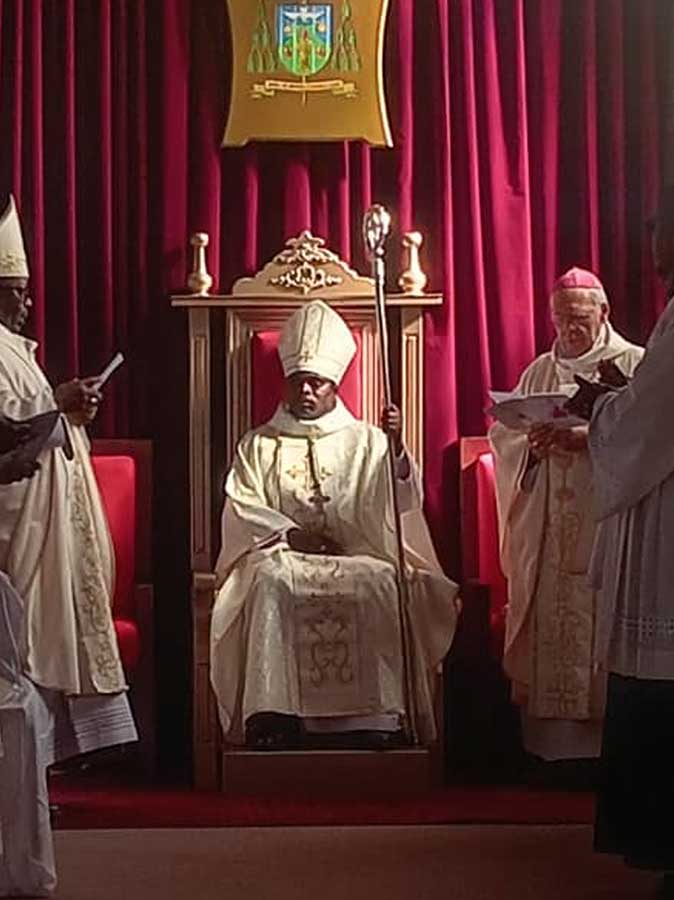
The Diocese of Bethlehem entered a new chapter in its history on Sunday, 5 July 2026, when Bishop Motlatsi Meshack Phomane formally took possession of the cathedra at Holy Ghost Cathedral, officially assuming his ministry as the fifth shepherd of the diocese.
The joyful Eucharistic celebration, attended by bishops in the Southern African Catholic Bishops’ Conference and the Lesotho Catholic Bishops’ Conference, priests, religious and faithful, followed his episcopal ordination at the University of the Free State on Saturday. Family, friends and the faithful gathered once again to witness the final liturgical act that completes a bishop’s installation into the diocese entrusted to his pastoral care.
Taking possession of the cathedra is the canonical act by which a bishop formally assumes governance of his diocese. The cathedra, from the Latin word for “chair”, is the bishop’s official seat and the visible symbol of his teaching authority and pastoral office. It is from this chair that the bishop exercises his ministry of teaching, sanctifying and governing the people of God entrusted to him.
Taking his seat
During the rite, Bishop Phomane was led to the cathedra after the rite of reception. By taking his seat for the first time, he visibly assumed responsibility for shepherding the local Church, becoming the chief pastor and teacher of the Diocese of Bethlehem.
Beginning his first homily as diocesan bishop, Bishop Phomane expressed heartfelt gratitude to God for His providence and acknowledged the responsibility that now rested upon his shoulders.
“Today, we are happy as the Diocese of Bethlehem because God has remembered us and given us a shepherd who will lead us,” he said.
“I, as your shepherd, unworthy as I am, am happy that God raised the lowly one and trusted me to serve Him in this ministry.”
He thanked God for the gift of episcopal ministry and invited the faithful to recognise the many blessings God had bestowed upon their own lives.
“We give thanks to God for entrusting us with the sacred task of teaching, sanctifying and governing His people in this part of His kingdom. We give thanks for the joy and grace He has bestowed upon us.”
Encouraging the congregation to make thanksgiving a way of life, Bishop Phomane invited everyone to reflect on God’s goodness in their families and communities.
“I invite you also to reflect on the blessings and gifts that the Lord has given you personally in your family and in your community, and approach Him at His altar to express your gratitude.”
Reflecting on the day’s readings, the bishop centred his homily on the choice every Christian must make between living according to the flesh and living according to the Spirit.
Drawing from the prophecy of Zechariah, he reminded the faithful that God sent not a conquering warrior but a humble King who brings peace and freedom.
He explained that St Paul’s Letter to the Romans presents Christians with two contrasting ways of living.
“’Flesh’ refers to our human weakness and our tendency to seek our own interests,” he said. “’Spirit’ is the life and power that comes from God through Jesus Christ.”
Bishop Phomane challenged the faithful to examine their own lives.
“We need to ask ourselves whether we live according to the flesh or according to the Spirit.”
“When we live according to the flesh, everyone does what pleases them, even at the expense of others. But when we live according to the Spirit of Christ, the Spirit of humility and love, we place others first and help them whenever they are in need.”
Choose the Spirit
The bishop emphasised that choosing the Spirit is ultimately choosing life itself.
“If we choose to obey the Spirit rather than the flesh, we are choosing life over death.”
He reminded the congregation that every baptised person shares in the mission of the Church and has received gifts that should be placed at the service of others.
“Each one, according to their baptism, is called and sent by God. We need to heed that calling and use our gifts for the good of the Church.”
Reflecting on Jesus’ invitation in the Gospel to take up His yoke, Bishop Phomane explained that discipleship is not necessarily free from hardship but becomes bearable when carried with love.
“Jesus does not mean that the burden is easy to carry,” he said. “He means that it is meant to be carried in love and with love. That love makes even the heaviest burden light.”
Quoting the familiar saying, “Where there is love, there is always a way,” he encouraged the faithful to place their trust completely in Christ.
The bishop also reflected on prayer as the place where Christians are invited to surrender the burdens they carry each day.
“This offloading is the main purpose of our lives and prayers,” he explained.
He described the Eucharist as the privileged place where believers place before God their anxieties, failures and struggles.
“During Holy Mass, we place our stress-filled lives on the altar and allow Jesus to cool down the overheated radiators of our hectic lives.”
“We also offload the burdens of our sins and worries on the altar and offer them, and ourselves, to God.”
Turning his attention to the future of the Diocese of Bethlehem, Bishop Phomane called on clergy, religious and laity to embrace a spirit of unity and shared responsibility.
Let’s build this Diocese!
“Today, we start a new chapter together as the Diocese of Bethlehem,” he said.
“We start with joy and hope that what God has begun in us, He will bring to completion.”
Echoing the synodal vision repeatedly emphasised throughout the Church, he urged the faithful to allow themselves to be guided by the Holy Spirit rather than by selfish ambitions.
“If we are to build this diocese, if we are to help the People of God grow in faith and love, we need to acknowledge that the Spirit of the Lord is here to empower us.”
“We need to choose the Spirit of Christ, not our own selfish and human desires.”
He challenged every member of the diocese to ask how they could contribute to its future.
“What can you do to help our diocese grow? What do you need to do to help our diocese move forward?”
“Choose well. Choose the Holy Spirit because He guides us, directs us and empowers us.”
Concluding his homily, Bishop Phomane invited everyone not only to thank God for what He had done in their personal lives, but also to reflect on what they could offer in return for the growth of the Diocese of Bethlehem.
“What can you do for the Diocese of Bethlehem to make it a home, a joyful home, a happy home, for all who live and come here?”
“Let us all join hands and work together, listen to one another, serve one another, as we move forward praising God on this journey towards our heavenly home.”
With the installation complete, Bishop Phomane officially succeeds a distinguished line of shepherds who have shaped the life of the Diocese of Bethlehem over nearly eight decades. He becomes the fifth bishop to lead the diocese, following Bishop Jan de Groef, who shepherded the diocese from 2008 to 2026; Bishop Hubert Bucher (1976–2008); Bishop Peter Kelleter, who served first as Apostolic Vicar from 1950 before becoming bishop from 1951 to 1975; and Bishop Léon Klerlein, the first Apostolic Vicar, who led the territory from 1948 to 1950.

- Bishop Nyandoro calls on religious leaders to defend human dignity and advocate for peace - October 14, 2026
- Father Chaka Motanyane: Support Matrics 2026! - October 13, 2026
- SECAM Seeks African Participation in World Youth Day 2027 - September 24, 2026