Question: In your December 2025 edition, I read that St Francis Xavier is buried in Goa, India, but that his arm is in Rome at the Jesuits’ mother church. Yet the Church insists that the body of the faithful should remain whole — a principle often emphasised in its prohibition on scattering ashes, rooted in belief in the unity of body and soul and the resurrection. If that is so, does the practice of dividing the relics of saints not contradict the very principle we uphold in Catholic burial?
Answer: You touch on something that would indeed seem like a contradiction. On the one hand, the Church’s teaching on Christian burial is that the human body must be treated with reverence, never divided, scattered or handled as an object. Even in cremation, the Church insists that the ashes be kept together, and buried or interred in a sacred place.
As you note, we often hear this explained in terms of our belief in the unity of body and soul, and in the resurrection of both at the end of time.
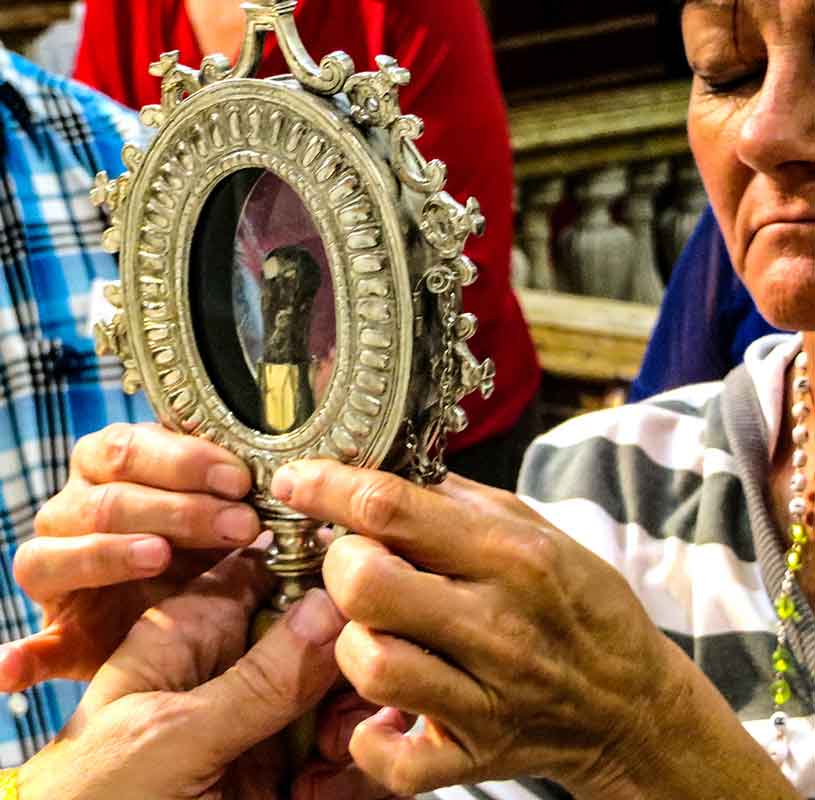
And yet, the Church venerates relics of saints — sometimes very small fragments of bone or tissue, sometimes whole body parts — placed in reliquaries, embedded in altars, or distributed to churches around the world.

But doesn’t this violate the very principle the Church holds when speaking about cremation and burial? The answer resides in the history and theology of relics.
From the earliest days of Christianity, the faithful were drawn to the graves of the martyrs. These men and women, who had borne witness to Christ even to the point of death, were seen as being especially close to the Lord in glory. Their tombs became places of prayer, and before long the Church began to keep relics of martyrs in her care.
By the 4th century, fragments of their remains were placed in altars — a tradition that continues to this day. When we celebrate Mass, we often do so literally over the bones of the saints, in continuity with the Christians of the catacombs.
The practice of dividing and distributing relics grew out of a pastoral instinct. Not every community could gather at the grave of a martyr in Rome, Antioch or Carthage. But by sharing a relic — even a small piece of bone or an object associated with the saint — the local Church could be visibly united with the universal witness of holiness. Relics became sacramentals: physical signs that direct our hearts to God and connect us to the communion of saints.
This is the key distinction. In ordinary circumstances, dividing or scattering human remains would be a violation of the integrity and dignity of the person. But in the case of the saints, the Church understands their relics as instruments of grace for the faithful.
This does not contradict our belief in the resurrection of the body. God’s power to raise the dead is not limited by the condition or location of our earthly remains. Many of the early martyrs, after all, were burned, drowned or torn apart in persecution. Even today, people may die in ways that leave little of their bodies intact. Yet we believe — and proclaim each Sunday in the Creed — that we will rise again in glory on the Last Day.
Published in the March 2026issue of The Southern Cross Magazine

- Pope Leo’s Prayer for Mission Sunday - October 17, 2026
- A Call to Unity and Love: Pope Leo on the 100th World Mission Day - October 17, 2026
- Walking in the footsteps of Blessed Joseph Gérard: Missionary Associates renew their missionary call - October 15, 2026