Kati Dijane reporting from Kigali, Rwanda
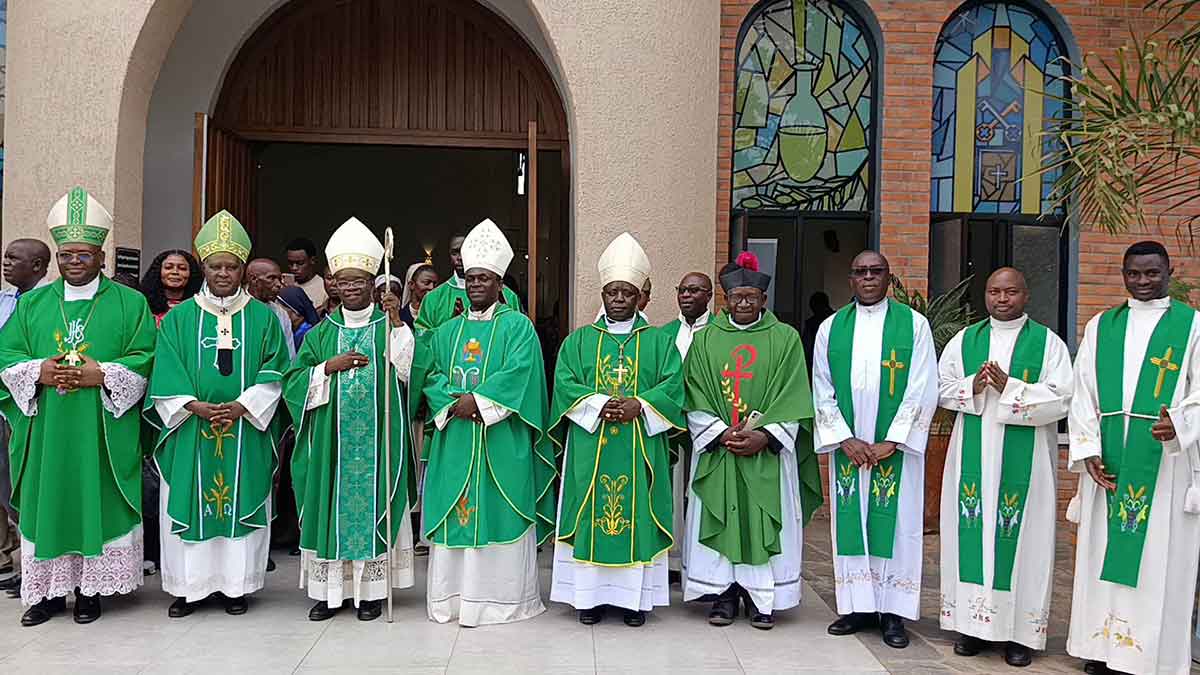
Delegates attending the SIGNIS World Congress 2026 began the second day of the international gathering in prayer as they celebrated Holy Mass on Wednesday, 5 August, at St Paul Chapel, a short walk from the Sainte Famille Hotel where the congress is taking place. Archbishop Fortunatus Nwachukwu, Secretary of the Vatican Dicastery for Evangelisation, presided over the Eucharistic celebration alongside Cardinal Antoine Kambanda, Archbishop of Kigali, bishops and priests from around the world.
The day’s liturgy coincided with the Memorial of the Dedication of the Basilica of St Mary Major in Rome, one of the Church’s oldest and most significant Marian basilicas. In his homily, Archbishop Nwachukwu invited participants to deepen their appreciation of the basilica’s rich history while drawing inspiration from the Gospel’s message of perseverance, humility and faith.
The Mother Church of Marian devotion in the West
Reflecting on the significance of the feast, Archbishop Nwachukwu described St Mary Major as the first and greatest church in the Western world dedicated to the Blessed Virgin Mary. He explained that it is one of Rome’s four major papal basilicas, alongside St John Lateran, St Peter’s Basilica and St Paul’s Outside the Walls.

He recounted the centuries-old tradition associated with the basilica, often celebrated as Our Lady of the Snows. According to tradition, a wealthy Roman couple prayed for guidance on how best to dedicate their fortune to God. The Blessed Virgin Mary appeared to them in a dream, instructing them to build a church on the Esquiline Hill where snow would miraculously fall on 5 August.
While August is typically the hottest month in Rome, tradition holds that snow indeed covered the hill, prompting Pope Liberius in the fourth century to erect a church on the site. Later, after the Council of Ephesus in 431 proclaimed Mary as Theotokos, or Mother of God, Pope Sixtus III rebuilt and expanded the church into the magnificent basilica known today as St Mary Major.
The archbishop also highlighted the basilica’s close association with Pope Francis, who regularly prayed before the revered icon of Salus Populi Romani before and after every apostolic journey and chose to be buried there.
A basilica with African roots
In a particularly moving reflection for the delegates gathered in Rwanda, Archbishop Nwachukwu reminded the congregation that St Mary Major also bears an important African legacy.
He recounted the remarkable story of António Manuel Nsaku ne Vunda, an ambassador of the Kingdom of Kongo (located between present-day northern Angola and the DRC), who was sent to Rome in 1604 by King Álvaro II to seek Pope Paul V’s support against the transatlantic slave trade. After a four-year journey through Brazil, Portugal and Spain, the ambassador arrived gravely ill in Rome in January 1608.
Although he died just two days after his arrival, Pope Paul V personally received his credentials and ordered that he be buried with full honours in St Mary Major Basilica. Today, his tomb remains there as a lasting witness to Africa’s historic relationship with the Holy See and the Kingdom of Kongo’s efforts to oppose the slave trade.
“Rome is also ours,” Archbishop Nwachukwu said, encouraging African Catholics to recognise their place within the universal Church and never feel excluded from its rich history.
A call to welcome, not exclude
Turning to the Gospel of Matthew (15:21–28), Archbishop Nwachukwu reflected on the encounter between Jesus and the Syrophoenician woman, whose unwavering faith won healing for her daughter.
He observed that while Jesus initially remained silent, the disciples were eager to send the woman away because they saw her as a nuisance. The archbishop noted that throughout the Gospels the disciples often attempted to dismiss those seeking Jesus, including hungry crowds and even children.
Drawing parallels with contemporary society, he challenged communicators and believers alike to examine whether they bring people closer to Christ or unintentionally drive them away.
“There are those who, through their words, actions and deeds, bring people to Jesus, and those who, through their words, actions and deeds, send people away from Jesus,” he said, urging the faithful to reflect on which example they follow.
Faith that perseveres
Archbishop Nwachukwu explained that the exchange between Jesus and the Syrophoenician woman was not intended to demean her but to reveal the depth of her humility and perseverance.
When the woman replied that even dogs eat the crumbs that fall from their master’s table, she demonstrated a profound understanding that God’s grace is not something owed but a gift freely received.
Her persistence became a powerful witness to the effectiveness of intercessory prayer, the archbishop said, reminding delegates that faithful prayer offered for family members, friends or those who do not yet know Christ can become a channel through which God’s grace reaches others.
He concluded by praying that all present would receive “the grace of humility and perseverance in prayer.”
Beginning the day with Christ
With the celebration of the Eucharist providing a spiritual foundation for the day’s work, the delegates present then proceeded to continue with the day’s programme that included plenary sessions from the American Bible Association and a presentation about the upcoming World Youth Day in 2027. The itinery also included a visit to the Kigali Genocide Memorial, place of remembrance to the victims of the Genocide against the Tutsi in Rwanda.

- Over 50 Young People Evangelise on the Streets of Mbombela - October 7, 2026
- Pope: God Transforms Evil into Redemption - October 6, 2026
- Mass Readings: 11 October – 18 October, 2026 - October 5, 2026