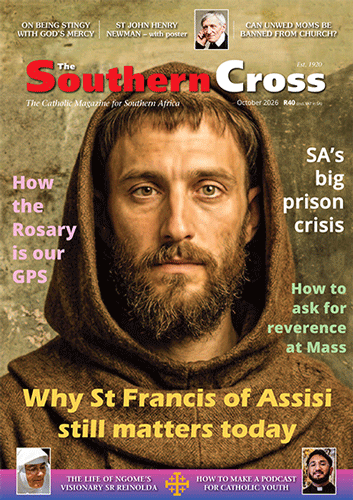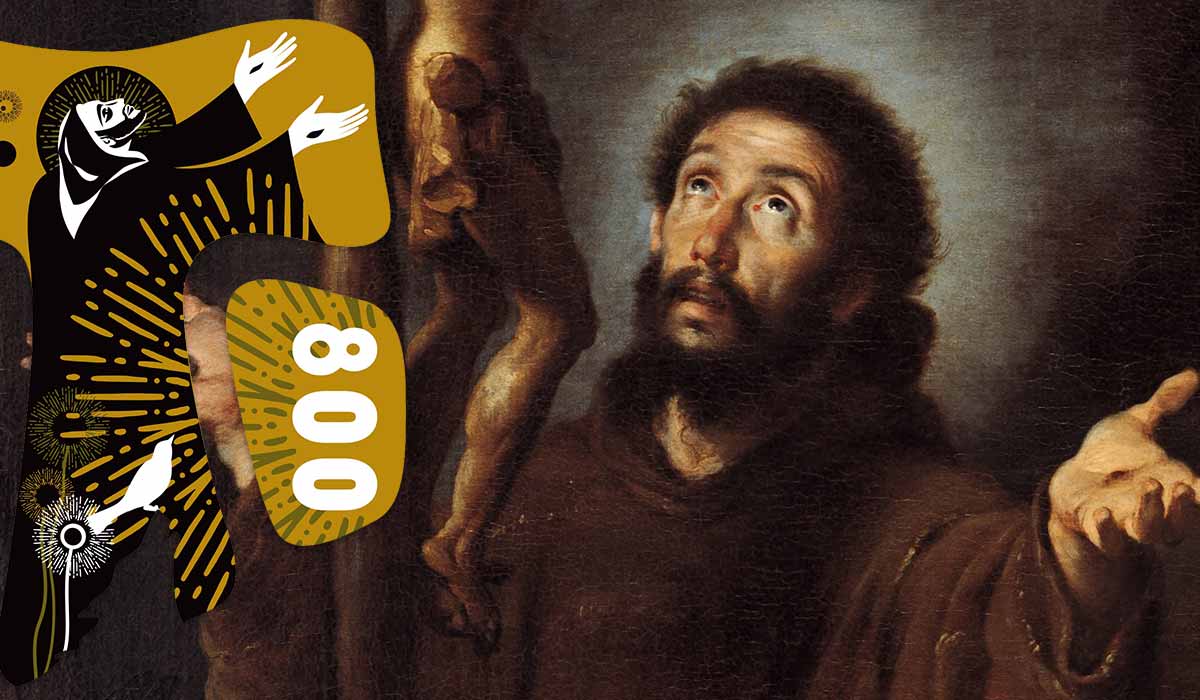
This year the Church marks the 800th anniversary of the death of St Francis of Assisi. In the third of a four-part series reflecting on different aspects of the saint’s spirituality, Günther Simmermacher looks at how Francis saw all of Creation as interconnected — a family.
Saint Francis of Assisi is often remembered as the patron saint of animals: the gentle mystic preaching to birds, taming the wolf of Gubbio, delighting in flora and fauna. These stories draw from historical tradition and early Franciscan sources, and they should inspire and even guide us, as they did Pope Francis in his 2015 encyclical on Creation, Laudato Si’.
But these stories also risk reducing Francis to a caricature of the medieval hippie — and Francis the Hippie can be easily dismissed as a naive, harmless idealist who simply did not understand the ways of the “real world”.
Such a condescending view, however, would miss the depth of Francis’ vision. As Pope Francis understood, the saint’s relationship with Creation was deeply theological, grounded in a radical understanding of the world as God’s gift, and humanity as its brother rather than its master.

No ownership
This vision emerged from Francis’ own conversion. When he renounced wealth, security and social status, he stripped himself — literally — not only of possessions but also of claims to ownership. Owning nothing, he encountered creation without the burden of ownership or control. The world ceased to be something he used and became something he received.
For Francis, creation was not raw materials awaiting human mastery and exploitation, nor a neutral stage on which salvation history happened to unfold. Creation already had meaning long before humanity emerged. Every creature bore the imprint of its Creator and glorified God simply by being what it was made to be. Just to exist was to praise God.
This conviction is at the heart of Francis’ spirituality. God is Father not only of human beings but of all that exists. From this truth flowed a sense of universal kinship. When Francis called creatures “brother” and “sister”, he did so not out of poetic flights of fancy but because they shared a common origin and destiny in God. Creation is interconnected by virtue of having been made by God, and consequently all creation is family.
Song of Creation
The most splendid expression of this vision is the “Canticle of the Creatures”, composed near the end of Francis’ life (and analysed in our issue of October 2024).
Often misread as a cheerful ode to nature, the Canticle is in fact a spiritual hymn rooted in suffering. Francis wrote it when he was nearly blind, tormented by illness, and sensing the approach of “Sister Death”.
The canticle addresses “Brother Sun”, “Sister Moon”, “Brother Wind”, “Sister Water”, “Brother Fire” and “Sister Mother Earth”. Each creature is named for its character and dignity. Sun is “beautiful and radiant”, water “humble and precious”, fire “strong and playful”. St Francis sees God as the source and sustainer of all life, present in every aspect of creation, from the sun and moon to the elements of Earth. This view emphasises the sacredness and interconnectedness of all living beings.
Crucially, Francis speaks with, not about, creation. Praise is not just a human activity. The non-human world glorifies God without words, simply by being faithful to its nature. Humans, invested with reason and freedom, are called to join this chorus, consciously and humbly. When they do not — when humans tear down nature, pollute rivers and sky, place profit and comfort above creation — and when they act against nature, they are not glorifying God. They do the very opposite.
This theology was evident in Francis’ daily conduct. He showed tenderness to animals, rescued worms from roads, lest they be crushed, and urged his brothers to leave part of their gardens uncultivated so that wildflowers could grow freely.
Spiritual Disorder
At the same time, Francis’ love for creation and his concern for the poor were inseparable. The same Gospel that taught him to see Christ in the leper taught him to recognise God’s generosity in the natural world. Exploiting the earth and exploiting the poor were symptoms of the same spiritual disorder: taking rather than receiving. Francis’ poverty was therefore ecological: he saw the world not as something to be consumed but as something to be contemplated.
This insight is at the core of Pope Francis’ Laudato Si’, which deliberately takes its title from the opening words of the “Canticle of the Creatures”. Pope Francis presents the saint of Assisi not as the mascot for environmentalism many see him as, but as a model of integral ecology — an approach that recognises the inseparable links between care for creation, care for the poor, and spiritual conversion.
Laudato Si’ notes that the ecological crisis is a technical and political problem — but more than that, it is a moral and spiritual emergency. At its root is what Pope Francis called a “throwaway culture”, driven by greed, entitlement and disregard for God. The remedy, he argued, is not simply better policies — those are necessary — but also a change of heart: a renewed sense of wonder, gratitude and restraint, free from the cynicism of a selfish profit- and comfort-driven world.
St Francis teaches that a right relationship with the world begins with a right relationship with God. Creation cannot be healed unless human desire is healed. Without praise, gratitude and humility, environmental concern thus risks becoming just utilitarian or ideological.
Saint and pope
Pope Francis deepened this teaching in his 2023 apostolic exhortation Laudate Deum, written in response to worsening climate breakdown and inadequate global action. Laudate Deum warns that Creation is not an object to be managed but a gift to be safeguarded for the sake of all, especially the vulnerable.
Both documents echo St Francis’ refusal to separate ecological from moral responsibility. The cry of the Earth and the cry of the poor are one. Environmental destruction, like economic injustice, is a sign that humanity has forgotten its place within Creation.
Even 800 years after his death, Francis of Assisi challenges modern assumptions about progress and mastery. Dominion, which is the power over nature that was granted to humanity (Genesis 1:28), is not the same as domination. The biblical command to “till and keep” the earth (Genesis 2:15) demands care, restraint and accountability.
Francis’ vision also resists the temptation to idealise nature while ignoring human suffering. He loved the leper before he loved the lark.
Hello Sister Death
Even death finds its place within this vision. In the final verse of the “Canticle”, Francis welcomes “Sister Death”, acknowledging her as part of the created order. Death is integrated into praise as a passage in our journey.
In an age marked by ecological anxiety, Francis calls us to conversion. He insists that environmental responsibility is not an optional concern for Christians, nor a fashionable adjunct to faith. It is a dimension of discipleship rooted in praise, humility and gratitude. He asks us to change our way of seeing — to rediscover Creation as sacrament and as family.
Only then can humanity take its rightful place within the chorus of praise — not as owners or dominators, but as grateful brothers and sisters.
Next: Suffering, the Cross and the Stigmata
Published in the September issue of The Southern Cross Magazine

- Sydney Duval: We Call him Friend - October 8, 2026
- St Francis and Mission - October 6, 2026
- St Francis of Assisi: Creation and Brotherhood - September 28, 2026