Healing is not always about the disappearance of pain, and reconciliation is not always an easy journey. Sometimes, healing begins with the courage to apologise, the humility to forgive and the willingness to repair what has been broken.
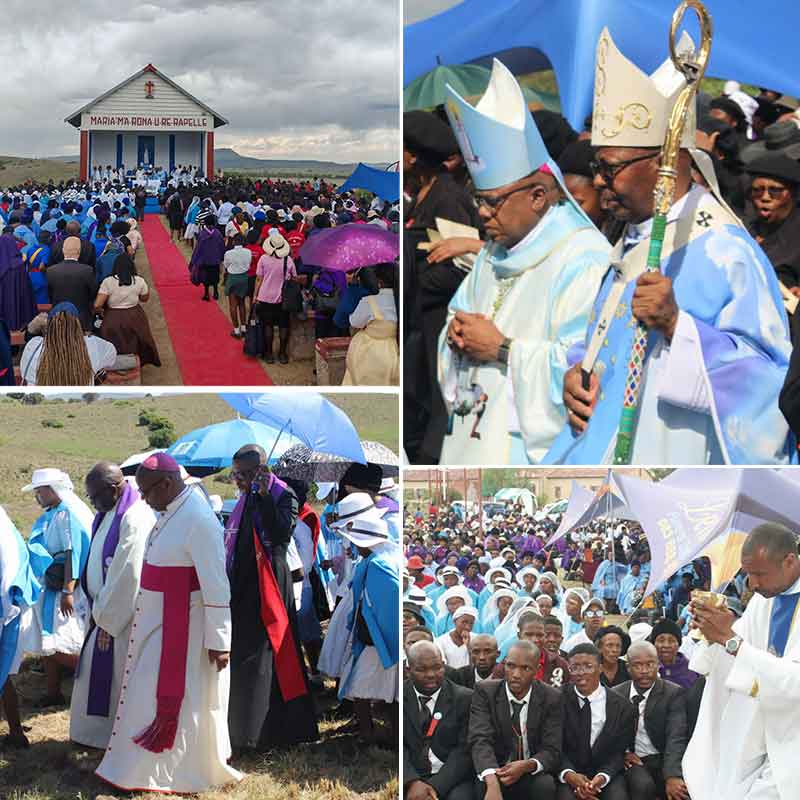
This was the message at the heart of the Archdiocese of Bloemfontein’s annual pilgrimage in honour of Our Lady of Fatima, held at Holy Trinity, Maseru Farm, on Sunday, 25 October 2026.
Gathered under the theme, “Maria Mofumahali oa Fatima, Mmuelli wa Rona, re kopele pholo le poelano ho Morena Modimo!” calling on Our Lady of Fatima, their intercessor, to pray for healing and reconciliation before the Lord God, the faithful came together carrying their prayers, struggles and hopes. Yet the pilgrimage offered more than an opportunity to ask for God’s intervention. It challenged those present to become instruments of the healing and reconciliation for which they prayed.
A journey of prayer towards the cross
The spiritual journey began with an explanation of the pilgrimage theme by Fr Mothusi Sidney Boatile, OMI, who reflected on the intercessory role of Our Lady of Fatima and her place in the life of the Church.

He reminded the faithful that Mary is not the final destination of their journey of faith, but points them towards her Son, Jesus Christ. He encouraged them to pray for one another and to allow their devotion to lead them into a deeper relationship with Christ.
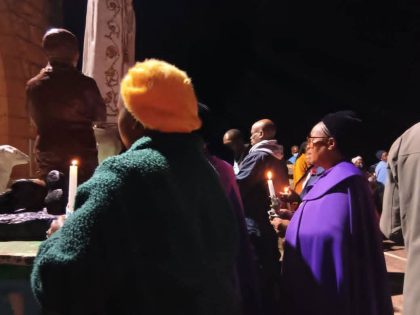
The recitation of the Rosary followed, with the faithful processing towards the cross as different sodalities and leagues from across the Archdiocese led the mysteries. The procession became a collective expression of faith, bringing together people from different communities in prayer and reflection.
As the faithful walked towards the cross, they were reminded that the Christian journey is not free from suffering. It is, however, a journey sustained by faith, strengthened through prayer and centred on Christ.
Seeking mercy, healing and spiritual renewal
Throughout the pilgrimage, the programme created opportunities for the faithful to bring their spiritual, physical and emotional needs before God.
Fr Moji Phakisi, CSS, led the penitential service ahead of confession, inviting the faithful to examine their lives, seek forgiveness and renew their commitment to Christian living. The Sacrament of Reconciliation offered an opportunity to confront personal failings and receive God’s mercy.
Fr Charles Matsoso, OMI, of Radio Maria Lesotho, attended with his team and reflected on the central place of the Eucharist in Catholic life. Drawing on the biblical account of the Israelites receiving manna in the wilderness, he spoke about God’s provision for his people and encouraged the faithful to approach Holy Communion with reverence. He also emphasised the importance of prayer before and after receiving the Eucharist, urging them to remain conscious of the sacredness of the encounter.
The call for healing was expressed during a healing service led by Fr Setlharemanng Letseng. The faithful were invited to pray for those experiencing physical illness, emotional distress and other personal struggles. Priests and bishops applied holy oil for the sick to the foreheads and hands of those who came forward, accompanying the gesture with prayer.
Deacon Dennis Ikenna led the exposition of the Blessed Sacrament, giving the faithful an opportunity to spend time in silent prayer and adoration before Christ in the Eucharist.
Prayers were also offered for the unemployed and those preparing for examinations, led by Fr Molikeng Lebofa. Fr Sam Wolff blessed water and religious articles brought by the faithful.
Together, these moments reflected the many intentions carried to the pilgrimage: prayers for healing, employment, success in examinations, peace in families and the grace to persevere through difficult circumstances.
Yet the most profound challenge of the day was that healing and reconciliation could not remain merely intentions spoken in prayer. They also demanded a response in the lives of those who prayed.
When prayer must become action
The closing Holy Mass was presided over by Archbishop Zolile Mpambani, SCJ, while Bishop Duncan Tsoke of the Diocese of Kimberley delivered the homily.
Reflecting on the apparitions of Our Lady of Fatima to three shepherd children in Portugal in 1917, during the First World War, Bishop Tsoke recalled the call to prayer, penance and conversion. He connected this message to the wounds that continue to affect families and communities today, including betrayal, rejection, division and broken relationships.
He reminded the faithful that healing does not always mean that every difficulty disappears immediately. Sometimes, God changes a situation; at other times, he gives people the strength to endure it. Suffering, he stressed, should not be interpreted as proof that God has abandoned them.
The bishop turned to the wedding at Cana, where Our Lady of Fatima’s example as a mother who brings human need before Jesus offers a powerful lesson for Christian life. Her words in the Gospel of John, “Do whatever he tells you” (John 2:5), remain an invitation to obedience and action.
For Bishop Tsoke, devotion to Our Lady of Fatima must lead beyond the recitation of prayers to a willingness to live the Gospel. Those who pray for reconciliation must also be prepared to take the first step towards it.
He challenged the faithful to apologise when they have caused hurt, to stop spreading false information on social media and to avoid words and actions that create division within families, parishes and communities.
Forgiveness, he cautioned, does not mean accepting abuse or injustice. Genuine reconciliation requires truth, accountability, humility and a willingness to change. It is not achieved by pretending that nothing happened, but by confronting what has caused harm and taking meaningful steps towards restoring relationships.
The courage to mend what is broken
Bishop Tsoke invited the faithful to examine whether their devotion to Our Lady of Fatima was reflected in their everyday relationships.
It is possible, he suggested, to pray the Rosary while refusing to speak to a family member, to ask God for peace while harbouring jealousy and resentment, or to seek reconciliation while allowing pride to prevent an apology.
Such contradictions challenge Christians to consider whether their prayer is transforming their hearts and conduct.
Prayer, he emphasised, must influence the way people speak to one another, respond to conflict and take responsibility for the pain they may have caused. The message of Our Lady of Fatima is not simply about seeking divine intervention; it is also about allowing God to work through the faithful in bringing peace to others.
To illustrate this, the bishop shared the story of a cracked clay pot that felt ashamed because it leaked water along the path. Unbeknown to the pot, the water it lost nourished seeds along the way, allowing flowers to grow.
The story offered a gentle but powerful reminder that what appears to be a weakness does not have to define a person. Wounds and imperfections do not place anyone beyond the reach of grace. Even painful experiences, when met with humility and a willingness to grow, can become part of a journey towards compassion and renewal.
The message was especially meaningful in the context of healing and reconciliation. People may carry wounds from broken relationships, rejection or past mistakes, but these wounds need not have the final word. Through God’s grace, there remains the possibility of healing, growth and new beginnings.
Bishop Tsoke called on the faithful to become instruments of peace in their homes, in the Church, in South Africa and across Africa. Reconciliation, he reminded them, must be lived through compassion, honesty, forgiveness and a readiness to rebuild what has been damaged.
Carrying the message home
After Archbishop Mpambani imparted the final blessing, a gentle drizzle began to fall. In a moment carrying special cultural significance, the rain was received as a symbol of blessings, bringing a poignant close to the day’s gathering.
But the lasting significance of the pilgrimage lay not only in the prayers offered, the services celebrated or the religious articles blessed. It lay in the challenge extended to every pilgrim: to carry the message of healing and reconciliation into daily life.
To seek healing is to recognise the pain of others. To pray for reconciliation is to become willing to take the first step towards peace. And to honour Our Lady of Fatima is to follow her direction towards Christ, allowing his teachings to shape the way we live and relate to one another.
As the faithful returned to their homes and communities, the pilgrimage left them with a question that reaches beyond a single day of prayer: What must I do to become an instrument of healing and reconciliation?
The answer may begin with a sincere apology, a conversation long avoided, a rumour left unshared or a decision to approach another person with compassion rather than judgement.
The pilgrimage was not simply an occasion to ask God for healing and reconciliation, but a call to become instruments of both.