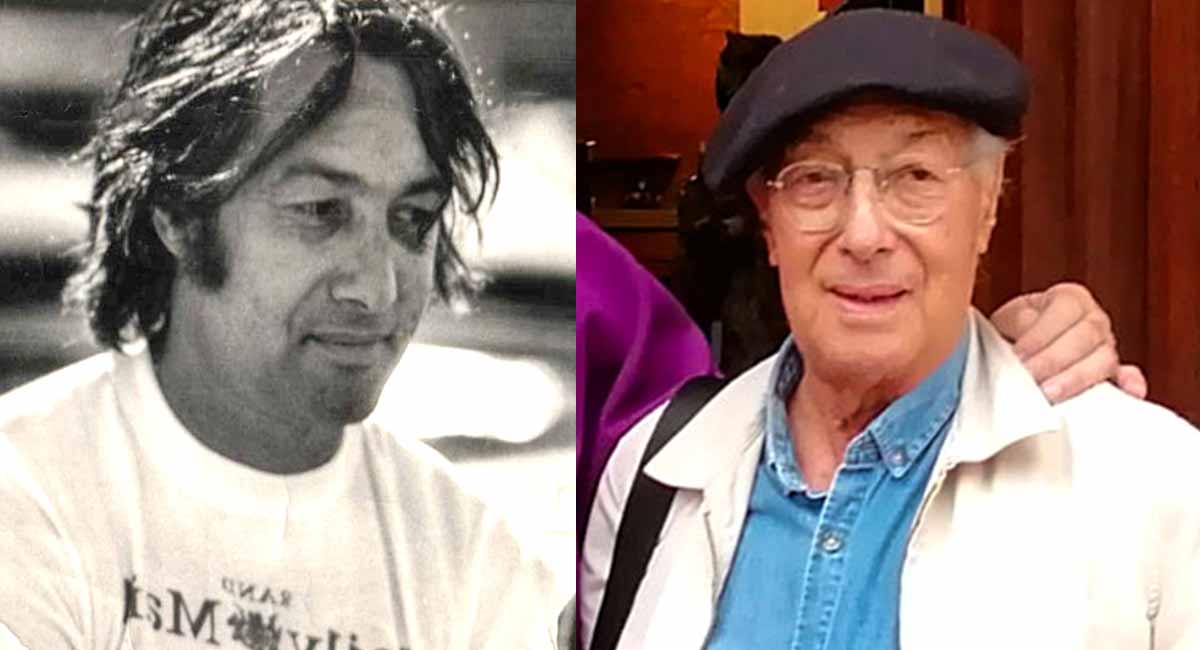
Many South Africans have benefited from Church work made possible by funding secured by Sydney Duval, who turned 90 this year. Günther Simmermacher pays tribute to an unsung giant of the local Church who has lived a life of faith in action.
Wherever Sydney Duval has served, he has left a mark — whether in his native KwaZulu-Natal, in Johannesburg, or in Cape Town, where he has lived for the past 46 of his nine decades of life.
On May 4 Duval turned 90, and we can be certain that he does not feel his work is done yet — there is always something to do in the Church he loves so deeply.
Born in 1936 in Durban to Lelia Therese (née Victor) and Cyril Michael Duval, who worked for SA Railways, Sydney was the eldest of three brothers and three sisters. Both parents had roots in Mauritius. He grew up in St Michael’s parish in Red Hill and later moved to St Joseph’s parish in Morningside. He matriculated from Glenwood High School.

From a young age Sydney was engaged in many church activities, including serving as a stagehand at the first Durban Passion Play in 1952, at the tender age of 15.
“One night, because I was small, I was asked to squeeze into a cockpit-like space to help steady the wonky cross on which David Horner, playing Christ, was being crucified,” Duval remembers. “In his final agony he uttered those passionate words, ‘My God, my God, why have you forsaken me?’ Just then a commotion broke out in the audience when a very emotional man shouted, ‘Stop playing the bloody fool with a thing like that. Get on with it.’ An outraged Oblate priest promptly upended that man. And as I stood there, bracing the cross, I felt as though I was helping David hold up the universe.”
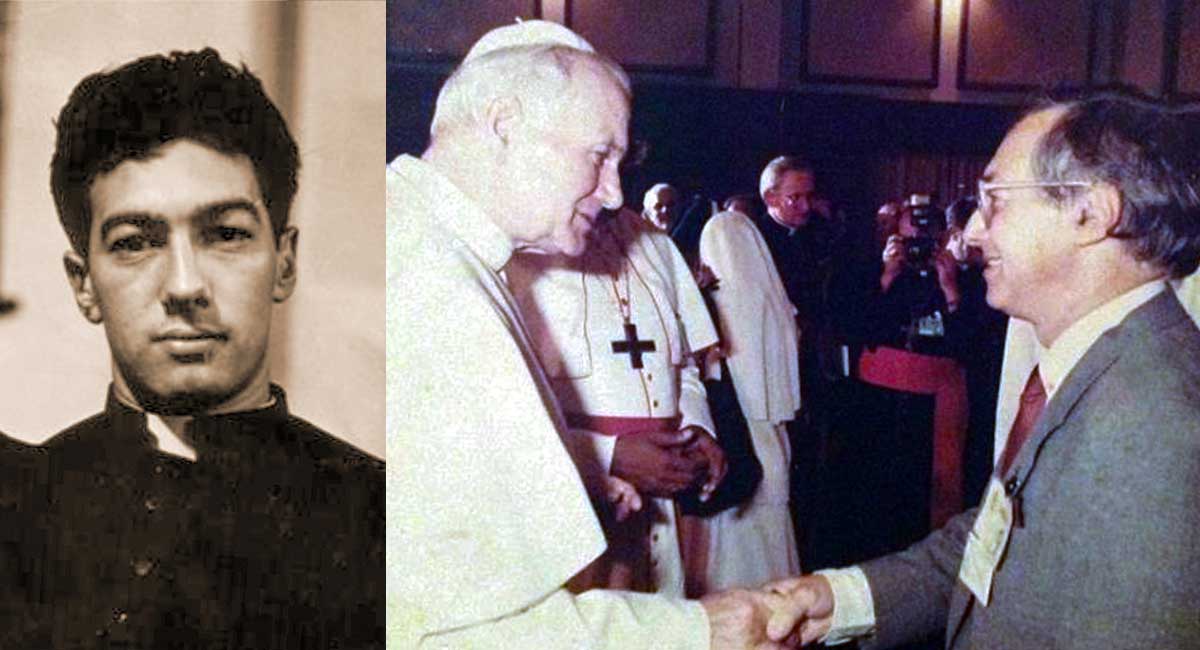
Entering the seminary
With faith so integral a part of his life, Duval saw his future in the priesthood and in 1958 he entered the seminary. At St John Vianney Seminary in Pretoria he forged close, lifelong friendships with the likes of Mgr Paul Nadal and Michael Shackleton in particular, as well as with future bishops Michael Coleman and Reginald Cawcutt. Friendship has been a defining theme in Duval’s life.
Over time, Duval realised that God was calling him to service outside sacerdotal orders. Instead of reading the Mass, he would write the news.
As a reporter and sub-editor, Duval quickly established a high reputation, especially as a member of the stellar staff of the Rand Daily Mail in Johannesburg, then one of South Africa’s most respected and fearless newspapers. He also worked for titles such as The Star, Pretoria News, Cape Argus and the Sunday Express, and served as editor of the Press, Radio and Advertising Review.
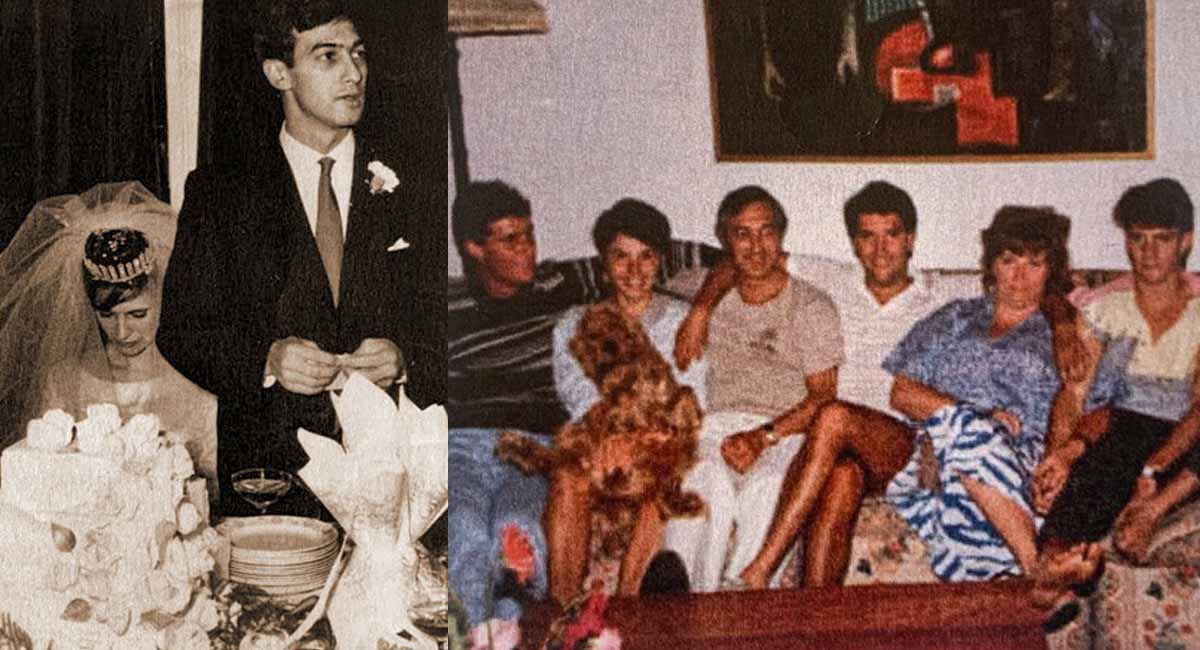
Standing by Duval over all these years was his remarkable wife Christiane (née Henion), whom he married on June 30, 1962. They raised four children: Serge, Clea, Luc and Dominic. Sadly, Christiane passed away on November 2, 2024.
Anti-apartheid activism
In the late 1960s and early 1970s, Duval belonged to a circle of anti-apartheid activists that included Drake Kota, Thom Manthata, Paul Goller, Erick and Jean Tyacke, Donovan Lowry and then-Fr Cosmas Desmond. As part of Catholic Action for Racial Equality (CARE) in Johannesburg, Duval helped draft the bishops’ “Call to Conscience” pastoral statement in 1972 and wrote its preamble. Dr Beyers Naudé described this document as “one of the most important Church documents of the century”. The many anecdotes from those years by the great storyteller Duval deserve a book.
As a journalist, Duval was a leader. He instituted the prestigious Pringle Gold Medal for distinguished services to journalism in defence of press freedom. To his regret, the highly coveted prize later faded away.
Every story he wrote or edited was treated with respect. Also when writing for The Southern Cross, Duval demanded of himself an exactness that sometimes exceeded editorial dictates of word counts and deadlines. What he filed were not just reports but prose of a lyrical bent that journalism has long lost.
He was also in the forefront of serving Catholic media. The Zulu newspaper UmAfrika was always close to his heart. When he became involved in 1986, circulation had dropped to 6000. “By 1994, with Cyril Madlala as editor, we were selling some 72000 a week,” Duval recalls. UmAfrika’s demise in 2013 has always been a source of sadness to him.
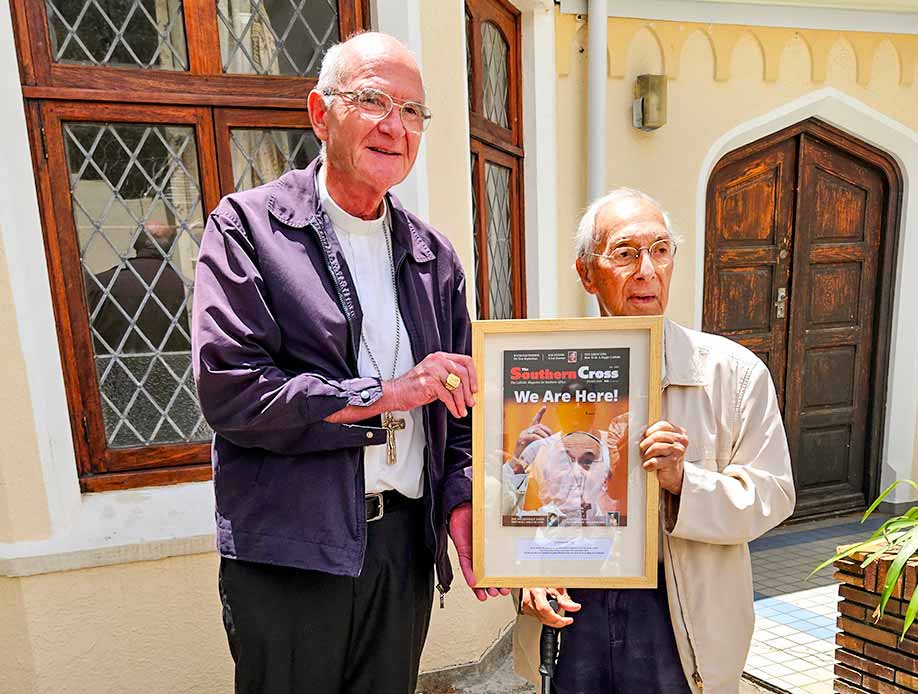
Duval also assisted in setting up the Comboni magazine Worldwide and secured funding to facilitate The Southern Cross’ transition to desktop publishing in the early 1990s. He contributed to The Southern Cross for many years — with news reports, photographs, obituaries — but asked not to be considered for the editorship of the Catholic weekly. In 2010 he finally did edit The Southern Cross, albeit only for a couple of issues while standing in for the editor.
When the Southern African Catholic Bishops’ Conference (SACBC) asked for a lay representative on the board of directors of The Southern Cross in 2006, they appointed Duval, a man who had long enjoyed their trust.
This trust was earned over decades of engagement with Catholic structures and organisations, and through tireless work to secure international funding for Church projects.
Driving Mother Teresa
In 1980 Duval moved to Cape Town, first to work at the Argus. He went on to serve first Archbishop Stephen Naidoo and then Archbishop Lawrence Henry as personal secretary. “My work at the chancery was a seven-day stint, often from morning to night, from urban to suburban to townships and informal settlements, with quarterly working trips to UmAfrika and meetings at the SACBC. Some years I had no annual leave,” he recalls.
Among the highlights in that position was driving Mother Teresa around the Cape Peninsula during her 1988 visit to South Africa, shuttling the busy nun from parish to parish.
All the while he was a board member — including a stint as chairperson — of Catholic Welfare & Development (CWD) for 27 years, served on the board of the Salesian Institute for more than a quarter of a century, and was the first chairperson of the Rural Development & Support Programme (RDSP). In Cape Town, Duval was also the co-founder of Youth Unlimited, a groundbreaking coalition of youth organisations in the city’s townships.
In 1998 he began a long association with the Franciscan Nardini Sisters in Nkandla, KwaZulu-Natal, who are especially close to his heart. Here he was able to draw on his background in journalism as he produced a widely circulated newsletter in two languages.
For these projects, and many others, Duval raised millions of rands from international donor agencies, with whose representatives he had a knack for building lasting relationships, even friendships.
But his abiding love in the Church is Mariannhill, the monastery near Pinetown in Durban, and the Fathers and Brothers who have worked there. For many years he served on the commission that prepared for the sainthood cause of Abbot Francis Pfanner.
Sustained by faith
Duval’s activities have been wide-ranging, but they have all been underpinned by a self-giving commitment. His energetic engagement, incisive perceptions, accumulated wisdom, endless encouragement, dependable loyalty and good humour have made him an invaluable associate and counsellor. In all of it, Duval has been sustained by the deep faith that has accompanied him throughout an eventful life.
Above all, he is a good and loyal friend to many, and one who appreciates the friendship of others. The inexorable advance of age means that one’s contemporaries are fading away — Duval has written many obituaries for them over the years. He regards his Southern Cross obituary of journalist Phyllis Konya in the 1990s as one of his best. More recently he wrote heartfelt tributes to close priest-friends such as Mgr Nadal and Fr Pat Naughton SDB.
We call him friend. Ad multos annos!
Published in the May 2026 issue of The Southern Cross magazine

- Sydney Duval: We Call him Friend - October 8, 2026
- St Francis and Mission - October 6, 2026
- St Francis of Assisi: Creation and Brotherhood - September 28, 2026