St John the Baptiser announced Jesus as the Messiah and suffered one of history’s most infamous executions.
After John had baptised his cousin Jesus, his work was done. He had heralded the arrival of the Messiah and prepared the way for the Lord. Now, he had passed the baton on to the Saviour.
The Gospel tells us that John’s journey of announcing the Messiah began when he was still in the womb of his mother, Elizabeth (our Saint of the Month in November 2022). As the Archangel Gabriel had prophesied, John was filled with the Holy Spirit even in his mother’s womb, with the foetus leaping for joy when Mary, pregnant with Jesus, visited her cousin (Luke 1:15; 41). His joy at the presence of the unborn Christ was a sign of his role as the precursor to Jesus.

John’s parents, Zechariah and Elizabeth, were both descendants of the priestly lineage of Aaron, living in the hill country of Judea, traditionally in what is now the village of Ein Kerem, west of Jerusalem. They were elderly and childless.
One day, Zechariah was serving in the Temple in Jerusalem when the archangel appeared to him, announcing that his wife would bear a son, who would be called John (Luke 1:13). When Zechariah expressed his scepticism at such a turn of events, he was struck mute, not regaining his speech throughout Elizabeth’s pregnancy.
When the time came to name the child, Elizabeth insisted on calling him John, a name that was not from Zechariah’s family line. The villagers protested that this violated convention, as naming a child was the father’s prerogative. At this, Zechariah confirmed Elizabeth’s — and the angel’s — choice by writing: “His name is John.” And instantly, he regained his voice.
Nothing is known about John’s childhood. Zechariah must have been wealthy, for the family had two homes: one on top of a hill, where Elizabeth spent her pregnancy and received Mary; the other in the village. Both homes are marked by Franciscan churches in Ein Kerem.
The spot of John’s birth is pinpointed in a crypt in the church of the Nativity of St John. The church of the Visitation on top of the hill includes a disused water cistern, which is now regarded as the place where Elizabeth and the infant John hid during Herod’s Massacre of the Innocents.
Into the desert
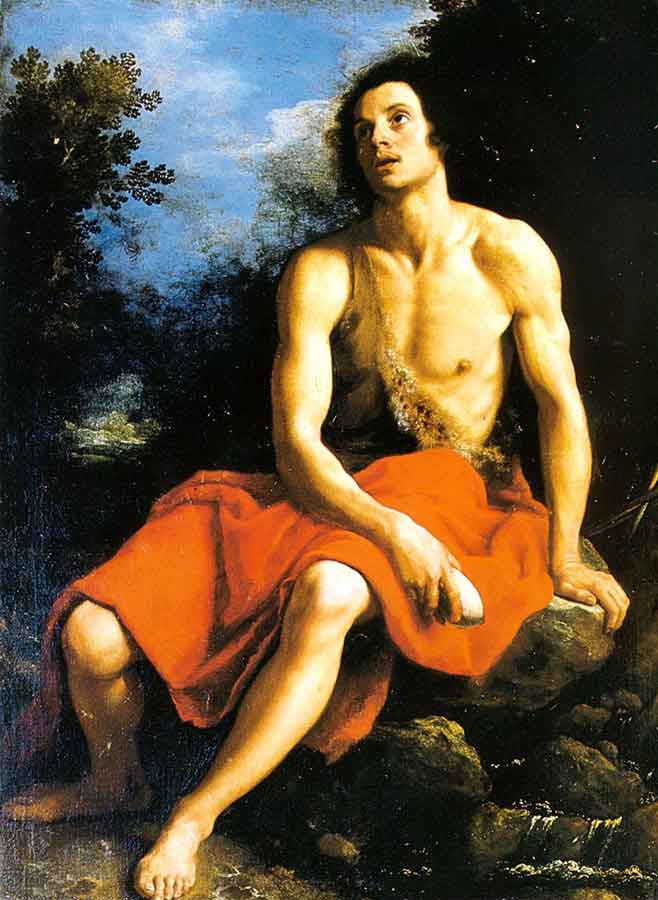
We next encounter John in the wilderness, living off wild honey and locusts. The desert was a place of spiritual preparation for John, and it was here that he would receive his prophetic calling. Some scholars suggest that John might have had connections with the Essenes, a Jewish sect that lived in the desert near the Dead Sea. The biblical historian and archaeologist Fr Bargil Pixner OSB even suggested that John and Jesus came from Essene families.
The Essenes were known for their ascetic lifestyle, communal living and emphasis on repentance. They awaited the coming of the Messiah, a theme that would resonate in John’s own ministry. Their strict adherence to purity laws and their practice of baptism as a ritual of cleansing might have influenced John’s own baptismal practices.
The commonality of their themes of repentance and purification, as well as their shared engagement with the wilderness, suggests that John might have been influenced by the Essenes, but it is unclear whether he was formally part of their community.
John’s most prominent role is his ministry of baptism, which took place in the River Jordan. His message was simple yet radical: “Repent, for the kingdom of heaven has come near” (Matthew 3:2). He preached repentance for the forgiveness of sins and called people to be baptised as a sign of their inner transformation.
His baptism, however, was not quite the same as the sacrament we know today; it was a ritual cleansing, a preparation for the coming of the Messiah. His ministry attracted many followers, and by the time Jesus arrived at the Jordan River to be baptised by John, the Baptiser was already something of a celebrity.
At first, John hesitated, feeling unworthy to baptise Jesus, who was without sin. “I need to be baptised by you, and yet you are coming to me?” he challenged Jesus, who replied: “Allow it now, for thus it is fitting for us to fulfil all righteousness” (Matthew 3:14-15).
At the moment of Jesus’ baptism, the heavens opened, the Spirit of God descended like a dove, and a voice from heaven said: “This is my Son, whom I love; with him I am well pleased” (Matthew 3:16-17). This moment confirmed Jesus’ divine nature and his mission as the Saviour of the world.
Thereafter, many of John’s followers turned to Jesus, most importantly the Galilean Andrew, who told his brother Peter and then their friends James and John about the events at the River Jordan.
Taking on the king
While John guided people to Jesus, he remained an outspoken public figure, especially in his criticism of Herod Antipas, the ruler of Galilee. Herod had married his brother’s wife, Herodias, which was considered unlawful under Jewish law. John publicly condemned this marriage as immoral and illicit.
Herodias was enraged by John’s rebuke and sought to silence him. The political tension surrounding John’s criticism of Herod Antipas led to his eventual arrest. This was not just a personal matter but also a political and even spiritual crisis. The king, though agitated by John’s criticism and concerned about an uprising led by John, feared harming the prophet because of his huge popularity.
According to the 1st-century Jewish historian Josephus Flavius, John was imprisoned in the fortress of Machaerus, on the eastern side of the Dead Sea in what is now the Kingdom of Jordan. For some time, Herod Antipas resisted his wife’s demand to execute John, and might even have been impressed by the prophet.
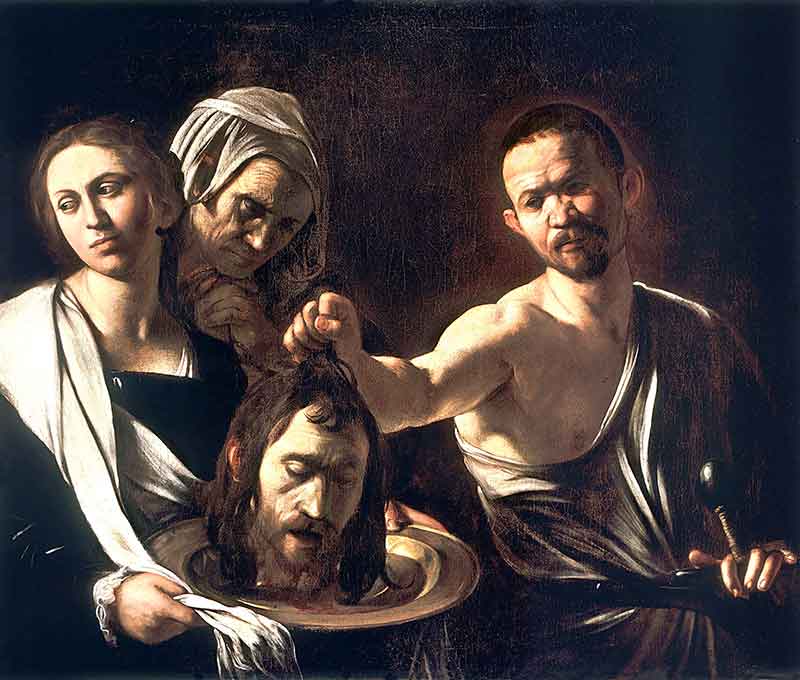
During a feast celebrating Herod’s birthday, Herodias’ daughter Salome danced before the king and his guests, enchanting him so much that he promised to grant her any request. At her mother’s urging, Salome asked for the head of John on a silver platter. Reluctantly, Herod complied, and John was beheaded in prison (Mark 6:21-29).
Josephus Flavius wrote that many Jews believed that Herod’s later military defeat was God’s punishment for his execution of John.
The absence of Jesus
One of the poignant questions in the Gospels is why Jesus did not visit John in prison or intervene on his behalf. From his cell, John sent one of his disciples to ask Jesus: “Are you the one who is to come, or should we expect someone else?” (Matthew 11:3). Jesus’ response was to point to his miracles and works of mercy, affirming that he was indeed the Messiah, the fulfilment of God’s promises.
Many theologians have speculated about why Jesus did not go to John. Some believe that Jesus respected John’s role as the forerunner and knew that John’s mission had to be completed through martyrdom.
Others suggest that Jesus did not intervene because he wanted to demonstrate that the kingdom of God was not based on earthly power or political liberation, but on spiritual salvation and suffering for the truth. Another theory proposes that by visiting John, Jesus might have placed himself at risk of the king’s close attention.
After John’s execution, Jesus withdrew to a solitary place to mourn the loss of his cousin and possibly also for his own safety.
The relics of the Baptiser
After John’s execution, the vengeful Herodias had his severed head buried in a dung heap. However, St Joanna, the wife of Herod’s steward Chuza and later a follower of Jesus, retrieved the head and buried it on the Mount of Olives in Jerusalem. Over time, the head was moved several times.
The Christian veneration of John’s remains at Sebastia, in today’s West Bank, dates back to the 4th century. After an attack on the shrine in 362, the bones were taken to Jerusalem, then to Alexandria in Egypt. In the 9th century, the head was reportedly buried in Constantinople.
There are competing claims about its final resting place. Muslims, who regard him as a prophet, believe it is in the Umayyad mosque in Damascus, while others assert it is in the Residenz Museum in Munich, or in the church of San Silvestro in Rome. Some even suggest that the Knights Templar possessed it in secret.
The solemnity of St John the Baptiser’s Nativity is on June 24, and the feast of his Passion is on August 29. The only other saint whose nativity is a feast day is the Virgin Mary.

- Sydney Duval: We Call him Friend - October 8, 2026
- St Francis and Mission - October 6, 2026
- St Francis of Assisi: Creation and Brotherhood - September 28, 2026