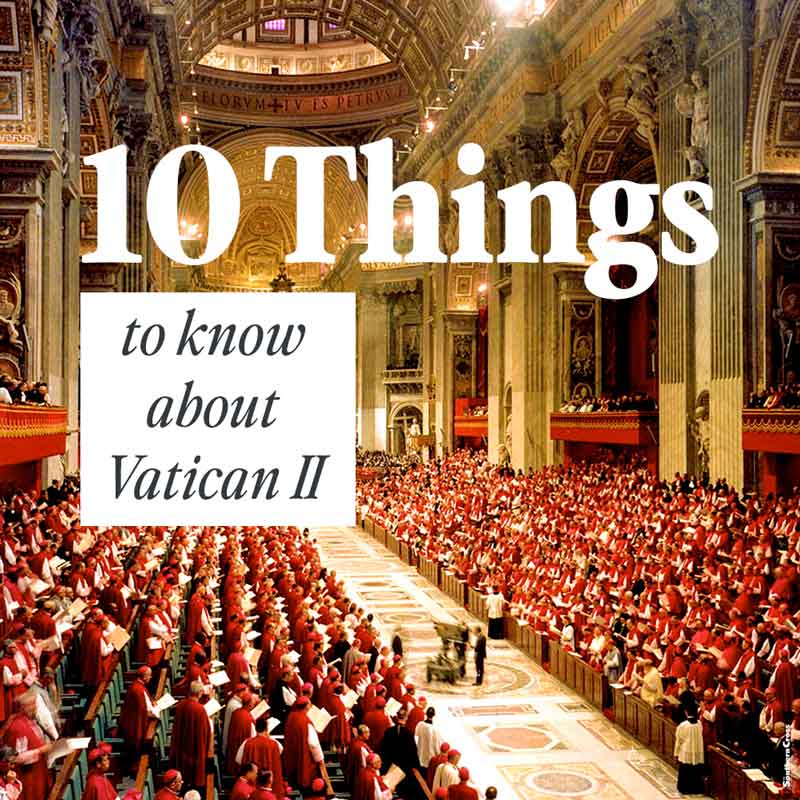
On December 8, 1965, the feast of the Immaculate Conception, Pope Paul VI closed an extraordinary gathering of bishops, theologians and experts from around the world that has shaped Catholic life ever since.
The Second Vatican Council, or Vatican II, opened in 1962 under Pope John XXIII. Here are ten things to know that help unlock its meaning and relevance.
1. The largest-ever Council
An ecumenical council is a worldwide meeting of bishops called by the pope to discuss matters of faith, discipline and Church life. Vatican II was the 21st such council in history, but it dwarfed all its predecessors. More than 2500 bishops from every continent attended, joined by hundreds of experts (known as periti).
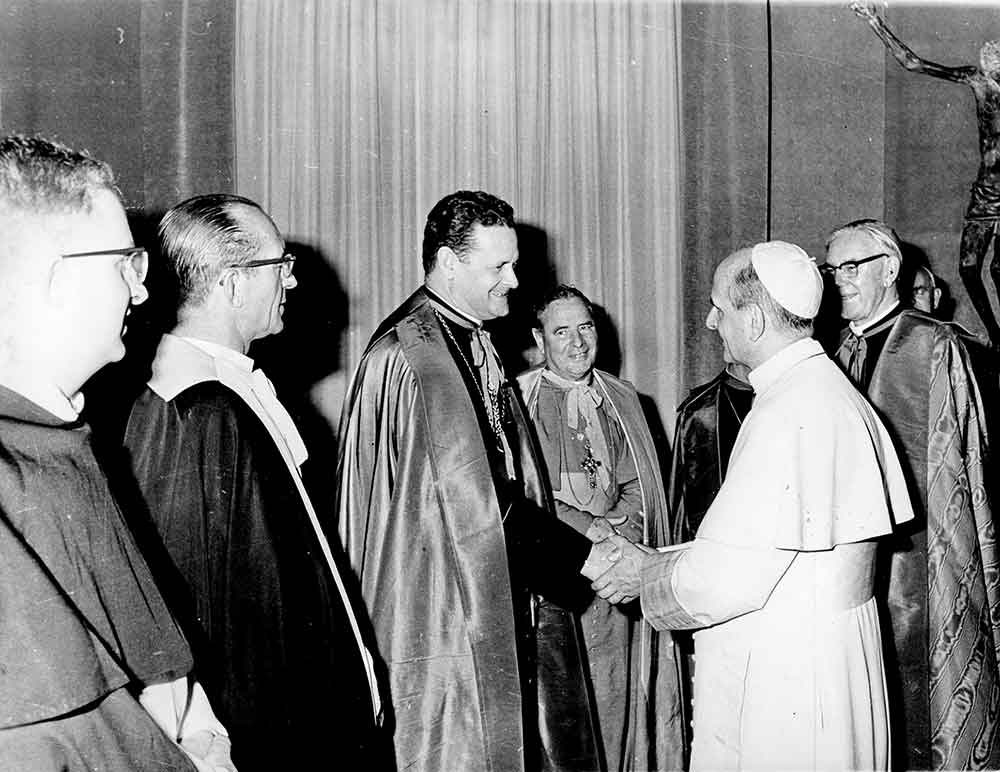
For the first time, bishops from Africa, Asia and Latin America came in significant numbers, giving the council a genuinely global voice. South African prelates such as Cardinal Owen McCann, Archbishop Denis Hurley and Bishop Gerard van Velsen were among the influential participants.

The Southern Cross was one of the very few publications in the world with a reporter inside: Archbishop Hurley regularly wrote articles from within the Council for the newspaper.
2. Caretaker’s big surprise
When Pope John XXIII announced in January 1959 that he was convoking a council, the Catholic world was stunned. Councils were rare: the previous one, Vatican I (1869-70), had been the first since the Council of Trent closed in 1563.
Pope John, who had been expected to be a “caretaker pope”, explained that the Church needed an aggiornamento (updating or renewal) so that it could speak more effectively to the modern world. He used the metaphor of “throwing open the windows of the Church and letting in the fresh air” to describe his vision for the Second Vatican Council.
3. Four sessions in four years
The Council opened on October 11, 1962, in St Peter’s basilica and met over four annual sessions, each lasting a few months, until December 8, 1965. Pope John presided over the first session, but he died in June 1963. His successor, Pope Paul VI, carried the Council through to completion. Each year, bishops debated proposed texts, made revisions, and then voted. The final documents were adopted by overwhelming majorities, a sign of the broad consensus achieved.
4. The key documents
Vatican II produced 16 documents, grouped into three types: Constitutions (the most important, setting out the Council’s teaching), Decrees (practical applications for particular areas of Church life), and Declarations (statements on specific questions).
The four major constitutions are:
• Lumen Gentium (on the Church)
• Gaudium et Spes (on the Church in the modern world)
• Dei Verbum (on Scripture and revelation)
• Sacrosanctum Concilium (on the liturgy)
Together, these have set the framework for Catholic life in the decades since.
5. A liturgical revolution
Perhaps the most visible change was the renewal of the liturgy. Sacrosanctum Concilium encouraged “full, conscious and active participation” of all the faithful in the liturgy. Latin remained the official language of the Roman Rite, but the Council allowed the use of local languages, opening the way to Mass in English, French, isiZulu and countless others. The priest now faced the people, Scripture was proclaimed more fully, and the liturgy was re-emphasised as the work of the whole Church, not just the clergy.
6. A new vision of the Church
In Lumen Gentium, the Council reflected on the nature of the Church. While it reaffirmed the pope’s authority, it placed a new emphasis on the role of bishops collectively (collegiality) and on the whole People of God. All the baptised, not just priests and religious, share in Christ’s mission. Holiness is a universal call, not the preserve of a few.
This renewed ecclesiology underlined both the dignity of the laity and the importance of communion within the Church.
7. Scripture and Tradition
The constitution Dei Verbum gave a balanced account of how God’s revelation reaches us. Scripture and Tradition are not rival sources but flow from the same divine wellspring, interpreted authentically by the Church’s magisterium.
The Council encouraged Catholics to read and study the Bible more deeply, leading to a great flourishing of biblical scholarship, translations and parish Bible groups. The lectionary used at Mass today, with its rich selection of readings, is a fruit of Vatican II’s vision.
8. Church in the modern world
Gaudium et Spes, the longest of the Council’s documents, was dedicated to the Church’s dialogue with contemporary culture. It addressed issues of marriage and family, culture, economics, politics, peace and war. Its opening words, using the language of its times, are often quoted: “The joys and the hopes, the griefs and the anxieties of the men of this age, especially those who are poor or in any way afflicted, these too are the joys and hopes, the griefs and anxieties of the followers of Christ.”
The Church, the Council affirmed, does not live apart from humanity but shares in its struggles.
9. Dialogue with other faiths
Vatican II was the first council to address relations with other Christians and with other religions. The decree Unitatis Redintegratio committed the Church to work for Christian unity, recognising elements of holiness and truth in other communities.
The declaration Nostra Aetate marked a turning point in relations with Jews, Muslims, Hindus and Buddhists, rejecting all forms of religious prejudice and affirming the Church’s respect for truth in other religions. These texts launched an era of dialogue and cooperation that continues today.
10. Vatican II today
Pope Francis repeatedly described the Synod on Synodality — the worldwide process of listening, discernment and dialogue launched in 2021 — as a continuation of the vision of Vatican II, a view shared by his successor, Pope Leo XIV.
The Council spoke of the Church as the People of God, journeying together, with bishops, clergy, religious and laity each playing their part. Synodality is that vision in practice: a way of being Church that involves listening to the Spirit through the voices of all the baptised. Just as Vatican II sought to renew the Church for its mission in the modern world, the Synod aims to carry that renewal forward in the 21st century.
The story of Vatican II is still unfolding in our own time.
Published in the December 2025 issue of The Southern Cross magazine

- Over 50 Young People Evangelise on the Streets of Mbombela - October 7, 2026
- Pope: God Transforms Evil into Redemption - October 6, 2026
- Mass Readings: 11 October – 18 October, 2026 - October 5, 2026