Question: What does it mean when a cardinal from a country outside Italy, like our Cardinal Stephen Brislin, is given a church in Rome?
Answer: When a pope creates new cardinals, they receive not only the scarlet zucchetto and biretta — symbols of their readiness to shed blood for the faith — and the cardinal’s ring, signifying their bond of unity with the pope. They are also each assigned a titular church in Rome.
This tradition goes back to the earliest centuries of the Church, when the clergy of Rome — the bishops of the surrounding suburbs (suburbicarian sees), the priests of Rome’s parish churches (tituli), and the deacons serving in its charitable institutions — were considered the trusted advisors of the Bishop of Rome, the pope.
These priests and deacons made up the original College of Cardinals, which was formally established in the 11th century but traces its functional roots back much further.

The title “cardinal” was originally given to these senior clergy as a mark of their permanent role in the life of the Roman Church (the word “cardinal” means “hinge”).
Made clergy of Rome
As the Church grew more universal and the papacy became more global in outlook, popes began to elevate bishops and archbishops from outside Rome to the College of Cardinals. However, to preserve the ancient idea that cardinals are, in essence, the clergy of Rome — responsible for electing the Bishop of Rome and advising him — each new cardinal continues to be symbolically incardinated into the diocese of Rome by being assigned a titular church, one of more than 900 churches located within the Eternal City.
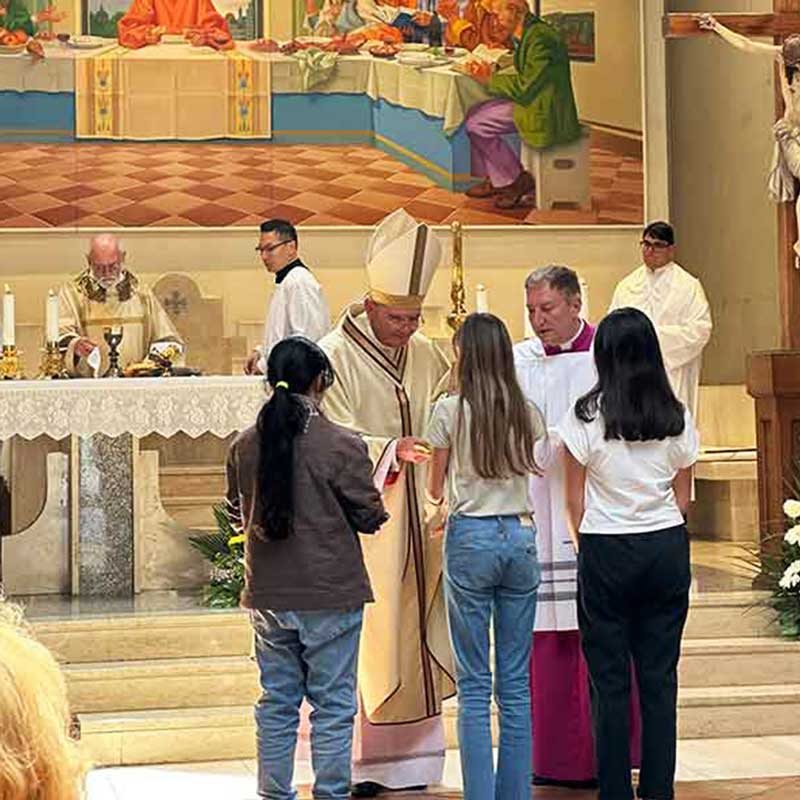
Once appointed in a consistory, a new cardinal is assigned a church that has become vacant, either due to the death of the previous cardinal or their elevation to a different role. Cardinals are then expected to take formal possession of their titular church. This often involves a liturgical celebration in which the cardinal visits the parish, may preach or celebrate Mass, and is formally welcomed by the local clergy and faithful.
No governing authority
A cardinal may then visit the parish from time to time, celebrate the sacraments there, or offer support and encouragement to the community. However, cardinals have no governing authority in these churches and may not interfere in their day-to-day operations, which remain under the oversight of the local parish priest and the diocese of Rome.
There are three types of titular appointments corresponding to the ancient clerical ranks:
• Cardinal Bishops, the heads the most important offices in the Roman curia and Eastern patriarchs, are assigned to one of the suburbicarian dioceses around Rome, such as Ostia or Albano.
• Cardinal Priests, the most common category, comprising diocesan (arch)bishops, are assigned to one of Rome’s parish churches (tituli).
• Cardinal Deacons, often senior Vatican officials, are assigned to one of Rome’s ancient diaconal churches.
Cardinal Stephen Brislin’s titular church is Santa Maria Domenica Mazzarello, a modern church in the eastern suburb of Don Bosco in Rome, which became vacant following the death in 2023 of Australian Cardinal George Pell.
Cardinal Wilfrid Napier is the cardinal-priest of San Francesco d’Assisi ad Acilia in north-western Rome (he is the church’s first cardinal priest).
Cardinal Owen McCann was the cardinal priest of Rome’s historic Santa Prassede basilica, which has been a titular church since 1099.
Published in the January 2026 issue of The Southern Cross magazine

- Blasphemy Warning Needed - October 10, 2026
- Where Should the Tabernacle be Located? - October 8, 2026
- Over 50 Young People Evangelise on the Streets of Mbombela - October 7, 2026