A historic day for the Diocese of Kroonstad
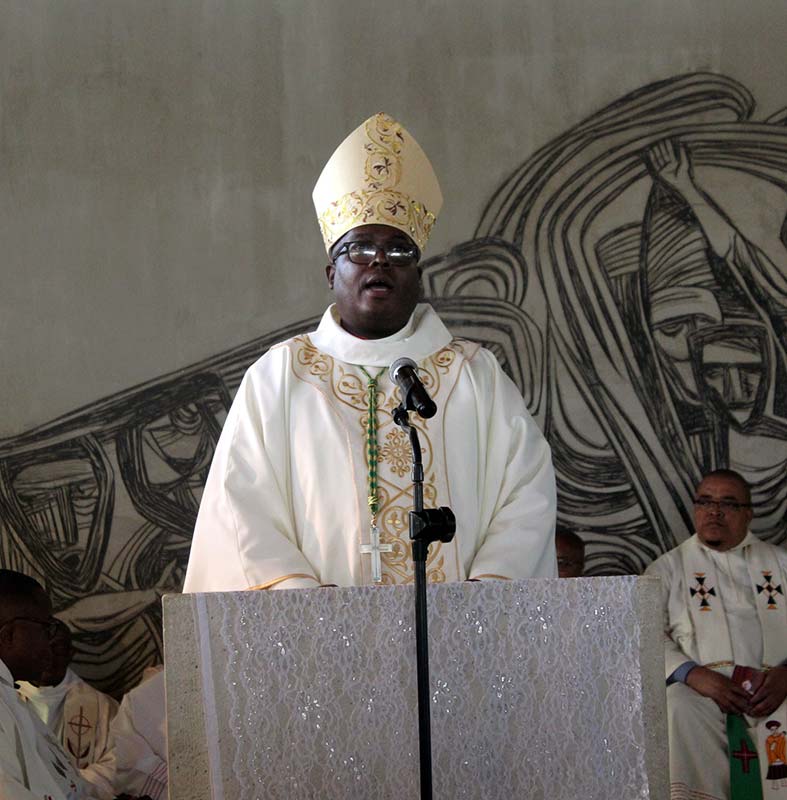
The faithful of the Diocese of Kroonstad gathered in prayer and thanksgiving at St Patrick’s Cathedral as Bishop Amos Mabuti Masemola officially took possession of the cathedra, marking the formal beginning of his ministry as the shepherd of the diocese. The celebration coincided with the Feast of the Ascension of the Lord, giving the liturgy a profound missionary focus as the new bishop reflected on unity, evangelisation and the future of the Church.
A humble thanksgiving for the gift of episcopacy
In his homily, Bishop Masemola first paused to express heartfelt gratitude for his appointment to the episcopacy and for the support he has received from the faithful. Speaking with humility and emotion, he thanked God for entrusting him with the responsibility of shepherding the people of Kroonstad.

“Today is also a day of thanksgiving for me personally,” he said. “I thank God for the gift of episcopacy, for calling me to serve His Church as a shepherd here in Kroonstad. I am deeply humbled by this responsibility, and I entrust myself to the prayers of all of you, the faithful, that I may serve with fidelity, humility and love.”
The bishop also thanked the priests, religious, lay faithful, families and especially the youth for their presence at the celebration. He described their participation as a sign of “the living Church” and emphasised that the journey of faith and mission must be walked together.
The Ascension: A call to mission
Reflecting on the Feast of the Ascension, Bishop Masemola reminded the congregation that Christ’s ascension into heaven is not about abandonment, but about empowerment and mission. He explained that after forty days of preparing and strengthening His disciples, Jesus entrusted His mission to the Church.
Drawing from the Acts of the Apostles, the bishop reflected on the words spoken to the disciples: “Why do you stand looking up toward heaven?” He explained that the disciples were being challenged not to remain passive observers, but to go out into the world and proclaim the Gospel.
“In Ephesians, St Paul proclaims that Christ is exalted above all powers, and yet His Body, the Church, shares in His mission,” Bishop Masemola said. “We are not spectators of His glory; we are participants in His work.”
He further reflected on the Great Commission in the Gospel of Matthew, where Jesus commands His disciples to “go and make disciples of all nations.” According to Bishop Masemola, the ascension is not a sign of Jesus leaving humanity behind, but rather a call for the Church to rise in faith and responsibility.
“The ascension is not about Jesus leaving us behind,” he said. “It is about Jesus opening a way for His presence. He ascends so that the Spirit may descend. He departs so that His Church may rise. His mission becomes our mission.”
Building the Church through shared vision
The bishop stressed that the disciples had to embrace change after the ascension because they could no longer rely on Jesus physically walking beside them. Instead, they had to trust in the Holy Spirit and in one another. He said the Church today is also called to embrace change while remaining rooted in Christ.
A major theme throughout the homily was the importance of unity and shared responsibility within the Church. Bishop Masemola emphasised that the Church is not built around one individual’s vision, but through collaboration among all the faithful.
“The Church is not built by one person’s vision, but by a shared vision,” he said. “Each of us has a role to play, different gifts, different ways of doing things, but all meant to complement the other. We are not adversaries; we are companions. Competition weakens us, but collaboration strengthens us.”
Protecting and living the Catholic identity
He explained that understanding the identity of the Church is essential if Catholics are to remain faithful to their mission. The bishop warned that when the Church loses sight of its identity, it risks distorting its purpose and compromising the Gospel.
“Our identity is based on being a community of believers united in Christ, living out the Gospel through faith, sacraments, tradition and service,” he said. “Let us embrace the Catholic identity with joy and courage. We must not hide and water down our Catholic identity.”
Bishop Masemola challenged the faithful to remain authentic Catholics and to avoid following trends that shift the focus away from Christ.
“Christ is the centre. Christ is the heart. Christ is the reason for our existence,” he said. “By putting ourselves at the centre, we run the risk of seeking personal fulfilment in the Church.”
A call for a self-sustaining Church
The bishop also called on Catholics to take greater ownership of the Church and its mission. Referring to the need for a self-sustaining Church, Bishop Masemola said every member of the Church must contribute their time, resources, talents and financial support toward evangelisation.
“Like the early Church, we ought to take responsibility, to build the Church and carry various responsibilities,” he said. “We must take ownership of the Church and not become life visitors.”
The bishop added: “We must become a self-sustaining or reliant Church. This does not mean independence from God, but we take full responsibility for the work of evangelisation.”
Empowering the youth of the Church
Particularly moving was Bishop Masemola’s reflection on the vital role of young people in the Church. He strongly emphasised that the youth are not merely the future of the Church, but an essential part of its present life and mission.
“A living Church welcomes and empowers its young people,” he said. “Their presence is not optional; it is essential. If we push them aside, how will they learn to build the future?”
Quoting Pope Francis and his apostolic exhortation Christus Vivit, Bishop Masemola reminded the congregation that young people are “the now of God.” He said their joy, energy and authenticity reveal the living presence of Christ in the Church.
A welcoming Church for all
The bishop also highlighted the importance of creating a welcoming Church for everyone, including those living with disabilities. He stressed that every person must feel at home within the Church community.
“We must build a Church where every person, regardless of status, ability or circumstance, finds a home,” he said. “Our brothers and sisters who are differently abled must be welcomed with dignity. Their presence enriches us and reveals the fullness of God’s love.”
Bishop Masemola warned that exclusion contradicts the mission of Christ and the Gospel itself.
“A Church that excludes is not the Church of Christ,” he added.
Mission at the heart of the Church
Returning to the meaning of the Ascension, the bishop reminded the faithful that mission lies at the very heart of Christian identity. He referred to the Synod on Synodality and its call for the Church not merely to speak about mission, but to become mission itself.
“The Synod on Synodality reminds us: the Church must not only speak about mission, it must also become mission itself,” he said. “Mission is not merely what you do; it is who we are.”
Unity as the heart of Christian identity
The bishop further reflected on Christ’s prayer for unity in John 17, where Jesus prayed “that they may be one.” He described unity as essential to Christian identity and urged the faithful to set aside divisions in order to live as one body in Christ.
“The ascension and this priestly prayer of Jesus converge in a single call: to remain united in love, mission and prayer,” he said. “Just as the disciples gathered in the upper room, so too must we gather as one body.”
“The work begins now”
Concluding his homily, Bishop Masemola called on the faithful to embrace the missionary mandate of Christ with courage and urgency.
“Beloved in Christ, the ascension is our commissioning,” he said. “Christ has entrusted His mission to us. He calls us to stop gazing upward and start walking outward. He calls us to unity, to collaboration, to authenticity, to courage.”
He urged the faithful to become a Church that is alive, welcoming and missionary, proclaiming Christ boldly in the modern world.
“Let us proclaim with joy and conviction that Christ is alive, Christ is with us and Christ sends us forth,” he said.
Ending on a powerful note, Bishop Masemola reminded the faithful that the mission entrusted to the Church cannot be postponed.
“The work that we are called to fulfil begins now; it can’t be delayed,” he said. “Are you ready?”
Father Michael Rasello explains the coat of arms
After showcasing the official portrait of Bishop Masemola, the former administrator of the diocese, Father Michael Rasello, explained the bishop’s and the diocese’s coat of arms:
Crucifix: The crucifix is the heart of the Christian faith, representing Christ’s sacrifice on the Cross. It reminds both shepherd and flock that salvation flows through the mystery of the Cross, and that pastoral leadership must always guide the faithful toward Christ’s redemptive love.
Sacred Heart of Jesus: The Sacred Heart symbolises Christ’s infinite love and mercy for humanity. It highlights devotion to the Sacred Heart, while also connecting to the Archdiocese of Pretoria, whose patron is the Sacred Heart. This expresses both personal spirituality and ecclesial identity.
Crown (Diocese of Kroonstad): The crown reflects the name: “Kroonstad” (Crown City in Afrikaans) and signifies Christ as King. It anchors the diocese’s identity in its local heritage while pointing to the eternal kingship of Christ.
Shamrock: Traditionally linked to St Patrick, the shamrock symbolises the Trinity – Father, Son and Holy Spirit. It also represents renewal, growth and missionary zeal. As the Diocese of Kroonstad’s patron saint is St Patrick, the shamrock is a fitting emblem of faith and heritage.
Bible with Alpha and Omega: The Bible represents God’s Word as the foundation of faith. The Alpha and Omega, the first and last letters of the Greek alphabet, signify Christ as the beginning and the end of all things (Revelation 22:13). Together, they affirm the eternal truth of Scripture and Christ’s divine sovereignty.
Motto: Fiat voluntastua– Thy will be done: Latin for “Thy will be done”, this motto echoes Christ’s prayer in Gethsemane. It expresses obedience to God’s will, humility in service and trust in divine providence.
Ndebele artistic drawing: This element affirms cultural heritage, showing that the Gospel is incarnated within local traditions. It celebrates the beauty of African identity and the universality of the Church, where faith is expressed through diverse cultures. The Ndebele arts on the coat of arms are not just decorative; they are visual theology and cultural memory. For Bishop Masemola, they symbolise:
- Faith and heritage united
- Resilience and leadership
- Cultural pride: His origin affirms the importance of indigenous identity within global Catholic leadership.
Green hat and tassels: The green galero (hat) with six tassels on each side is a heraldic mark of episcopal rank. It identifies the bearer as a bishop within the Church’s heraldic tradition.
Cross (behind the shield): A standard feature in episcopal heraldry, the cross behind the shield represents pastoral authority and the bishop’s mission to continue Christ’s work. It is both a sign of leadership and a reminder of service rooted in the cross.
Overall meaning
This coat of arms weaves together symbols of faith, heritage and mission. It proclaims Christ as King, the Cross as the path of salvation, Scripture as the foundation and cultural identity as a vessel of the Gospel. The motto: Fiat voluntas tua unites all these elements under the call to serve God’s will faithfully.
Before his final blessing, Bishop Masemola prayed before the statue of the Virgin Mary while the church sang the Regina Caeli.

- Cardinal Brislin: The Church must walk with families beyond the wedding day - October 19, 2026
- JHB leadership conference calls Catholics to shared responsibility for Church’s mission - October 19, 2026
- Justice & Peace call for responsible mining, youth empowerment and accountable leadership - October 16, 2026