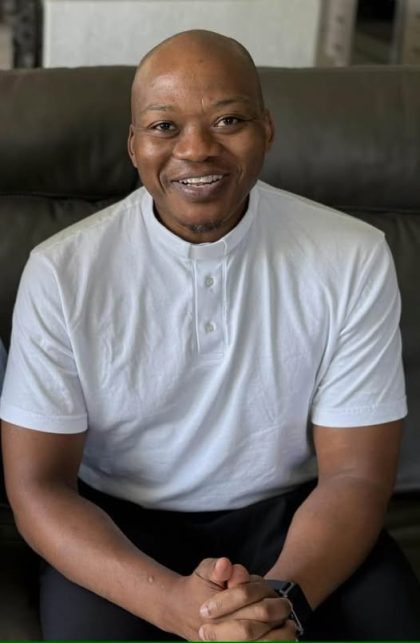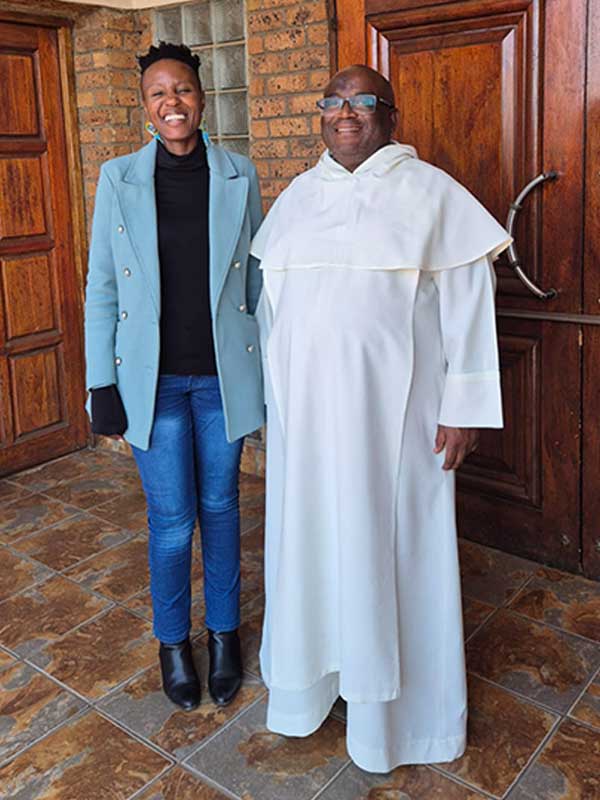
Meet Father Chaka Motanyane OP, a leader of the Far East Rand Deanery and a champion of young people.
As South Africa commemorates the 50th anniversary of the 1976 Soweto Uprising and the Church in Southern Africa celebrates 75 years since the establishment of the hierarchy, we uncover the story of Father Chaka Motanyane OP, the Dominican priest, who currently serves as the dean of the Far East Rand Deanery in the Archdiocese of Johannesburg.
Father Chaka OP has spent nearly three decades serving God’s people across different dioceses in South Africa. His journey, however, began in the mountain kingdom of Lesotho, where he first encountered the example of priests whose dedication would shape the course of his life.
A calling born in Lesotho
Father Chaka Motanyane was born in Teyateyaneng, Lesotho, and attended St David Primary School before continuing his studies at St Teresa Minor Seminary in Roma. Since Lesotho is dominated by the Oblates of Mary Immaculate, Father Chaka became acquainted with the Dominican Order, a congregation that was relatively less popular.

“At the end of my matric, I decided to join the Dominicans because I thought they were a little bit different from what we were used to,” he recalled.
“I wanted to see where my vocation would take me.”
Yet his vocation had begun much earlier. As a young boy, he watched his parish priest, an Oblate missionary, travel from village to village, often on foot or horseback, ministering to people in remote areas. What left the deepest impression was the priest’s care for the elderly and the sick.
“It was the ministry towards the sick and old people in the villages that struck me most,” he said. “I wanted to be able to visit and care for the elderly and sick people. That is what drew me to the priesthood.”
In 1988, he entered the Dominican Order in Maseru and later pursued philosophical and theological studies at St Joseph’s Theological Institute in Cedara, KwaZulu-Natal. His years of formation culminated in his ordination to the priesthood on 6 December 1997. This year marks the 30th anniversary of that milestone.
Three decades of ministry
Father Chaka’s priestly ministry has taken him to various communities across South Africa. His first assignment was in the Free State, where he served as a deacon and ministered extensively among mine workers, many of whom were Basotho labourers working in the region’s gold mines. He later spent twelve years serving as parish priest in KwaThema, followed by two years at St David’s Marist Inanda.
Another significant chapter in his ministry was his decade-long service as a chaplain to the South African Police Service (SAPS), where he accompanied officers and their families through both joys and challenges. Today, he continues his ministry in KwaThema while carrying the additional responsibility of serving as Dean of the Far East Rand Deanery.
Reflecting on the highlights of his priesthood, Father Chaka points not to positions or titles, but to people, particularly young people.
“I really do love working with young people,” he said. “I want to make sure that when they make choices for their future, they are informed.”
Leading the Far East Rand
Father Chaka was appointed dean after his name was forwarded, together with others, for consideration by diocesan leadership. He succeeded Father Martin Badenhorst OP, who moved to Johannesburg. As dean, he oversees a region that faces unique challenges. One of these is the frequent movement of religious priests serving in parishes throughout the deanery.
“We don’t have young diocesan priests in the deanery; most of us are religious priests,” he explained. “Sometimes, priests are transferred after only a few years, which can affect stability in parishes.”
The Far East Rand also faces economic difficulties. Once a thriving industrial centre, towns such as Springs have seen factories close and employment opportunities diminish. Young people often have to travel considerable distances to access higher education and employment opportunities. Despite these challenges, Father Chaka remains optimistic about the future.
“Thanks to initiatives such as Catholic media in the region, people are beginning to know more about the Far East Rand,” he said. “We are here, and we are here to stay.”
Empowering young people
A recurring theme throughout Father Chaka’s ministry is the empowerment of young people.
For him, youth ministry extends beyond organising events and gatherings. It involves equipping young people with practical skills and opportunities that can transform their lives. He believes the Church must think creatively about addressing youth unemployment and poverty.
“The biggest challenge facing young people today is unemployment,” he said. “As the Church, we need to think out of the box about how we can assist young people not only to get jobs but also to start their own businesses.”
Inspired by a skills development centre he encountered in the Vaal, Father Chaka dreams of establishing similar initiatives within the deanery. Such centres could teach practical skills, such as plumbing, sewing, baking and entrepreneurship, skills that would enable young people to create opportunities for themselves and others.
“We cannot all be employed by big companies,” he noted. “Some of us need to learn how to do things for ourselves.”
He also believes that Catholic parishes should become more self-sustaining by developing projects that generate income and reduce dependence solely on weekly collections.
Preserving Catholic identity
While passionate about social development, Father Chaka is equally committed to nurturing the Catholic faith. He expressed concern that many Catholics are gradually losing touch with the richness of their own traditions and heritage.
“We have a very rich history as Catholics,” he said. “We must be proud of who we are and protect our Catholic identity.”
He believes this strong sense of identity is essential if the Church is to continue thriving and attracting younger generations. At the same time, he recognises the need for greater unity within communities and deaneries, calling on Catholics from different backgrounds and cultures to work together more closely in building the Church.
A message of hope
As South Africa remembers the sacrifices made by the youth of 1976, Father Chaka’s message to today’s young people is one of gratitude, courage and determination. He encourages them never to take for granted the struggles and sacrifices that secured many of the freedoms they enjoy today.
“Young people must know what they want and go after it,” he said. “We must never listen to anybody who says we are not good enough. We are good enough.”
He reminds young people that each person has been created uniquely by God, gifted with talents and abilities that can be used to make a difference in the world. Above all, he stresses the importance of education.
“Education is very important because nobody can take it away from you,” he said.

- Justice & Peace call for responsible mining, youth empowerment and accountable leadership - October 16, 2026
- Bishop Nyandoro calls on religious leaders to defend human dignity and advocate for peace - October 14, 2026
- Father Chaka Motanyane: Support Matrics 2026! - October 13, 2026