Kati Dijane reports from Kigali, Rwanda –
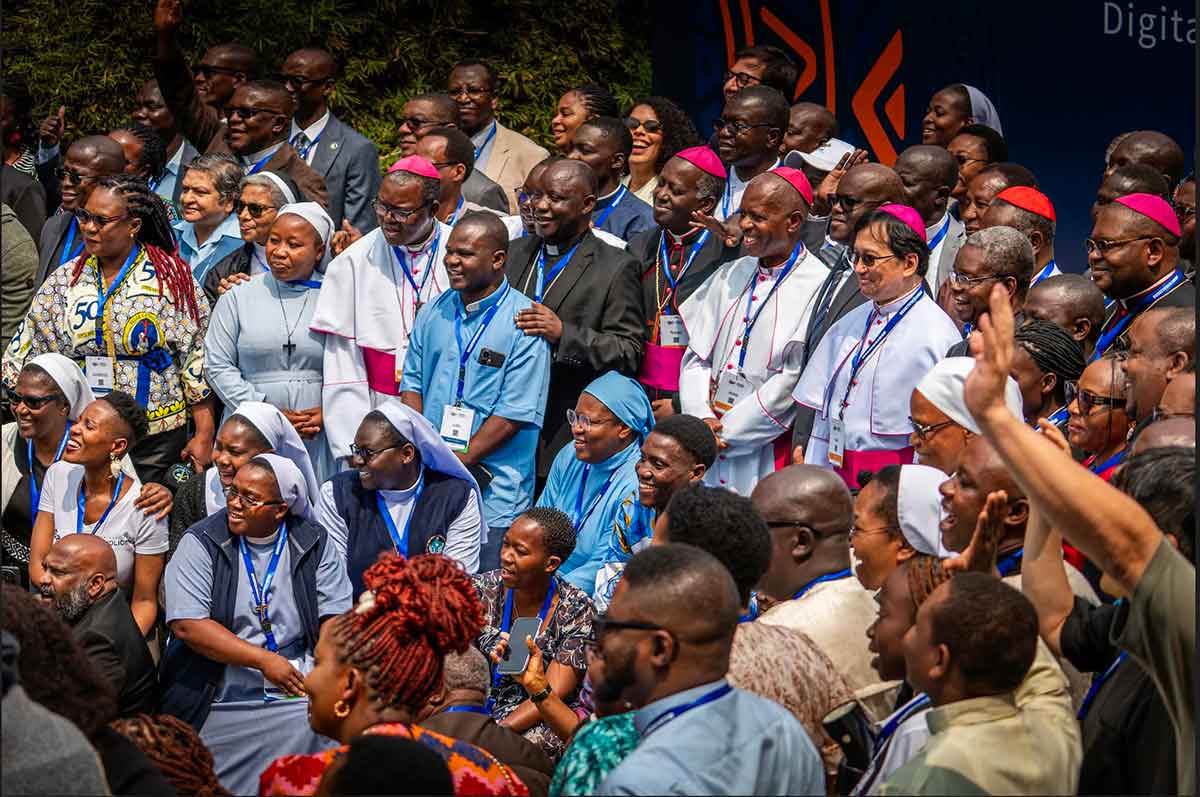
History was made on Monday, 3 August, as several Catholic communicators from more than 40 countries across five continents gathered in Kigali, Rwanda, for the opening of the SIGNIS World Congress 2026, the first time the prestigious global gathering has been held on African soil.
Held under the theme “Digital Communication for Cultural Harmony and Environmental Wellbeing”, the week-long congress brings together journalists, broadcasters, filmmakers, academics, digital communicators and Church leaders to reflect on the future of Catholic communication in an increasingly digital world. The congress runs from 3 to 8 August and provides a platform for dialogue on media ethics, evangelisation, artificial intelligence, intercultural dialogue and environmental responsibility.
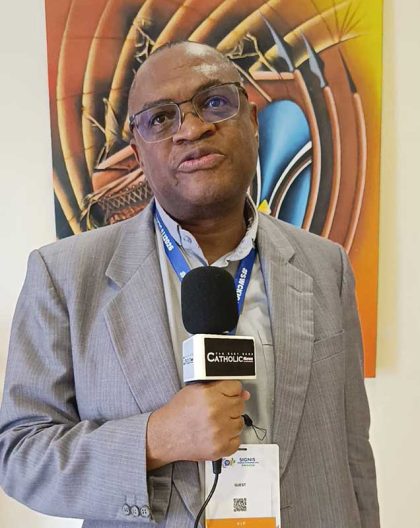
The opening ceremony featured several distinguished Church and civic leaders, including, Reverend Father Walter Ihejirika, President of SIGNIS Africa, Archbishop Arnaldo S. Catalan, Apostolic Nuncio to Rwanda, Dr Usengumukiza Felicien, Deputy Chief Executive Officer of the Rwanda Governance Board, Archbishop Fortunatus Nwachukwu, Secretary of the Vatican’s Dicastery for Evangelisation, and Dr Natasa Govekar, Theological-Pastoral Director of the Dicastery for Communication.

Welcoming delegates to Rwanda, Cardinal Antoine Kambanda, Archbishop of the Archdiocese of Kigali and the first cardinal in Rwanda’s history, described the congress as both a privilege for the nation and a significant moment for the Church in Africa.
“Rwanda is honoured to host the SIGNIS World Congress, taking place in Africa for the first time,” he said. “We are delighted to welcome Catholic communicators from over 40 countries across five continents.”
He expressed gratitude to SIGNIS and its partners for entrusting Rwanda with hosting the international gathering and thanked the local organising committee for its dedication in making the congress a reality.
A call rooted in the Second Vatican Council
Drawing on the teaching of the Second Vatican Council, Cardinal Kambanda reminded delegates that the Church has long recognised the transformative role of social communication in proclaiming the Gospel. Referring to the Council’s decree Inter Mirifica, he recalled its call for Catholics to make effective use of modern communication media and for the establishment of Catholic media organisations and communication offices throughout the world.
“The media of social communication have provided the Church with new opportunities to carry out its mission of proclaiming the Gospel of Christ to the world,” he said.
He noted that, when used responsibly, the media contribute to peaceful coexistence, solidarity, sustainable development, respect for human dignity and the promotion of Christian values. The cardinal encouraged delegates to use the congress as an opportunity not only to celebrate the progress Catholic media have made but also to examine areas requiring further growth and collaboration.
Human dignity in the age of artificial intelligence
A major focus of Cardinal Kambanda’s address was the growing influence of artificial intelligence on communication. He noted that the congress follows the publication of Pope Leo XIV’s first encyclical, Magnifica Humanitas, which reflects on safeguarding the dignity of the human person in the age of artificial intelligence.
“The fact that nearly 300 delegates have gathered here sends a powerful message,” he said. “Authentic communication is ultimately inspired by the human mind and heart, while technology remains a tool at the service of humanity.”
He encouraged participants to reflect deeply on the Holy Father’s teaching and to consider how the Church can responsibly embrace artificial intelligence and emerging digital technologies without compromising human dignity or Christian values.
The congress theme closely aligns with Pope Leo XIV’s call for technology to remain at the service of humanity, emphasising ethical communication, human relationships and the common good.
Rwanda’s testimony of reconciliation
Perhaps the most moving part of the cardinal’s address centred on Rwanda’s own painful history and the lessons it offers the global communication community. He recalled how the media were tragically manipulated during the 1994 Genocide against the Tutsi, becoming instruments that fuelled hatred, division and violence.
“It is tragic that the media was misused to intensify division and terror, facilitating the genocide to the point where the media itself acted as a powerful participant,” he said. Yet, he stressed that Rwanda’s story is also one of hope and transformation. Since the genocide, he explained, the country’s media have increasingly become instruments of unity, reconciliation and peace-building.
Within the Catholic Church, media platforms, including Kinyamateka, Radio Maria Rwanda and Pacis TV, have developed programmes dedicated to trauma healing, reconciliation and rebuilding trust among communities.
“We continue this journey through the ongoing process of the purification of memory,” Cardinal Kambanda said, highlighting how communication can become a ministry of healing when rooted in truth and charity.
Investing in Catholic media
While celebrating the achievements of Catholic media worldwide, Cardinal Kambanda acknowledged the challenges facing many Church communication initiatives.
He pointed to limited financial and technical resources, outdated equipment and the shortage of professionally trained Catholic journalists as obstacles preventing Catholic media from reaching their full potential.
Given the increasing importance of communication in contemporary society, he urged the Church to continue investing in Catholic media so that they can proclaim the Gospel effectively while responding to the ethical challenges presented by new technologies.
He also appealed for stronger collaboration among Catholic media organisations and diocesan communication offices around the world.
“We therefore call for greater solidarity among Catholic media organisations and Church communication offices so that, by working together, we may build strong and credible Catholic media capable of serving both the Church and contemporary society,” he said.
A milestone for Africa
The Kigali congress marks a historic milestone for SIGNIS, the World Catholic Association for Communication.
Established in 2001 through the merger of the International Catholic Association for Radio and Television (UNDA) and the International Catholic Organisation for Cinema and Audiovisual (OCIC), SIGNIS promotes excellence, ethics and professionalism in Catholic communication across journalism, film, television, radio, digital media and communication education. Since its founding, the organisation has held world congresses in cities, including Rome, Chiang Mai, Quebec and Seoul. Kigali now becomes the first African city to host this global event.
The choice of Rwanda reflects not only Africa’s growing contribution to Catholic communication but also the country’s international reputation as a place of reconciliation and renewal following one of history’s darkest chapters.
Rwanda’s first cardinal
Cardinal Antoine Kambanda’s role in opening the congress carries particular significance.
Born in Kigali in 1958, he was ordained a priest in 1990 and later served in several pastoral and educational roles before being appointed Bishop of Kibungo in 2013. In 2018, Pope Francis appointed him Archbishop of Kigali, and in 2020 he became the first cardinal in Rwanda’s history. Throughout his ministry, Cardinal Kambanda has consistently championed reconciliation, healing, evangelisation and the responsible use of communication in building peaceful communities.
As delegates begin several days of dialogue and collaboration, Cardinal Kambanda expressed hope that the congress would inspire a renewed commitment to ethical, human-centred communication that serves both the Church and society. Concluding his address, he thanked the SIGNIS Board, delegates, volunteers and partners for making the congress possible.
“You are most welcome to Rwanda,” he said. “I wish you all a fruitful, successful and memorable Congress. May God bless you all.”
Additional information:
www.signis.world/news
www.vaticannews.va

- Cardinal Brislin: The Church must walk with families beyond the wedding day - October 19, 2026
- JHB leadership conference calls Catholics to shared responsibility for Church’s mission - October 19, 2026
- Justice & Peace call for responsible mining, youth empowerment and accountable leadership - October 16, 2026