Kati Dijane reporting from Kigali
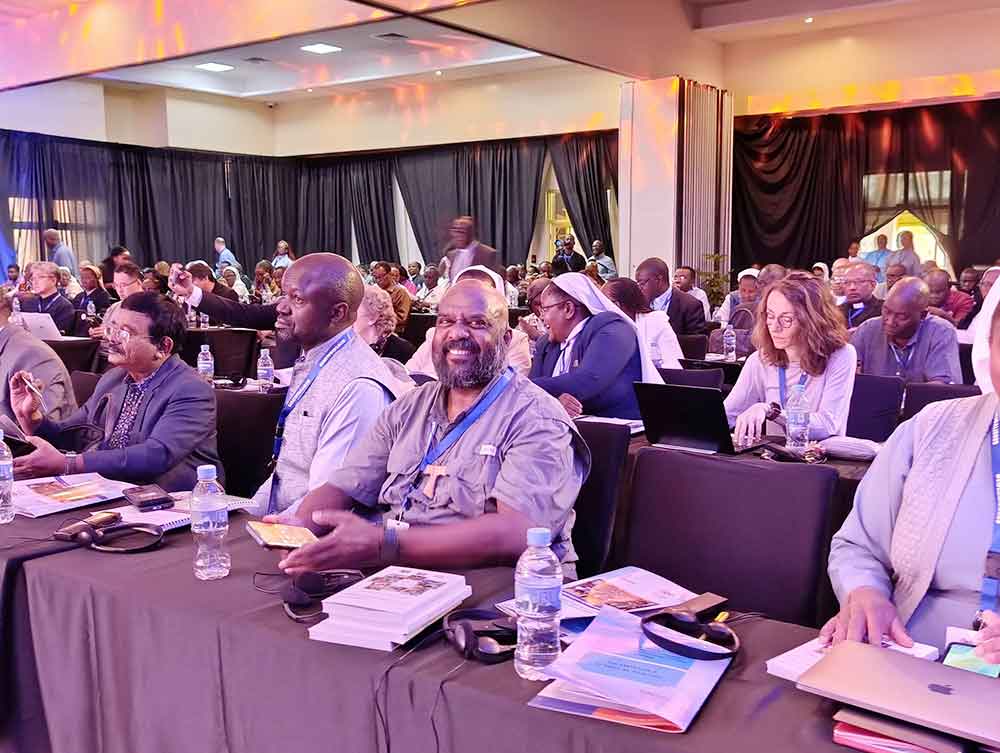
More than 300 Catholic communicators, media professionals, Church leaders and communication experts from over 40 countries have converged in Kigali, Rwanda, for the 2026 SIGNIS World Congress, marking a historic milestone as the global gathering takes place on African soil for the very first time.
Held under the theme “Digital Communication for Cultural Harmony and Environmental Well-being”, the congress has brought together participants from five continents to explore how Catholic media can faithfully respond to the opportunities and ethical challenges of the rapidly evolving digital age. The congress has attracted an impressive line-up of Church and civic leaders, including Cardinal Antoine Kambanda, Archbishop of Kigali; Archbishop Fortunatus Nwachukwu, Secretary of the Dicastery for the Evangelization of People; Archbishop Arnaldo S. Catalan, Apostolic Nuncio to Rwanda; Bishop Vincent Harolimana of Ruhengeri Diocese; Bishop Balthazar Ntivuguruzwa of Kabgayi Diocese; Bishop Michael Bibi of Buea Diocese in Cameroon; and Bishop Gerald Musa of Katsina Diocese in Nigeria.
Pope Leo calls for communication rooted in truth, human dignity
Through his apostolic nuncio to Rwanda, Archbishop Arnaldo S. Catalan, Pope Leo XIV on Tuesday, 4 August, assured participants of his spiritual closeness and expressed his hope that the congress would provide renewed momentum for communication that serves the common good. Reflecting on his recent encyclical Magnifica Humanitas, the Holy Father reminded delegates that digital communication is about far more than transmitting information. Rather, he said, it contributes to shaping culture itself, influencing how people understand the world and one another. He encouraged communicators to ensure that digital platforms are inspired by truth, respect for human dignity, communion, peace and environmental stewardship.

Entrusting participants to the intercession of Mary, Mother of the Church, Pope Leo imparted his Apostolic Blessing, praying that the congress would bear lasting fruit for the Church and society.
Rwanda welcomes the world
Opening the congress on behalf of the Government of Rwanda, Dr Usengumukiza Felicien, the deputy chief executive officer of the Rwanda Governance Board, described the event as a historic moment not only for Rwanda but for the African continent. “For the first time in the history of SIGNIS, this global congress has come to the African continent,” he said, welcoming delegates and expressing gratitude that Rwanda had been chosen to host the assembly.
Dr Felicien challenged Catholic communicators to see themselves as “modern-day apostles of the digital age,” entrusted with transforming media and the internet into spaces that foster genuine encounter, solidarity and hope. Drawing from Rwanda’s own painful history, he reflected on the devastating role hate-filled media played during the 1994 Genocide against the Tutsi, while also highlighting the country’s remarkable journey of healing, reconciliation and reconstruction. “Words and narratives have the power to destroy, but more importantly, they have the divine power to heal, rebuild and unite,” he said, inviting delegates to allow Rwanda’s experience to inspire their own communication ministries.
He also addressed contemporary challenges facing digital communication, including artificial intelligence, misinformation, algorithm-driven echo chambers and data exploitation. Technology, he stressed, is never neutral but reflects the values of those who design and use it. Catholic communicators therefore have a responsibility to promote transparency, truth, human dignity and ethical use of digital technologies.
Communication must care for creation
Environmental wellbeing formed a central pillar of the opening addresses. Dr Felicien reminded delegates that care for creation cannot be separated from authentic communication, echoing Pope Francis’ call in Laudato si’ to protect our common home. He pointed to Rwanda’s environmental initiatives, including restrictions on single-use plastics and national conservation programmes, as examples of how governments and communities can place environmental stewardship alongside human development. He encouraged communicators to use journalism, film, radio and digital media to expose environmental injustices, celebrate sustainable practices and inspire ecological conversion throughout the world.
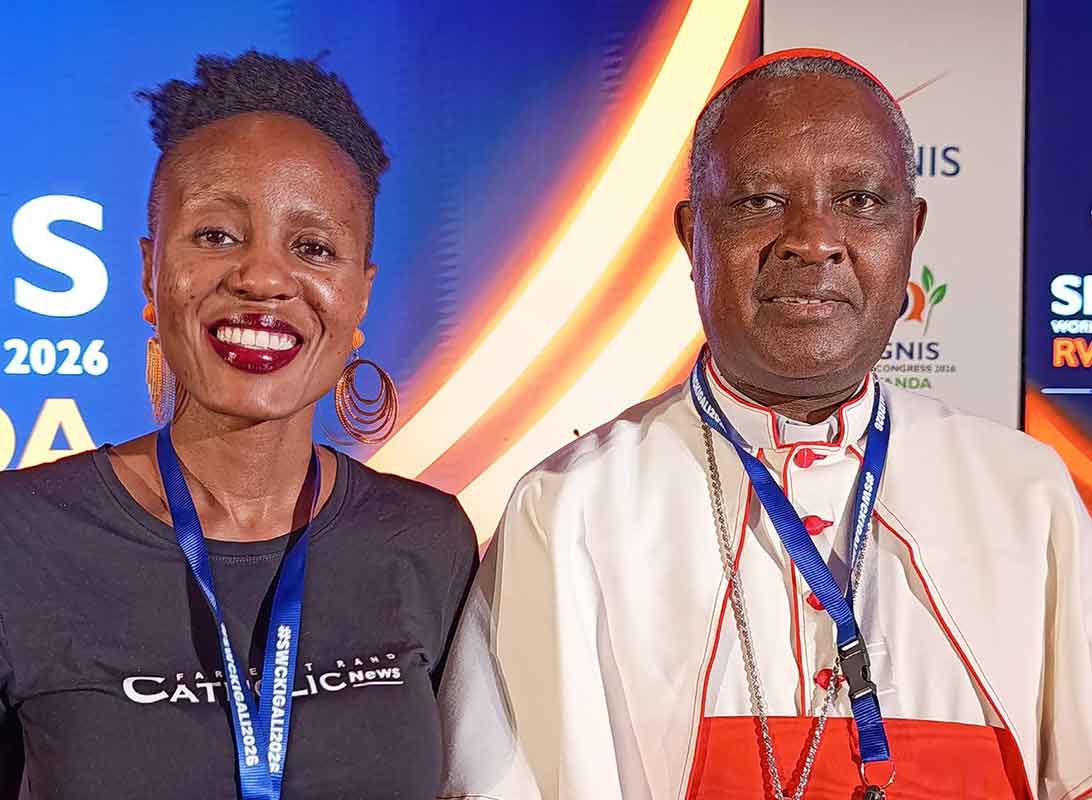
Cardinal Kambanda: Africa has much to offer Catholic media
Welcoming delegates, Cardinal Antoine Kambanda described the congress as a significant opportunity for the Church to evaluate how communication continues to serve evangelisation in today’s rapidly changing media landscape.
He recalled the vision of the Second Vatican Council, particularly Inter Mirifica, which encouraged Catholics to make full use of the means of social communication in proclaiming the Gospel. The cardinal said Catholic media have become indispensable instruments for promoting peace, solidarity, sustainable development and human dignity.
Referring to Pope Leo XIV’s encyclical Magnifica Humanitas, Cardinal Kambanda noted that advances in artificial intelligence make it even more urgent to safeguard the uniqueness and dignity of every human person. He said the presence of nearly 300 delegates itself demonstrated that authentic communication ultimately flows from the human heart and mind, while technology must remain a servant rather than a master. The archbishop also reflected on Rwanda’s own experience, acknowledging the destructive role media played during the genocide before becoming an instrument of healing, reconciliation and peace.
Today, he explained, Catholic media outlets such as Kinyamateka, Radio Maria Rwanda and Pacis TV continue helping communities heal through programmes focused on reconciliation and the purification of memory.
Investing in Catholic media
While celebrating the achievements of Catholic communication, Cardinal Kambanda acknowledged the financial and technical challenges facing many Catholic media organisations, particularly in acquiring modern equipment and training professional journalists. He called for greater investment in Catholic media and deeper collaboration among Church communication offices worldwide to build strong, credible media capable of serving both the Church and wider society in an increasingly digital world.
As the first SIGNIS World Congress ever hosted in Africa, the gathering offers Church communicators an opportunity to learn from Africa’s experiences of reconciliation, resilience and hope while equipping them with practical strategies to proclaim the Gospel responsibly in an age increasingly shaped by artificial intelligence and digital technology. Over the past few days, delegates have participated in keynote presentations, workshops, panel discussions and networking sessions as they seek new ways of ensuring that Catholic communication continues to build bridges of truth, foster cultural harmony and contribute to the care of our common home.
Catholic communicators must be bearers of hope and truth, says Archbishop Nwachukwu
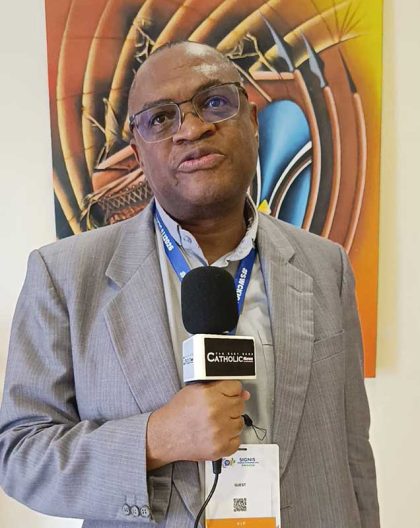
Meanwhile, speaking on the sidelines during the visitation of the Kigali Genocide Memorial on Wednesday, 5 August, Archbishop Fortunatus Nwachukwu, Secretary of the Vatican Dicastery for Evangelisation, has called on Catholic communicators to become authentic witnesses of the Gospel by using media to foster truth, love and reconciliation. Archbishop Nwachukwu said that communication plays a vital role in building relationships and societies, making Rwanda a particularly meaningful host for the congress.
“We know what can happen when communication fails or when it is used badly,” he said. “It reminds us of the consequences when communicators do not fulfil their responsibility or communicate in a negative way.”
The archbishop said the congress is an opportunity for participants to renew their commitment to proclaiming the Good News of Jesus Christ and promoting the Gospel’s message of love.
“If there had been a good witness of the love taught by Jesus Christ in this place, the genocide would not have taken place,” he said, adding that Christians should honestly reflect on whether their witness had been strong enough.
Archbishop Nwachukwu also described the decision to hold the SIGNIS World Congress in Africa for the first time as a recognition that the continent’s voice has matured and deserves to be heard on the global stage.
“Africa is no longer the voice of a baby crying from a crib,” he said. “It is now the voice of an adult, or at least a teenager who has come of age and should be taken into consideration.”
While welcoming this recognition, he challenged the Church in Africa to embrace greater responsibility and self-reliance, encouraging African Catholics to “behave like grown adults” capable of addressing their own challenges and contributing confidently to the universal Church. Addressing young people, particularly digital missionaries and Catholic influencers, Archbishop Nwachukwu urged them to prioritise personal formation before building an online presence.
“Before building your platforms, build your minds. Build yourselves,” he said. “Your platform is going to carry your identity, and if your identity is weak and faulty, your platform will also be weak and faulty.”
He also encouraged young communicators to draw inspiration from Pope Leo XIV’s encyclical Magnifica Humanitas, describing it as a blueprint for communicating the Gospel in today’s digital age.
The quadrennial global event for media professionals and communicators will conclude on 8 August.

- SECAM Seeks African Participation in World Youth Day 2027 - September 24, 2026
- ‘Carlo is an instrument of God’: His mother reflects on the first year of her son’s sainthood - September 11, 2026
- Durban youth urged to keep their lamps burning for Christ - August 31, 2026