South Africans love to celebrate anniversaries. And it is with good cause that soon we will mark 30 years since our world-leading Constitution was inaugurated.
It is worth remembering that the Constitution did not arrive with the first democratic elections 32 years ago, but emerged from a longer process of deliberation and debate.
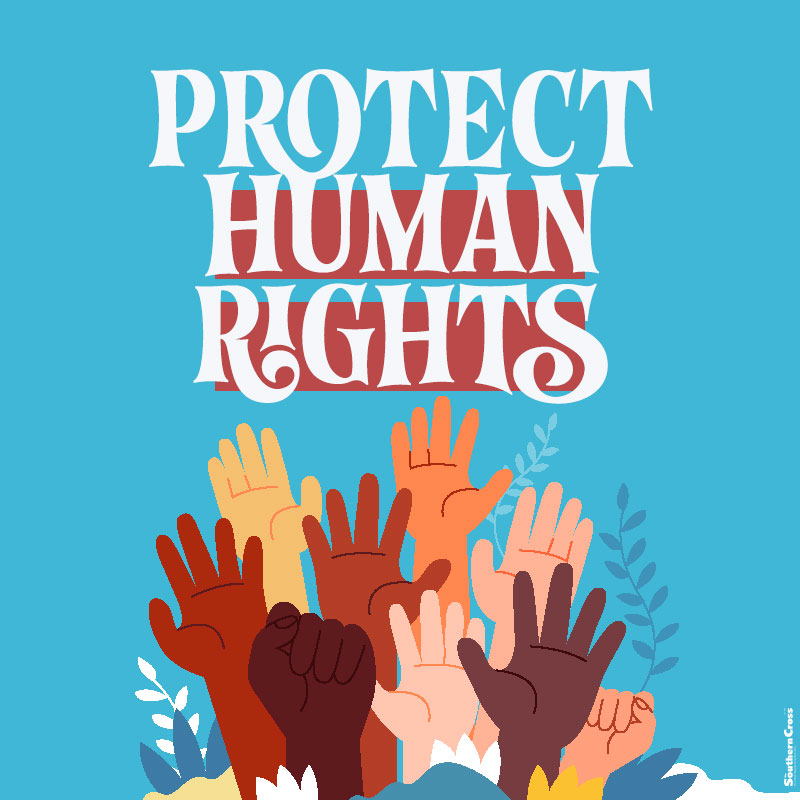
The key insight was that, after decades of apartheid denying people their rights, this new Constitution had to be exemplary in defending rights. Moreover, while grotesque racism was the presenting symptom that needed addressing, the framers of the Constitution realised that it was all forms of discrimination that they had to guard against. So clause 9(3) in the Bill of Rights states unequivocally:
“The state may not unfairly discriminate, directly or indirectly, against anyone on one or more grounds, including race, gender, sex, pregnancy, marital status, ethnic or social origin, colour, sexual orientation, age, disability, religion, conscience, belief, culture, language and birth.”

As the various rights — to freedom of speech, to a fair trial, to access housing, to privacy — are then articulated, they must all be seen against this overarching commitment to absolute equality.
But the Constitution is a piece of paper: it does not in itself bring about justice. Rather, it is like a cheque that promises justice to the recipient. And we then discover that the ability to cash the cheque for its full value is dependent on the (trans)actions of many other people.
The Constitution especially recognises the role played by government officials: “The state must respect, protect, promote and fulfil the rights in the Bill of Rights.” Note: it is not enough for the state merely not to infringe people’s rights — it needs to be actively engaged in respecting, protecting, promoting and fulfilling those rights.
How rights are violated
The state, of course, is not just some abstract political entity. It is personified in every politician and every official — at all levels of government — each of whom has a personal duty to respect, protect, promote and fulfil these rights.
Every SAPS officer who doesn’t respond to your cry for help fails to protect your rights
Every Home Affairs bureaucrat who treats you with disdain is failing to respect your rights; every SAPS officer who does not respond to your cry for help is failing to protect your rights; every public health nurse who does not make sure you get the treatment you deserve is failing to promote your rights; every politician who uses public money for their own benefit rather than for the community is failing to fulfil your rights.
When we read the rights in this light, we get a clearer sense of the gap between the rights that are promised and the rights that we actually enjoy. In fact, it is a huge gap. So the temptation is to give up and expect public servants to fail us — but as soon as we do this, we let them off the hook.
If Southern Cross readers — who I assume are more empowered than most people in South Africa — feel that their rights are frequently infringed, imagine being a homeless person or a refugee. What rights do they actually enjoy, despite the fulsome promises of the Constitution? At the Denis Hurley Centre (DHC) in Durban, I see the impact on these communities every day.
I am no longer surprised at how their rights are undermined. What shocks me is the failure of the state to take any remedial steps when manifest injustices are right in front of them.
A disturbing video
More than six months ago, Don O’Mahoney, a doctor at the DHC clinic, first started seeing homeless people with scars and wounds and bruises. They consistently told him that these were the result of violence by a local security firm, which was being paid by eThekwini Municipality to patrol the streets.
Then CCTV footage came into our possession that clearly showed several uniformed personnel of that security firm surround a homeless man and take it in turns to beat him with a sjambok. If you have the stomach to watch this gratuitous violence, it can be viewed at https://tinyurl.com/Durban-violence
Months after the video was published by us, neither eThekwini nor SAPS nor security regulator PSiRA has taken any discernible decisive action against the identified perpetrators or against their employer. From what we see at the DHC, the beatings have not ceased.
Meanwhile, it is now a year since vigilantes started their blockade of government hospitals and clinics, appointing themselves as the people to decide who is allowed to access healthcare and who is not. They claim to be targeting “illegal migrants”, but they have also blocked foreign nationals who have visas, work permits and permanent residence, as well as their South Africa-born children who are citizens, and South African nationals without IDs.
It is shocking that the Department of Health and SAPS had to be taken to court to remind them of their duty to prevent the actions of these illegal protesters. And even after that, they have yet to accomplish the action required, and so the blockades continue and innocent people suffer.
Inaction and impunity
Security agents and illegal protesters continue to impose harm, having faced no sanction from the courts. What is worse is that their impunity is reinforced by the casual inaction — I am tempted to say negligence — of government officials and police officers who should be taking positive steps to enforce the Constitution. It chills me to think that many of them will consider themselves not just good citizens but good Christians. Indeed, some of them are Catholics.
It would be very easy, when faced with this level of misery, to just give up. After all, I don’t live in fear of being beaten up on the streets by security personnel; I don’t need to worry that I won’t be able to get healthcare. Do I really need to speak out? Well, if we call ourselves Christians, we absolutely do.
This is why at the DHC we have continued to use the media to shine a light on the dark deeds of those who fail us. For example, in May the investigative DStv programme Carte Blanche carried a whole segment about the violence funded and tolerated by eThekwini, as well as one about the looting of soup kitchen contracts.
Voice for the voiceless
When victims cannot speak for themselves, we have the duty — as Pope Francis, Archbishop Denis Hurley and St Oscar Romero would remind us — to be the voice of the voiceless.
We need to do it for today’s victims. And we need to be aware that there will be new victims tomorrow, further groups who will become the next targets of violence or discrimination.
Let me rework the famous poem by Martin Niemöller — the German Lutheran pastor who ended up in a Nazi concentration camp — written some 80 years ago but still apt today:
First, they came for the blacks, and I did not speak out because
I am not black.
Then they came for the Indians, and I did not speak out because
I am not Indian.
Then they came for the foreigners, and I did not speak out because
I am not a foreigner.
Then they came for the homeless, and I did not speak out because
I am not homeless.
Then they came for me. And there was no one left to speak out for me.

- Lessons from the Saints - October 12, 2026
- No Room for Exclusion - September 7, 2026
- Rose Calaca: The Vocation to Educate - August 18, 2026