As immigration continues to dominate South Africa’s political landscape, two Catholics have become unlikely symbols of the competing philosophies shaping the national debate. Although both were formed by the same faith tradition, they interpret the country’s migration challenge through strikingly different lenses.
On one side is Thebe Ikalafeng, internationally recognised as one of Africa’s foremost branding strategists and founder of the Brand Leadership Group and Brand Africa, whose work over three decades has focused on building the reputation of African nations and institutions across the continent. Having advised governments, universities and multinational companies while travelling to every country in Africa, Ikalafeng approaches migration through a distinctly pan-African lens, arguing that Africa’s future depends on greater continental solidarity rather than growing hostility between Africans.
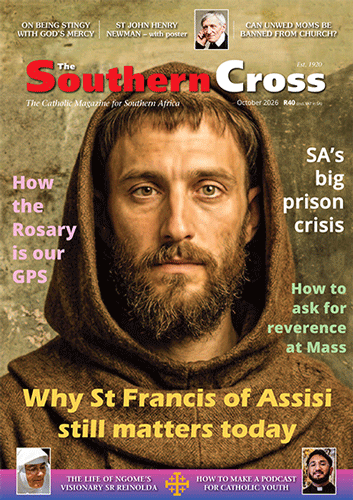
That worldview is inseparable from his Catholic formation. Raised by his grandmother Regina Ikalafeng in a strict Catholic household in Galeshewe, Kimberley, he walked to Mass at Our Lady of Fatima parish, sang in the church choir, attended St Dominic’s Primary School and later St Boniface High School under the Irish Christian Brothers before continuing his education at the Jesuit-run Marquette University in the United States. Ikalafeng, who featured on the cover of the Southern Cross in February 2025, has repeatedly credited his Catholic upbringing and the Christian Brothers with instilling the discipline, values and sense of service that have shaped both his personal life and professional career.
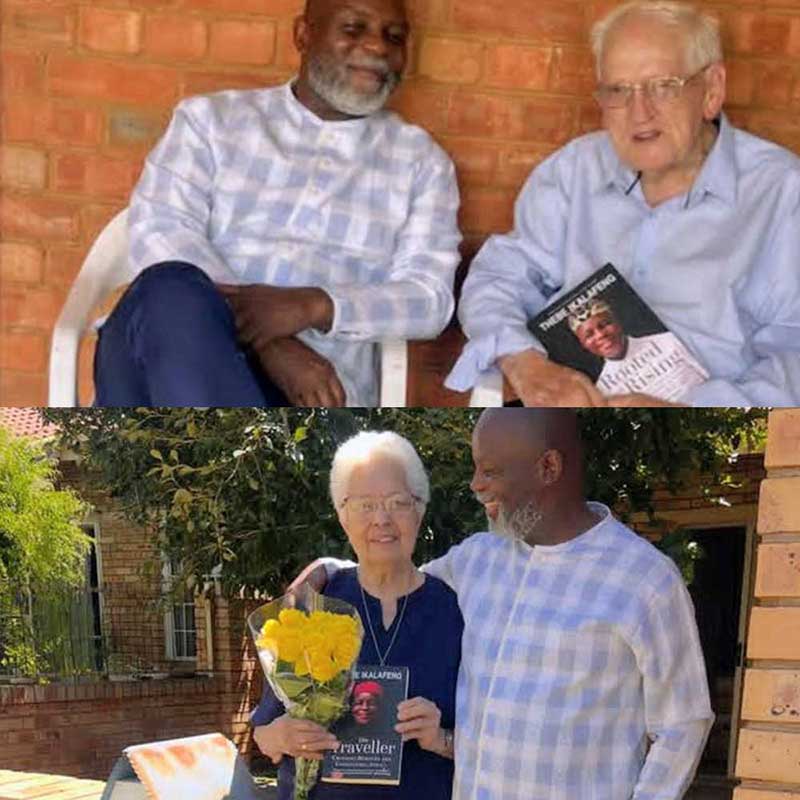
Those values are evident in his recent analysis of South Africa’s migration crisis. While acknowledging legitimate public concerns over undocumented migration, criminality and failures within the Department of Home Affairs, Ikalafeng argues that African migrants have become convenient scapegoats for much deeper structural failures. He contends that unemployment, corruption, inequality and weak governance, not migrants themselves, remain the principal causes of South Africa’s social tensions. In his view, attacks on fellow Africans represent “Afrophobia” rather than simple xenophobia and betray the continental solidarity that helped secure South Africa’s own liberation.
Standing at the other end of the national conversation is Jacinta Ngobese-Zuma, founder of the March and March Movement, which has emerged as one of the country’s most vocal citizen organisations campaigning against illegal immigration.
Ironically, Ngobese-Zuma’s own story is also deeply rooted in Catholicism. She has publicly explained that she received the name Jacinta because she was born into a devout Roman Catholic family in KwaZulu-Natal. Jacinta is a traditional Catholic baptismal name, most famously associated with Saint Jacinta Marto, one of the three children of Fatima in Portugal. Ngobese-Zuma has said that all her siblings were also given Catholic names, reflecting the strong religious culture of her family. Her Catholic upbringing formed an important part of her early life and continues to feature in public discussions of her background. She has also participated in church-hosted civic engagements, including a Social Cohesion Dialogue organised by the Justice, Peace and Development Commission at the Diakonia Centre in Durban.
There, Ngobese-Zuma articulated the central philosophy of the March and March Movement. She argued that South Africans increasingly feel like second-class citizens in their own country as illegal immigration places pressure on employment, healthcare, schools and public resources. According to her, businesses exploit undocumented foreign nationals as cheap labour, thereby undercutting local workers, while overstretched public services struggle to cope with growing demand. She further argued that South Africans elect governments every five years with the constitutional expectation that citizens’ interests will be prioritised and maintained that genuine economic migration should occur only where identified labour shortages exist and through lawful immigration processes.

For Ngobese-Zuma, the issue is therefore not hostility towards foreigners as individuals but the state’s inability to enforce immigration law and protect opportunities intended for South African citizens.
These competing narratives illustrate how South Africa’s immigration debate increasingly resists simple ideological labels. Both figures speak from backgrounds shaped by Catholic formation, yet they arrive at markedly different public conclusions.
Ikalafeng emphasises the Church’s long tradition of African solidarity, human dignity and remembrance of the hospitality shown to South African exiles during apartheid. Ngobese-Zuma stresses social justice for citizens, accountable government and the responsibility of the state to uphold the rule of law and safeguard limited public resources.
Neither perspective exists entirely outside Catholic social thought. The Catholic Church consistently teaches both the dignity of migrants and refugees and the legitimate right of states to regulate their borders for the common good. Consequently, faithful Catholics can legitimately disagree over where the balance should lie in responding to South Africa’s migration crisis.
The contrast between Ikalafeng and Ngobese-Zuma therefore reflects something larger than a political disagreement. It demonstrates that one of South Africa’s defining national debates is also unfolding within the country’s Catholic community itself. Shared faith has not produced identical political conclusions. Instead, it has led two committed South Africans, formed within the same religious tradition, to interpret justice, responsibility and the common good through different lenses.
As immigration continues to dominate South Africa’s political discourse, this conversation is unlikely to disappear. If anything, the voices of Catholics such as Thebe Ikalafeng and Jacinta Ngobese-Zuma demonstrate that the debate is not simply about borders. It is also about how faith informs public life in a nation still searching for the right balance between compassion, legality, national responsibility and African solidarity.

- A Final Appeal: Help Take Sister Julia’s Bees to Rome - October 19, 2026
- Take Sister Julia’s bees to Rome - October 12, 2026
- A Catholic Journey to the Sacrament of Marriage - October 3, 2026