An anniversary is a great opportunity to reflect. That means looking backwards but also looking at the present and looking forward.
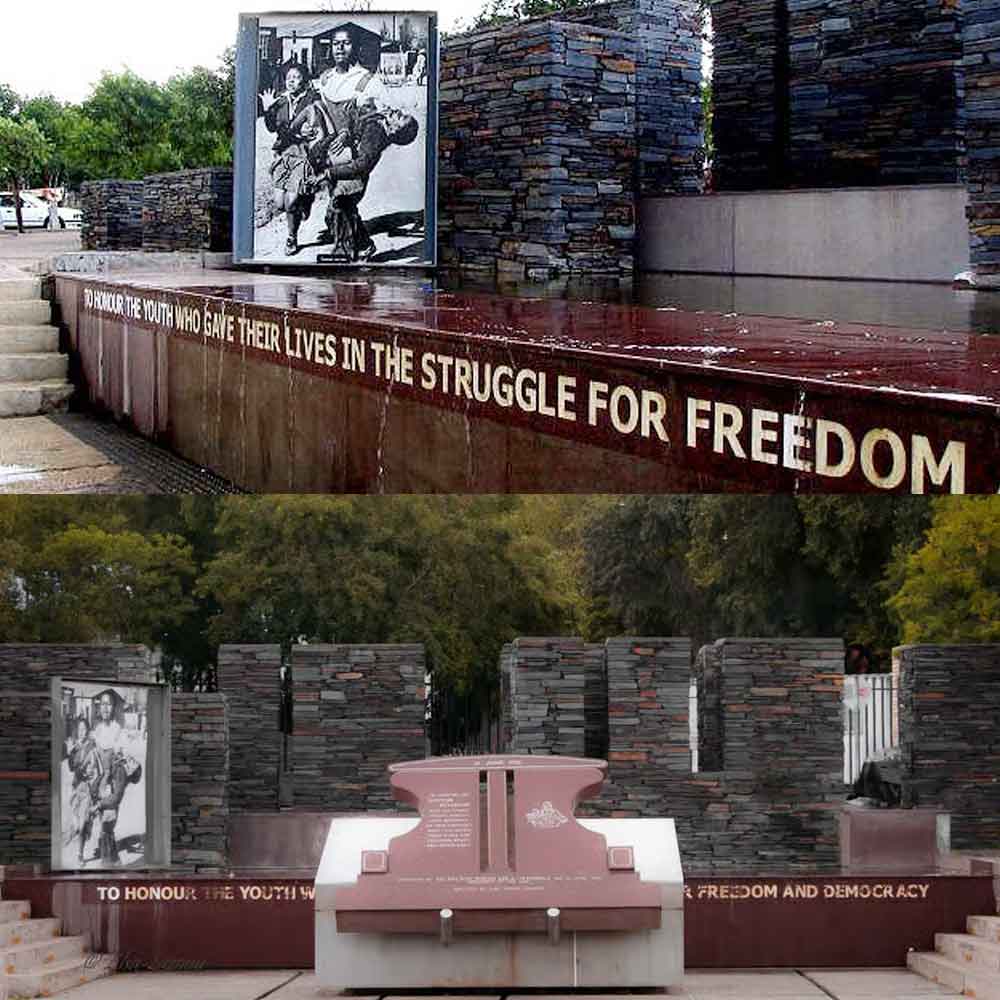
The 50th anniversary of the 1976 youth uprising in Soweto is an opportunity to remember how up to 700 children died as martyrs. The blood of their sacrifice fed the fruits that would eventually lead to the democracy that we have today. On June 16, 1976, any claim that the apartheid regime might have tried to make for moral legitimacy finally collapsed.
Puleng Matseneng, my former colleague at the Jesuit Institute, was born and still lives in Orlando West — only a few hundred metres from where the first children were shot.
In June 1976, aged 7, she had just started attending the local Catholic primary school. Her older sister in high school was among the thousands of children who were protesting that day against the government’s plan to force them to study in Afrikaans. Clumsily, I once asked Puleng if she spoke Afrikaans. Her reply was devastating: “I can, but I choose not to.”

She recalls the sense of chaos and fear that descended. “There was burning. Everywhere burning. And bodies all over. I was terrified,” she told me in a recent conversation.
What kind of normality can there be for a child when playmates from your neighbourhood are now lying dead on the ground? My mind immediately turned to school children in Iran, Gaza, Lebanon, Ukraine, Sudan and so many other places around the world.
In remembrance
On June 16 this year, as every year, Puleng will be with others at the museum in Orlando built on the site where 12-year-old Hector Pieterson fell after being shot by police. The iconic photograph by Sam Nzima of the dying Hector carried by Mbuyisa Makhubo as Hector’s sister Antoinette Sithole runs beside them let the world see for themselves the horror of the regime.
Antoinette, who later became Puleng’s friend, thought Hector was not even in the march, because he was too young.
The commemoration will bring Puleng great sorrow — for her, the words of the Mass come to mind: “Do this in remembrance of me.” But it is a pain which she knows she must embrace. She draws on the language of Ignatian Spirituality to talk about a “third-week experience” — the time during the 30-day Spiritual Exercises when the retreatant is asked to follow Jesus closely in his Passion and death.
But just as Easter Sunday follows Good Friday, so in the Spiritual Exercises comes the fourth week — the experience of rising with Christ and sharing in his transformation. “As Soweto and as South Africa, we are living in the fourth week,” Puleng told me, “with the knowledge that God is with us; that we can and should always have hope that things will come right in the end.”
Gentrified street of history
But she is keenly aware that the fourth week is far from fully realised. Between her house and the Hector Pieterson Memorial and Museum is the famous Vilakazi Street, the one-time home to two Nobel Prize winners, Archbishop Desmond Tutu and Nelson Mandela. The street, named after a Catholic, is now full of fancy bars and even fancier cars, one of the places to be seen in Soweto.
“This wealth should be a mark of the success of the new South Africa — but because it belongs to just a few, and most people are still struggling, it is in fact a sign of our failure,” Puleng said. “Vilakazi Street is not for the ordinary person working at supermarkets.”
On June 16, 1976, Puleng’s future Jesuit Institute colleague Fr Peter Knox SJ lived on the other side of Johannesburg. Aged 14, he was getting ready to cycle home from De La Salle College.
“I remember one of the Brothers saying to me: ‘Make sure you don’t cycle anywhere near Soweto today!’ It is a mark of how sheltered we were that we didn’t even know that Soweto was nowhere near our white northern suburbs,” Fr Peter told me.
But he was aware that something was going on. His mother often drew parallels between the apartheid regime and what she had experienced as a child in Nazi Germany. “I was certainly aware a year later, when on ‘Black Wednesday’ the government imposed a massive crackdown on media freedom, among other things.”
He also remembers how the school curriculum would provide surprising information about apartheid. “For example, the syllabus told us how much was spent on educating a white child, and how much less on an Indian, Coloured or Black child. But it was presented as if it was a maths problem, not a moral problem!”
Opening doors
Fr Peter recalls that June 16 had a direct impact on his own schooling. Catholic religious orders had to suspend their schools in Soweto — Puleng’s own school was closed for the rest of 1976. So they started looking for places, for at least a few lucky children, in the then white-only schools they ran in safer parts of Johannesburg.
“From 1977 onwards each year a few more black boys would come to our school — some were rich, but I remember one was the son of a nurse at Baragwanath hospital,” Fr Peter said.
By being able to talk to these boys, Fr Peter slowly started learning something about their lives in Soweto.
Later, as a trainee Jesuit priest in the late 1980s, he lived in Soweto. “I think the only white people in Soweto at the time were Catholic religious!”
As it is for Puleng, Ignatian Spirituality provides a way for Fr Peter to make sense of all this. “Ignatian Spirituality helps us to reflect on what has happened to us, where we have come from, what has shaped us. It also obliges us to consider things that make us uncomfortable.”
For both Puleng and Fr Peter, the Catholic Church played a key role in those years. For Puleng it was the only safe place in a childhood where you felt you could not trust anyone. She is saddened that now, because of problems of abuse, the Church is no longer seen by some people as a safe place.
For both, the Church was also a place where they learnt about justice — for Fr Peter not in his white suburban parish but rather in his later experience of CathSoc at the University of Cape Town. “That was a place of encounter. It seems to me that today, our parishes can still be places where people who would not otherwise encounter each other can meet — and meet as equals.”
Injustice today
I wonder what I would have done in response to June 16. Such a reflection can help me think more usefully about my response to injustice today. I recall a production of Sarafina, the musical inspired by June 16, being staged with a mixed race cast in Pretoria. The title role was played by a white student because, it was explained to me, “these days all students in public schools suffer because of the government, not just black ones.”
We can no longer use the excuse that we cannot know what is happening — the Internet means that nothing is hidden from us. But it is up to us to choose what we read. And we can also choose to put ourselves in a culture of encounter and to learn directly from people whose lives are not the same as ours.
We do not need to wait for dead bodies lying in our own streets before we wake up to our Christian duty to speak out and to act.

- Lessons from the Saints - October 12, 2026
- No Room for Exclusion - September 7, 2026
- Rose Calaca: The Vocation to Educate - August 18, 2026